
HomeBricks & MortarMeghalaya Mining Sweep Signals Enforcement and Safety Gaps

Meghalaya Mining Sweep Signals Enforcement and Safety Gaps

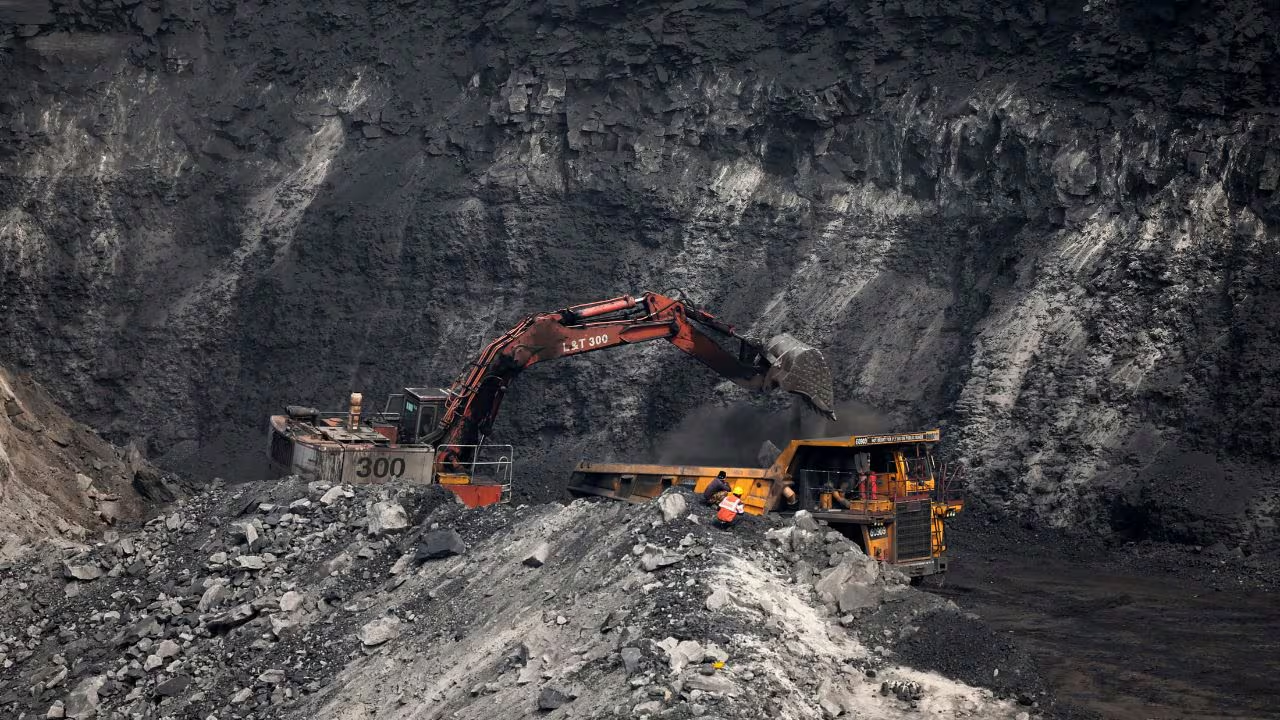
Law enforcement agencies in Meghalaya have confiscated more than 17 000 metric tonnes of illegally mined coal and 25.5 kg of explosive material from abandoned mine sites in East Jaintia Hills as part of a sustained crackdown following a deadly mine explosion earlier this month. The scale of the haul — equivalent to the output of several mid-sized industrial facilities — underscores deep challenges around unregulated resource extraction, cross-border supply chains and urban infrastructure safety in the region.

The operations, conducted overnight between 20–21 February, targeted multiple sites previously used for clandestine coal extraction and storage. Investigators recovered a total of 17 322 metric tonnes of coal, along with explosive materials commonly used in illegal mining. Although no arrests were made during this specific raid, law enforcement data shows that 94 FIRs have been filed and 22 individuals arrested in connection with unlawful mining and coal transportation since early February.This surge in enforcement follows a tragic explosion on 5 February at an unlicensed mine in the Thangsku area, which claimed dozens of lives and shone a spotlight on systemic safety failures and long-standing regulatory gaps. A judicial inquiry commission and a Special Investigation Team are now probing the causes of the blast and alleged enforcement lapses.

For India’s urbanisation and infrastructure ecosystem, the episode has broader resonance. Coal remains a backbone fuel for power generation that feeds city grids and energy-intensive building activity. Yet illegal mining — often linked to informal supply chains, weak land governance, and lack of environmental oversight — poses risks that extend into construction, housing supply and industrial power security. Urban planners and energy experts warn that unregulated extraction erodes regulatory trust and can distort building material markets while undermining environmental safeguards.Coal confiscated in past operations has reportedly entered informal markets, fuelling industries from brick kilns to construction sites without proper documentation or safety checks. This creates price distortions in urban building material supply chains and can incentivise unsafe labour practices. In regions where enforcement is lax, informal coal often substitutes for certified fuels and materials, undermining both environmental and safety standards.

The ongoing enforcement campaign also highlights governance challenges at the intersection of natural resource management and urban development. East Jaintia Hills police have intensified nightly raids, registered cases and seized vehicles suspected of transporting illegal coal — a signal that authorities are prioritising rule of law in a sector long plagued by illicit operations.Environmental planners stress that illegal mining not only endangers miners and local communities but also amplifies threats to water, soil and air quality — all of which intersect with housing health, building resilience and long-term land use planning. In rapidly urbanising districts that absorb rural migrants and industrial workers alike, these environmental impacts can shape patterns of settlement, infrastructure cost burdens and service delivery challenges.

For policymakers and city authorities, the Meghalaya case underscores the need for integrated frameworks that tie mining regulation to urban planning, public safety, environmental protection and sustainable construction protocols. Strengthened monitoring, digitised material tracking and community-level engagement could help avert future tragedies and align resource extraction with broader developmental goals.

Also Read: Chhattisgarh Gevra Mine Poised For Global Production Lead

Meghalaya Mining Sweep Signals Enforcement and Safety Gaps
RELATED ARTICLES

LEAVE A REPLY

Please enter your comment!
Please enter your name here

- Advertisment -spot_img

Most Popular

Recent Comments

Parman Designs Rethinks Home Rituals With Concrete Craft

Parman Designs Rethinks Home Rituals With Concrete Craft

0
In an era when Indian residential design is increasingly informed by cultural memory and material integrity, a new set of furniture collections is foregrounding...
India Interiors See Cardamom Rainforest Textile Innovation

India Interiors See Cardamom Rainforest Textile Innovation

0
Thai premium textile house Jim Thompson has introduced a rainforest-inspired range of statement fabrics aimed at interior designers and high-end homeowners, underscoring evolving demand...
Talcher Coal Dust Pollution Spurs Environmental Action

Talcher Coal Dust Pollution Spurs Environmental Action

0
India’s National Green Tribunal (NGT) has issued formal notices to multiple state authorities and industry stakeholders over alleged pollution caused by coal transportation in...
Coal India Exceeds GeM Target With Urban Infrastructure Relevance

Coal India Exceeds GeM Target With Urban Infrastructure Relevance

0
State-owned Coal India Limited has surpassed its Government e-Marketplace (GeM) procurement target for the current financial year, achieving roughly ₹61,891 crore — about 114%...
Chhattisgarh Gevra Mine Poised For Global Production Lead

Chhattisgarh Gevra Mine Poised For Global Production Lead

0
India’s footprint in global coal production is poised to deepen as Coal India’s South Eastern Coalfields Ltd (SECL) readies its Gevra coal block in...
