

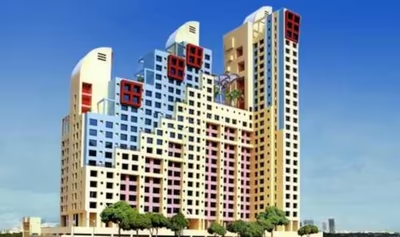
Lokhandwala in Andheri West continues to command sustained residential demand, reinforcing its position as one of the city’s most resilient lifestyle-driven micro-markets. Despite traffic congestion and high density, the neighbourhood’s mix of entertainment industry presence, retail vibrancy and social infrastructure keeps housing absorption steady across rental and ownership segments.
Situated within Andheri West, Lokhandwala has long benefited from proximity to major production hubs such as Yash Raj Films and Balaji Telefilms. This ecosystem has shaped its demographic profile, attracting actors, technicians, digital creators and media professionals. Real estate brokers note that demand in the locality is often lifestyle-led rather than purely investment-driven. At the centre of the neighbourhood is the Lokhandwala Market, a dense retail spine offering daily essentials, fashion outlets, electronics and specialty stores. The presence of this high-footfall commercial strip enhances walkability and reduces dependence on long commutes for everyday needs a factor urban planners increasingly identify as critical to liveable, compact city districts. The area’s food culture further strengthens its residential appeal. Legacy establishments such as High Point Restaurant and Yashins Food Inn coexist with cafés and global chains, supporting a late-night economy that aligns with the schedules of media and creative professionals. Analysts suggest that such mixed-use vibrancy sustains both rental yields and resale values. While built density remains high, Lokhandwala retains pockets of green relief. Chhatrapati Shivaji Maharaj Joggers Park and neighbourhood gardens provide limited but valued open space. Fitness studios and wellness centres add to the area’s health-oriented offerings, reflecting changing buyer expectations around community amenities.
Connectivity is another anchor. Andheri railway station and arterial links to the Western Express Highway and Link Road position Lokhandwala within a broader transport grid. Future metro expansions across the western suburbs are expected to further ease east–west travel, a long-standing bottleneck in the precinct. However, urban development experts caution that continued residential demand must be balanced with infrastructure upgrades. Stormwater management, parking solutions and pedestrian safety remain pressing concerns in older micro-markets. As redevelopment activity increases, regulatory oversight and sustainable building practices will be essential to prevent overburdening civic systems. Property consultants describe Lokhandwala as a self-contained urban enclave one where housing, retail, dining and nightlife intersect within a relatively compact footprint. In a metropolis marked by long commutes, such integrated neighbourhoods retain premium appeal.
As Mumbai’s housing market evolves, Lokhandwala’s enduring draw illustrates a broader trend: lifestyle density, when paired with connectivity and social infrastructure, can sustain demand even in saturated urban environments. The challenge ahead will be ensuring that this vibrancy aligns with long-term urban resilience and equitable access to public space.
Also Read: Pokhran Road 2 housing momentum
Mumbai Lokhandwala lifestyle housing demand rises




