

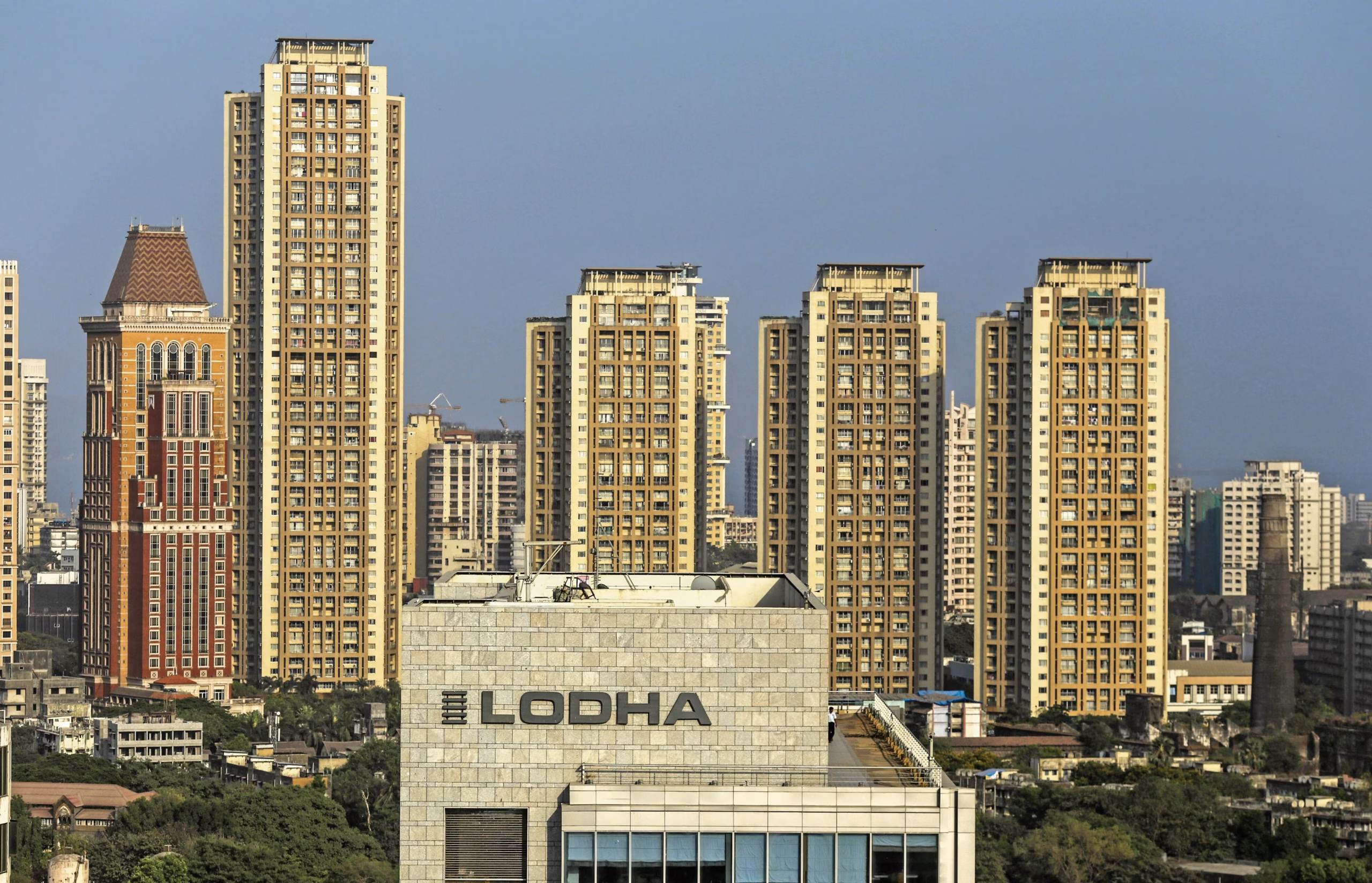
Lodha Developers has outlined one of its most ambitious launch calendars yet, preparing to introduce 15 new residential projects across the Mumbai Metropolitan Region, Pune, and Bengaluru in the latter half of FY26. The pipeline, valued at around Rs 14,000 crore, signals the firm’s confidence in sustained housing demand and reflects the broader shift towards professionally managed, environmentally conscious urban development.
According to company officials, the rollout will add nearly 10 million sq. ft. of saleable space and help the developer stay on course to meet its full-year pre-sales guidance of Rs 21,000 crore. The announcement follows a strong first half of the fiscal year, during which the firm introduced projects worth more than Rs 13,000 crore and reported steady growth in pre-sales. Industry analysts noted that the company’s performance in the year’s first six months an 8% rise in pre-sales to over Rs 9,000 crore demonstrates both market resilience and the continued dominance of branded players in India’s urban housing hubs. A consultant tracking the sector said demand in MMR and Pune, particularly in the mid-income and premium segments, “remains supported by better credit access, improved project execution, and the push for more climate-responsible buildings”.
Despite the aggressive launch pipeline, the developer is not relying solely on fresh inventory. Executives indicated that internal strategies now focus equally on accelerating construction cycles, bolstering digital-first sales processes, and reducing unsold stock in completed or near-completed projects. These measures, analysts said, are becoming increasingly important as metropolitan buyers prioritise timely delivery, transparent governance, and energy-efficient urban lifestyles. The firm’s cumulative footprint now includes more than 110 million sq. ft. delivered and another 130 million sq. ft. under development. With this scale comes growing responsibility. Urban policy experts argue that large developers play a crucial role in reducing the construction sector’s carbon footprint, especially in regions such as MMR and Bengaluru where infrastructure stress and heat vulnerability are intensifying. “Developers with significant pipelines need to embed greener building materials, water-sensitive design, and inclusive amenities,” said a Mumbai-based urban planner.
In a notable strategic shift, the company is also preparing to enter the Delhi-NCR market with a pilot housing project in Gurugram. This marks its first significant move outside its traditional western and southern base. With NCR’s residential market recovering and governance reforms attracting institutional capital, competition among branded developers is expected to sharpen. For citizens, the expansion underscores the evolving nature of India’s urban housing market where demand is increasingly steered by trust, sustainability features, public transport access, and long-term cost-efficiency rather than by short-term speculation. As India’s metros attempt to expand without exacerbating inequality or climate risk, the choices made by major developers will continue to shape how inclusive, resilient, and low-carbon these cities become.
Also Read: Baloda Bazar Chhattisgarh Transformed By Ambuja Cements CSR Rural Health Nutrition Drive
Mumbai Realty Giant Lodha Unveils Rs 14,000 Crore Projects Spanning MMR Pune Bengaluru




