Indian Railways’ $22 Billion Modernisation Are Core Passenger Issues Being Addressed?
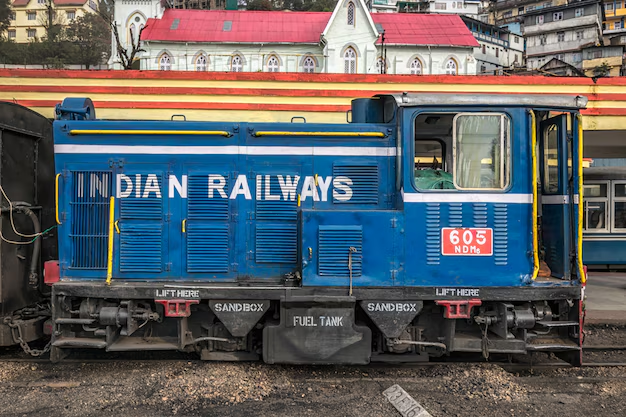
Indian Railways, one of the world’s largest rail networks, has committed over $22 billion (₹1.92 trillion) in the current fiscal year to modernise its infrastructure. This massive investment covers a broad spectrum of initiatives, including electrification, the expansion of rail lines, and the introduction of faster and safer trains. With the government aiming for net-zero carbon emissions on the railways by 2030, the focus is on sustainability alongside capacity building. However, as funds flow into these high-profile projects, many wonder if the investment is enough to address the longstanding issues that affect daily passengers—issues that often go unnoticed amid the grandeur of large-scale infrastructure upgrades.
The scale of Indian Railways’ financial commitment is undeniable. As of January 5, ₹344 billion ($4 billion) has been allocated to safety enhancements, while ₹403 billion ($4.7 billion) has been earmarked for rolling stock, including the development of the much-anticipated Vande Bharat trains. These trains, which are designed to offer a more comfortable and secure travel experience, are currently undergoing speed and safety certifications, with a launch expected soon. The introduction of these trains, along with the expansion of electrification, is certainly a welcome development for improving long-distance travel and reducing the country’s carbon footprint. However, the question remains: can these investments truly transform the daily experience of the millions who rely on the trains? Indian Railways moves over 23 million passengers every day, and despite the ambitious modernisation projects, fundamental issues such as overcrowding, poor hygiene, and slow speeds continue to plague the system. Train stations are often unclean, toilets are in disrepair, and amenities like waiting rooms are inadequate. These issues, while seemingly minor in comparison to infrastructure upgrades, directly impact the comfort and well-being of passengers.
In terms of safety, while significant funds have been allocated to modernising track systems, including doubling and gauge conversion, as well as implementing modern signalling systems, the frequency of accidents remains a major concern. In the past year alone, more than 100 train accidents were reported, resulting in numerous fatalities and injuries. This persistent safety issue raises questions about the efficacy of safety measures, especially considering the millions of people who rely on the railways daily. The government’s commitment to building a “future-ready” railway system is commendable. The electrification of 97% of broad-gauge lines and the introduction of Vande Bharat trains demonstrate progress in terms of speed, sustainability, and technological advancement. But with accidents still occurring regularly, and overcrowding and hygiene issues remaining prevalent, critics argue that these measures, while important, are insufficient to address the core concerns of passengers. The future of Indian Railways hinges on striking a balance between modernising infrastructure and enhancing the day-to-day travel experience for passengers. Upgrading technology and improving safety are undoubtedly important, but passenger comfort, cleanliness, and timely services should be given equal priority. Without a holistic approach that addresses these basic issues, the impact of the vast investments being made may fall short of expectations. While Indian Railways’ $22 billion modernisation initiative is an important step toward creating a world-class rail network, it is essential to remember that the success of these investments will be measured not just by the speed and efficiency of trains but by the satisfaction of passengers. Only by addressing the fundamental issues faced by commuters can Indian Railways truly become a modern, reliable, and comfortable transport system for all.