Researchers Unveil Eco-Friendly Method for Cement Production
In a major breakthrough for the cement industry, researchers at the University of Michigan have developed a revolutionary method that could drastically reduce carbon pollution, offering a glimpse into a more sustainable future for one of the world’s largest polluting sectors.
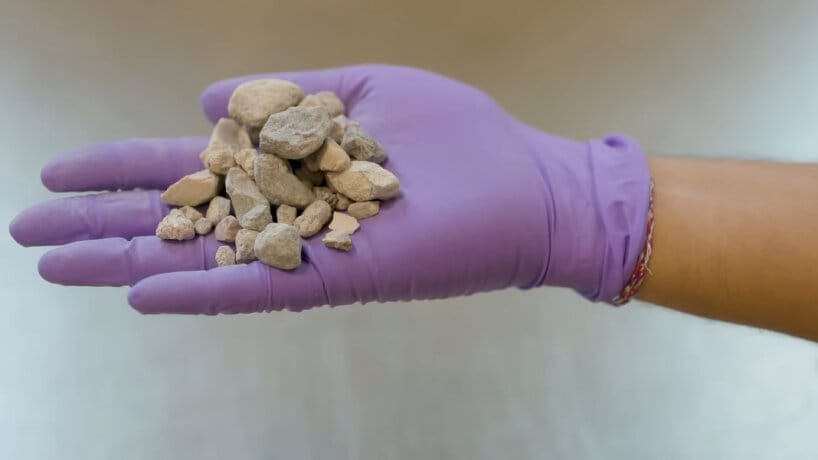
Cement, a ubiquitous material used in everything from skyscrapers to bridges, may seem like an ordinary substance, but behind its commonplace presence lies a significant environmental impact. It is the second-largest industrial source of carbon emissions globally, contributing an alarming 5% to 8% of total carbon dioxide pollution. However, a team of scientists at the University of Michigan has found a way to significantly reduce this impact without drastically altering the current manufacturing process. The new method primarily focuses on one key ingredient: limestone. When heated, limestone, a critical component in cement production, releases carbon dioxide. This step in the traditional process has long been a major contributor to global emissions. But the researchers’ approach captures an equal or greater amount of carbon dioxide from the atmosphere than is emitted, making the overall process potentially carbon neutral or even carbon negative. This innovation could revolutionise the industry and lead to major reductions in global emissions.
What sets this new method apart from previous technological advancements is its simplicity. Unlike other innovations that require expensive modifications or new equipment, this method can be easily integrated into existing cement plants with minimal cost and effort. Xiao Kun Lu, a chemical engineering doctoral student at Northwestern University, explained that this low-entry barrier could make the method highly attractive to large cement manufacturers, who would be able to implement it with little disruption to their current operations. The financial aspect of this breakthrough is also promising. While capturing carbon is inherently expensive, this method represents a cost-effective solution compared to traditional cement manufacturing techniques. The simplicity and scalability of the process make it an ideal candidate for widespread adoption, potentially mitigating the environmental harm caused by the cement industry, which has long been a major contributor to global carbon emissions.
Professor Volker Sick, the director of the project at the University of Michigan, expressed his excitement about the development, noting that it is a “confluence of different groundbreaking technologies” that together form a solution “almost too good to be true.” Contributing author Wenxin Zhang further highlighted the potential of this technology, emphasising that it could transform the cement industry from a significant CO2 emitter into a crucial enabler for clean energy and carbon management technologies. While the findings are promising, there are still challenges ahead, particularly with scaling the technology and gaining industry-wide adoption. However, if successful, this new approach could mark a pivotal moment in the global fight against climate change, offering a greener future for the construction industry and beyond.