

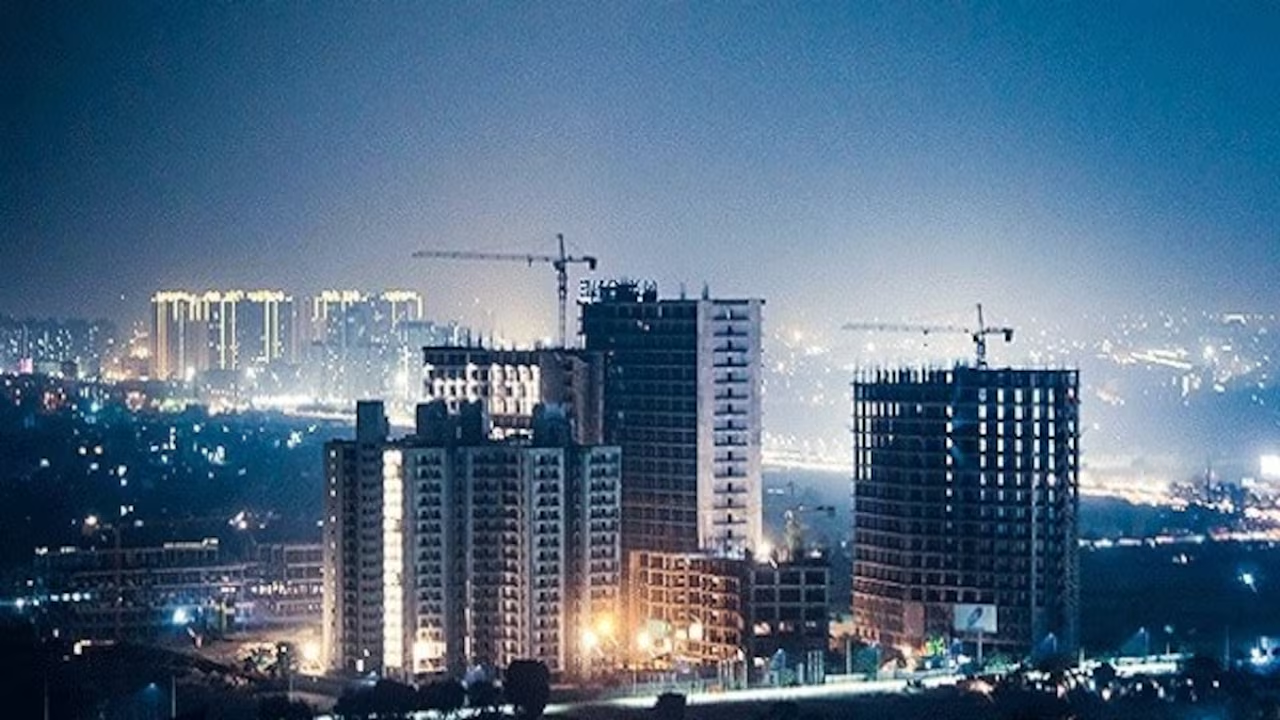
A viral social media video showing clusters of high-rise apartment towers in Mumbai has reignited a familiar but unresolved conversation: how much space does the city really have left and at what cost? The clip, posted by a city resident, questioned both density levels and soaring apartment prices, drawing tens of thousands of responses and exposing anxieties around affordability, migration and liveability.
The footage captured rows of newly built and under-construction towers, with the creator remarking that thousands of residents would eventually occupy a single block. Her criticism that buyers are “paying crores” for compact flats struck a chord in a city where the average apartment size has steadily shrunk even as capital values rise. According to property analysts, Mumbai housing prices remain among the highest in India due to a combination of limited land supply, regulatory constraints and sustained demand. The city’s peninsula geography restricts outward growth, encouraging vertical expansion instead. As a result, redevelopment of ageing low-rise structures into high-density towers has become the dominant supply model. Data from recent launches indicates that compact configurations continue to account for a significant share of new inventory, particularly in redevelopment-heavy suburban markets. While luxury segments have recorded strong sales momentum, mid-income buyers often face high per-square-foot costs relative to carpet area. Urban planners argue that the debate reflects deeper structural pressures. Mumbai attracts migrants from across India due to its employment ecosystem in finance, media, technology and services. This continuous inflow supports economic dynamism but intensifies pressure on housing stock and civic infrastructure.
The conversation online also drifted into questions of belonging and migration, with some commenters linking density challenges to population inflows. Experts caution against oversimplifying the issue. Housing affordability in Mumbai is shaped not only by migration but also by land pricing, taxation, infrastructure levies and lengthy approval cycles, all of which influence final sale prices. At the same time, vertical growth has delivered tangible gains. Redevelopment has improved structural safety in older neighbourhoods and expanded formal housing supply. Metro rail expansion and coastal road projects aim to redistribute growth corridors and reduce commute times, potentially easing centralised density stress over time. However, the optics of tightly packed towers raise valid concerns about open space, sunlight access and social infrastructure. Climate resilience, stormwater management and energy efficiency are emerging as critical considerations in high-density planning. The viral video underscores a generational frustration: aspirations for space and comfort collide with economic reality. For policymakers and developers alike, the challenge is not simply to build higher, but to ensure that density translates into better quality of life through integrated transport, accessible public spaces and inclusive housing models.
Mumbai’s skyline will likely continue rising. Whether that growth feels sustainable or suffocating will depend on how thoughtfully the next phase of urban development is managed.
Also Read: Mumbai Housing Costs Redefine Independent Homes
Mumbai Skyscrapers Stir Housing Affordability Concerns