HomeLatestTalcher Coal Dust Pollution Spurs Environmental Action

Talcher Coal Dust Pollution Spurs Environmental Action

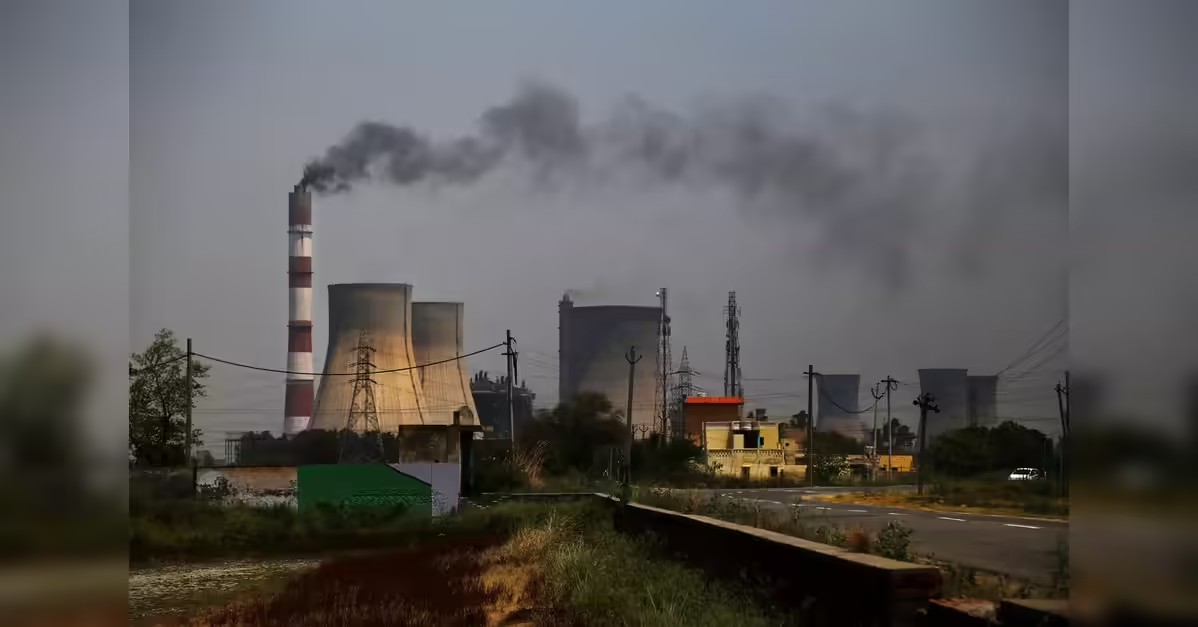
India’s National Green Tribunal (NGT) has issued formal notices to multiple state authorities and industry stakeholders over alleged pollution caused by coal transportation in Talcher, a major mining and industrial hub of Odisha. The development underscores mounting regulatory scrutiny of airborne emissions linked to the coal value chain, with broad implications for public health, local development and sustainable urban planning in the region.

The NGT’s East Zone Bench intervention comes amid growing concerns among residents, civic activists and environmental experts that unchecked coal dust from freight movement is deteriorating air quality, damaging local ecosystems and posing chronic health risks. Talcher, situated in Angul district and home to extensive coalfields and industrial establishments powering large thermal and captive energy plants, sits at the nexus of India’s energy infrastructure and urbanisation dynamics.Coal transported by rail and road from mines and processing units across the Talcher coalfields is a backbone input for regional power generation and industrial activity. However, the heavy movement of uncovered coal wagons and trucks along arterial highways and residential belts has long been linked to elevated particulate levels. Complaints lodged with the Odisha State Pollution Control Board cited repeated coal dust fallout on roads and neighbourhoods — a source of persistent respiratory ailments for many locals.

Public health specialists point out that fine particulate matter (PM2.5 and PM10) released during open coal transport can exacerbate asthma, bronchitis and cardiovascular conditions for children, elderly residents and construction workers alike. Urban planners note that this problem is compounded when coal haulage routes double as feeder roads for housing developments, logistics parks and commercial zones where daily commuter traffic and pedestrian use intersect.The NGT notices seek accountability and detailed action plans from implementing agencies, including measures to mitigate dust dispersion. Past judicial directives on similar pollution sources have emphasised covering coal wagons with tarpaulins, mechanising loading and unloading sites, and implementing regular pollution monitoring — but execution has been patchy.

For the regional built environment, the current episode rings alarm bells about the integration of industrial supply chains with city planning. Talcher’s urban footprint has grown alongside its industrial base, creating peri-urban clusters of residential settlements, worker housing and civic infrastructure. Without coordinated environmental management and transport logistics planning, these same growth patterns risk undermining the quality of life and long-term sustainability of urban communities.Stakeholders in housing and infrastructure sectors are watching closely, as dust-related pollution can translate into higher filtration and maintenance costs for buildings, affect construction schedules and complicate compliance with green-building standards. Developers increasingly factor ambient air quality into project design — from landscaped buffer zones to enhanced façade filtration — especially in regions with intense industrial activity.

NGT’s involvement could catalyse more rigorous enforcement, compelling the Odisha State Pollution Control Board and transport agencies to operationalise guidelines on coal dust control along major haulage routes. It may also prompt municipal authorities across Odisha’s emerging urban corridors to integrate air quality management more robustly into city masterplans, zoning codes and infrastructure prioritisation.Given India’s broader climate and clean-urbanisation commitments, balancing industrial supply chains with environmental safeguards is critical. How authorities and industry respond in Talcher may set precedents for managing similar coal-linked pollution pressures in other energy-industrial hubs across the country.

Also Read: Coal India Exceeds GeM Target With Urban Infrastructure Relevance

Talcher Coal Dust Pollution Spurs Environmental Action
RELATED ARTICLES

LEAVE A REPLY

Please enter your comment!
Please enter your name here

- Advertisment -spot_img

Most Popular

Recent Comments

UltraTech Records Reveal Scale of Construction Demand

UltraTech Records Reveal Scale of Construction Demand

A fresh corporate filing submitted to stock exchange authorities has provided a detailed picture of how India’s largest cement producer is positioning itself amid...
India Cement Industry Bets on Green Power

India Cement Industry Bets on Green Power

India’s cement manufacturers are accelerating investments in renewable energy infrastructure as rising fuel expenses and growing climate related obligations reshape the economics of one...
RBI Holds Repo Rate At 5.25 Percent Bringing Stability To Housing And Commercial Real Estate

RBI Holds Repo Rate At 5.25 Percent Bringing Stability To Housing And Commercial Real...

India's real estate sector received a measure of financial certainty after the Reserve Bank of India chose to maintain its benchmark policy rate at...
AV Group Establishes New Corporate Headquarters In Vasai Virar Growth Corridor

AV Group Establishes New Corporate Headquarters In Vasai Virar Growth Corridor

A significant corporate infrastructure investment in Vasai-Virar is reinforcing the northern Mumbai metropolitan belt's emergence as a key destination for business activity, real estate...
Capitaland India Trust Raises ₹1672 Crore To Accelerate Bengaluru Commercial Real Estate Project

Capitaland India Trust Raises ₹1672 Crore To Accelerate Bengaluru Commercial Real Estate Project

Fresh institutional financing for a large office development in Bengaluru underscores continued confidence in India's commercial real estate sector, particularly in technology-led urban centres...