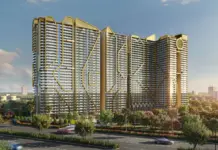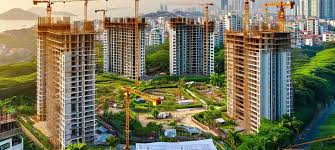
A rare 4.3-acre land parcel in Malabar Hill, one of Mumbai’s most tightly held residential enclaves, is set for redevelopment after Lodha Developers secured development rights through a structured agreement with a charitable trust, marking one of South Mumbai’s most significant land transactions in recent years.
The site, currently comprising six bungalows along with ancillary structures, carries an estimated development potential of nearly Rs 2,800 crore based on prevailing market benchmarks in the Malabar and Cumballa Hill division. According to property registration records reviewed by Urban Acres, the agreement for development rights was executed in early January and involves a combination of upfront financial commitment, revenue sharing and constructed area allocation. Under the arrangement, the land-owning trust will receive a newly constructed independent building with more than 54,000 sq ft of RERA-defined carpet area, alongside a revenue share exceeding 40 per cent of project proceeds. The transaction structure also includes a substantial security deposit and bank guarantee, reflecting the scale and sensitivity of redevelopment in legacy neighbourhoods. Malabar Hill has historically witnessed limited new supply owing to land scarcity, strict development controls and the presence of institutional and trust-owned holdings. Fresh inventory typically arises through selective redevelopment rather than greenfield construction. Urban analysts say the consolidation of a contiguous parcel of this size is unusual in South Mumbai, where fragmented ownership patterns often complicate land assembly.
The locality commands some of the highest residential valuations in India, driven by low-density planning, sea views and proximity to established commercial districts such as Nariman Point and Churchgate. Developers with strong balance sheets are often the only participants capable of executing projects in this micro-market, given the high entry costs and long gestation cycles. From a policy perspective, the transaction also highlights how trust-owned land is being leveraged for asset optimisation. As mandated under state public trust regulations, monetary proceeds accruing to the trust are expected to be invested in approved instruments, with only interest income available for utilisation towards charitable objectives. This framework seeks to safeguard principal value while enabling redevelopment of ageing properties. Urban planners caution, however, that premium redevelopment in coastal precincts must incorporate climate resilience measures. With South Mumbai vulnerable to tidal flooding and extreme rainfall, integrating advanced drainage systems, energy-efficient design and structural safeguards will be critical.
For Mumbai’s broader housing market, the deal reinforces the pivot towards high-value redevelopment in established neighbourhoods as greenfield land across the metropolitan region dwindles. Whether this translates into additional ultra-luxury supply or remains a tightly curated offering will depend on regulatory clearances, design outcomes and evolving buyer appetite in a maturing premium segment.
Also Read: Mumbai Bets On Cluster Redevelopment Future
Mumbai Malabar Hill Plot Set For Redevelopment