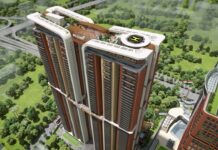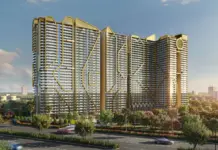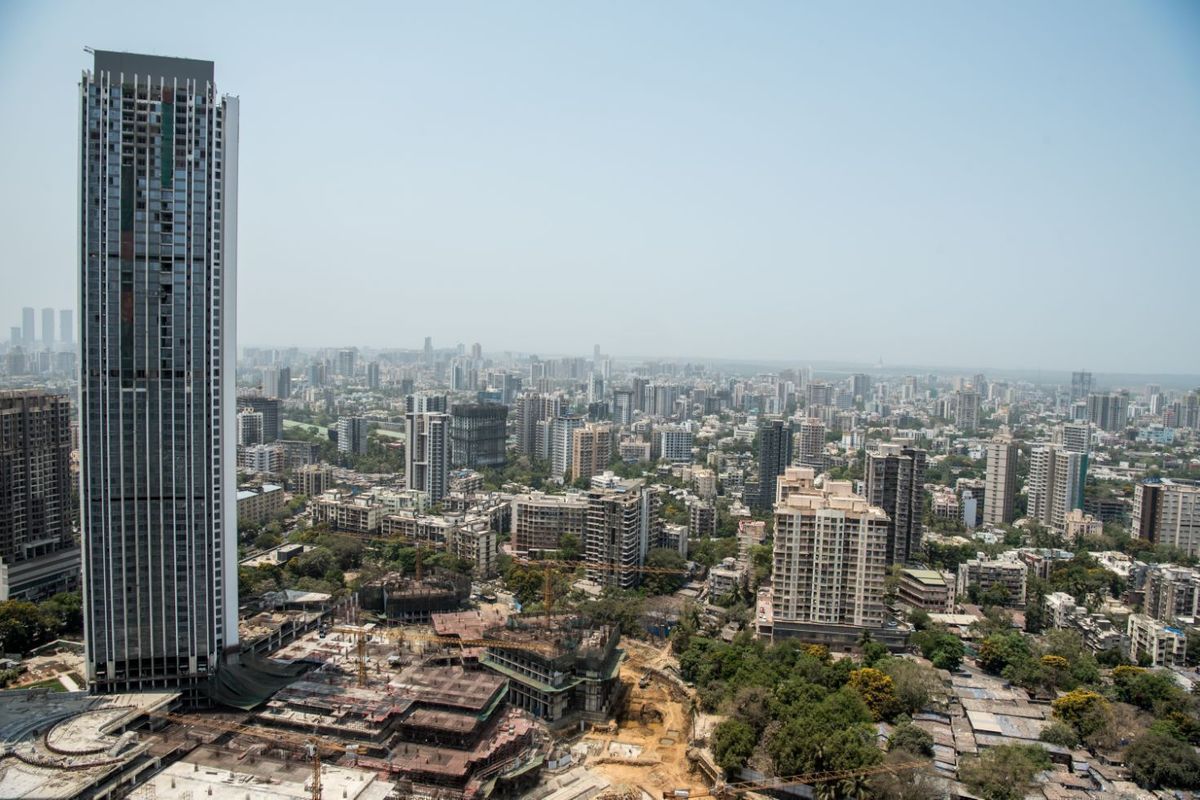
India’s financial capital is building higher than ever before, with a new generation of super-tall residential towers redefining land economics, buyer expectations and infrastructure planning. From Worli to Mahalaxmi and Lower Parel, buildings crossing 250 metres are no longer anomalies but part of a structural shift in how the city accommodates growth.
Among the most prominent is Palais Royale in Worli, rising to approximately 320 metres and positioned to become India’s tallest operational building. Close behind stands Lokhandwala Minerva in Mahalaxmi at over 300 metres, while Lower Parel’s skyline features Lodha World One and Lodha World View. In Worli, Three Sixty West has further cemented the micro-market’s identity as a vertical luxury district. Urban economists argue that Mumbai taller towers are less about spectacle and more about necessity. The city’s peninsular geography restricts outward expansion, while nearly 90 per cent of developable land is already utilised. As land values climb, developers rely on higher floor space index (FSI) allowances and redevelopment frameworks to make projects financially viable. Height enables more saleable area on limited plots, particularly in former mill lands and ageing housing society clusters. Policy changes over the past decade including fungible FSI and incentive-linked redevelopment have provided the regulatory scaffolding for such growth.
Demand has also evolved. High-net-worth individuals, senior executives and non-resident Indians increasingly seek expansive apartments with sea views, private lifts and hotel-style services. In this segment, elevation translates into exclusivity. Panoramic vistas and controlled access command significant price premiums. However, Mumbai taller towers also intensify infrastructure demands. High-rise clusters generate concentrated traffic, water usage and energy loads. Without parallel investment in transit systems, drainage upgrades and power redundancy, vertical densification risks amplifying urban stress. Planners note that super-tall construction involves longer approval cycles, advanced wind engineering, deeper foundations and higher capital exposure. Financing structures are complex, often dependent on phased sales and strong pre-launch bookings to maintain cash flow. The pipeline remains active. Proposed projects in South and Central Mumbai are expected to cross the 300-metre mark, signalling continued appetite for height. Yet absorption capacity remains a watchpoint. If multiple ultra-luxury towers enter the market simultaneously, inventory build-up could pressure pricing. For a city confronting climate vulnerability and land scarcity, verticality presents both opportunity and responsibility. Properly integrated with transit networks and resilient infrastructure, high-density living can reduce sprawl and shorten commutes. Poorly calibrated, it can strain already fragile systems.
Mumbai’s skyline is thus more than a display of engineering prowess. It is a reflection of constrained geography, regulatory evolution and concentrated wealth and a test of whether ambition can align with sustainable urban planning.
Also Read: Mumbai coastal housing sees fresh investment
Mumbai vertical growth signals land pressure