HomeHome InteriorMumbai Residence Experiments With Japandi Living Spaces

Mumbai Residence Experiments With Japandi Living Spaces

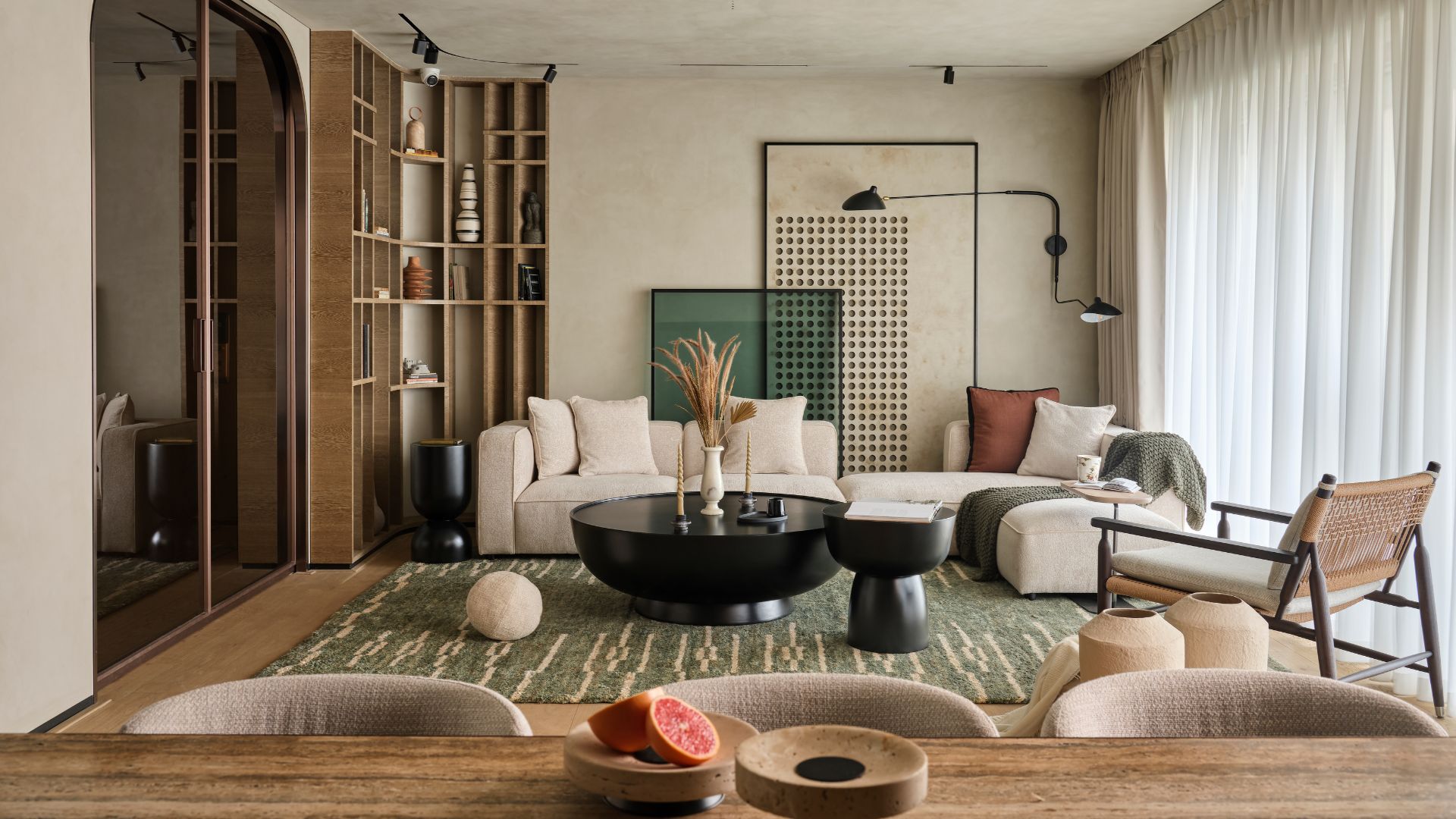
A newly completed apartment in Mumbai is drawing attention within design and real estate circles for its interpretation of Japandi interior design, a style that merges Japanese minimalism with Scandinavian warmth. The 1,500-square-foot residence demonstrates how global design ideas are increasingly being adapted for Indian urban housing, where space efficiency, natural materials and climate responsiveness are becoming key priorities.

Industry observers say the project reflects a broader shift in Indian metropolitan homes. With rising apartment densities in cities like Mumbai, homeowners and developers are experimenting with layouts and finishes that maximise light, reduce visual clutter and prioritise long-term usability rather than purely decorative interiors. The apartment’s design approach centres on soft forms and muted colours. Curved architectural details replace sharp edges across ceilings, furniture and partitions, creating visual continuity while reducing spatial rigidity in compact rooms. Designers involved in the project say the intention was to maintain openness without expanding the footprint an approach urban planners often identify as crucial in high-density cities. Materials played a central role in shaping the interiors. Wood elements, textured wall finishes and neutral tones dominate the palette, while grid-like patterns and glass accents introduce contrast. Experts in residential design note that such combinations are becoming common in Japandi interior design, which balances handcrafted materials with clean geometry.

Another key feature of the apartment is the integration of indoor greenery within furniture and structural elements. Built-in planters within seating areas and entertainment units aim to maintain a connection with nature, even within a high-rise environment. Urban designers increasingly highlight biophilic design bringing natural elements into indoor spaces as an effective way to improve mental wellbeing in dense urban housing. Lighting strategies were also developed to compensate for fluctuating daylight conditions typical of coastal cities. Layered ceiling profiles with concealed lighting help distribute illumination evenly across the apartment. Interior designers say such solutions are especially relevant in Mumbai, where monsoon seasons and neighbouring towers often limit natural light penetration. The home’s layout emphasises flexibility. Moveable seating in the living area allows the space to shift between family use and social gatherings. In the dining area, furniture proportions were adjusted to ensure ergonomic comfort, while storage solutions were built directly into walls and cabinetry to reduce clutter.

Bedrooms follow a restrained colour approach, relying on variations of beige and wood tones to maintain calm, low-contrast environments. In one room, artwork served as the primary design reference for colour selection, demonstrating how personalised elements are shaping modern residential interiors. Design professionals note that such customised projects signal a departure from mass-produced modular interiors that dominate many urban apartments. Instead, homeowners are investing in tailored solutions that combine functionality, cultural craft traditions and global aesthetics. As Indian cities continue to densify, housing experts believe interior design strategies like Japandi interior design may gain wider relevance particularly when they prioritise durability, material efficiency and adaptable living spaces suited to compact urban homes.

Also Read : Mumbai Real Estate Conclave Maps Sector Future
Mumbai Residence Experiments With Japandi Living Spaces
RELATED ARTICLES

LEAVE A REPLY

Please enter your comment!
Please enter your name here

- Advertisment -spot_img

Most Popular

Recent Comments

Ahmedabad Gas Supply Cut Disrupts Restaurant Kitchens

Ahmedabad Gas Supply Cut Disrupts Restaurant Kitchens

0
A sudden reduction in industrial natural gas allocation has disrupted kitchen operations across Ahmedabad’s food service sector, forcing many restaurants to rapidly adjust cooking...
Goa Weekend Home Market Expands With Rising Demand

Goa Weekend Home Market Expands With Rising Demand

0
India’s evolving residential preferences are reshaping the country’s leisure property sector, with coastal destinations and emerging urban fringes attracting rising interest from affluent buyers....
Noida Mixed Use Project Cleared For Sector Growth

Noida Mixed Use Project Cleared For Sector Growth

0
Urban development in Noida is poised for another transformation after regulatory clearance was granted for a large mixed-use development in the city’s central business...
Bengaluru Hotels Leverage AI for Faster Scaling

Bengaluru Hotels Leverage AI for Faster Scaling

0
A major hospitality group based in Bengaluru is preparing for a significant expansion of its hotel operations, aiming to increase its room inventory to...
Uttar Pradesh Reviews Airport and Expressway Infrastructure Push

Uttar Pradesh Reviews Airport and Expressway Infrastructure Push

0
The Uttar Pradesh government has intensified oversight of several large infrastructure projects, directing district administrations to accelerate land acquisition so that expressways, airport-linked transport...