
HomeLatestIndia Coal Gasification Rules Aim To Boost Output

India Coal Gasification Rules Aim To Boost Output

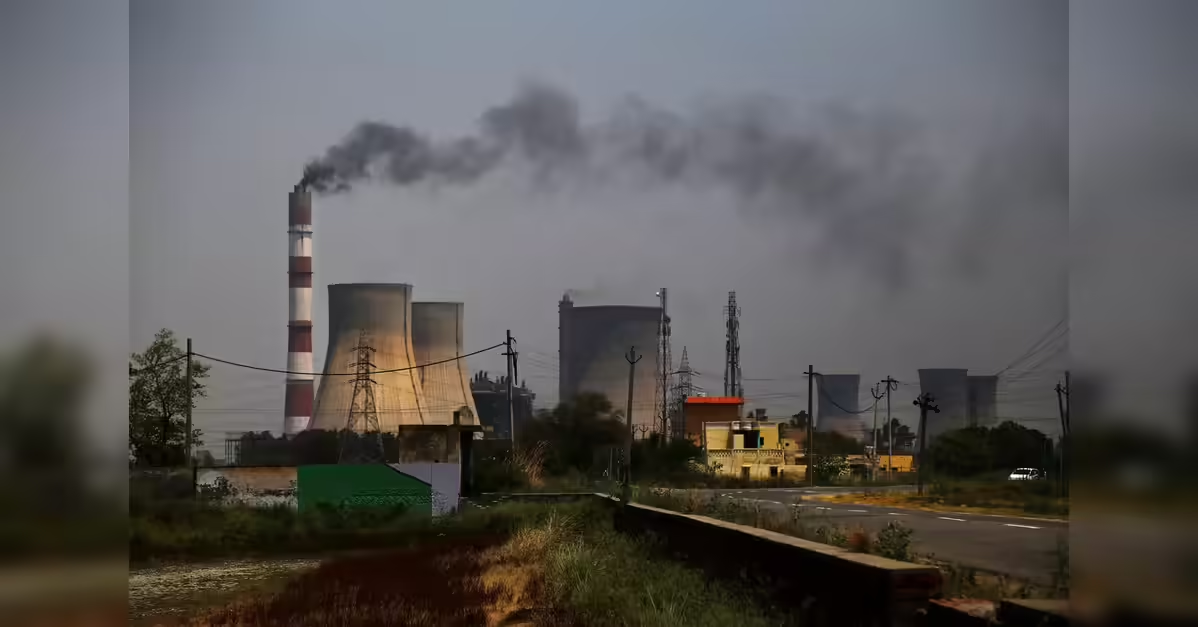
India is advancing a new regulatory framework for coal gasification and mining operations, signalling a strategic shift towards maximising domestic resource use while addressing energy security concerns. The updated rules are designed to accelerate coal output and promote gasification technologies, positioning the sector as a transitional pillar in the country’s evolving energy landscape.

The policy push focuses on integrating coal gasification into mainstream mining plans, allowing operators to convert coal into synthetic gas for industrial applications. This approach is expected to reduce reliance on imported fuels such as natural gas and support sectors like fertilisers, chemicals, and steel. Government targets indicate a goal of gasifying up to 100 million tonnes of coal by 2030, reflecting the scale of ambition behind the initiative. Officials indicate that the revised framework aims to streamline approvals and incentivise investments in gasification-linked projects. By aligning mining plans with downstream industrial use, the government is attempting to create a more integrated coal value chain. Recent policy discussions have also emphasised faster mine development and operationalisation, as part of broader efforts to enhance domestic coal production and reduce import dependency. A key component of the reform is the inclusion of coal gasification provisions in mining auctions and project approvals. This enables access to deeper or otherwise unviable coal reserves through technologies such as underground coal gasification (UCG), which converts coal into gas without traditional extraction. Such measures are expected to unlock new resource potential while improving efficiency in coal utilisation. 

From an economic standpoint, the move is closely linked to India’s infrastructure and industrial growth trajectory. Coal remains central to the country’s energy mix, supporting electricity generation and core industries. As urbanisation accelerates, demand for energy-intensive materials such as cement and steel is rising, increasing pressure on domestic fuel supplies. Strengthening coal production through gasification is therefore seen as a way to stabilise supply chains and support long-term development.However, the policy also highlights the complexities of balancing growth with environmental responsibility. While coal gasification is often positioned as a cleaner alternative to direct combustion, it still involves carbon emissions and requires robust monitoring systems. Experts argue that integrating carbon capture, efficient water use, and environmental safeguards will be critical as projects scale.Urban and energy planners note that the reforms reflect a dual-track strategy: maintaining coal as a reliable energy source in the near term while gradually transitioning towards cleaner alternatives. Investments in gasification technologies are being framed as a bridge—enabling more efficient use of existing resources while renewable energy capacity continues to expand.

At the same time, the success of the initiative will depend on private sector participation, technological adoption, and regulatory clarity. Industry stakeholders have pointed to the need for consistent policy support, financial incentives, and infrastructure for transporting and utilising synthetic gas outputs.As India navigates rising energy demand and climate commitments, the new coal gasification framework underscores a pragmatic approach—leveraging domestic resources while exploring cleaner pathways within traditional sectors. The coming years will determine how effectively this balance can be maintained as the country builds a more resilient and diversified energy system.

Also Read: India Coal Reliance Rises Amid Energy Supply Crunch

India Coal Gasification Rules Aim To Boost Output

RELATED ARTICLES

LEAVE A REPLY

Please enter your comment!
Please enter your name here

- Advertisment -spot_img

Most Popular

Recent Comments

Ahmedabad Flex Workspace Leasing Signals Wider Urban Shift

Ahmedabad Flex Workspace Leasing Signals Wider Urban Shift

Ahmedabad is emerging as a new growth point for India’s flexible office market, with flex workspace leasing rising more than sixfold in the first...
India Private Credit Moves Towards Mid Market Funding

India Private Credit Moves Towards Mid Market Funding

India’s private credit market is moving towards a broader base of mid-sized transactions, with deals between US$10 million and US$60 million accounting for 61%...
India Housing Demand Puts RERA Launches Under Watch

India Housing Demand Puts RERA Launches Under Watch

India’s residential property market is entering a more measured phase, with buyer interest holding up even as new supply remains constrained. An Equirus assessment...
RERA Reform Faces Fresh Questions From Homebuyers

RERA Reform Faces Fresh Questions From Homebuyers

NEW DELHI: The Supreme Court’s sharp criticism of India’s real estate regulator has renewed scrutiny of how effectively RERA protects homebuyers. The February 2026...
Bengaluru Office Lease Puts RERA Rules In Focus

Bengaluru Office Lease Puts RERA Rules In Focus

Bengaluru is set for another large corporate office commitment, with German semiconductor company Infineon Technologies taking about 6.3 lakh sq ft in Whitefield under...
