HomeLatestIndia Real Estate Shifts Despite Demand Dip

India Real Estate Shifts Despite Demand Dip

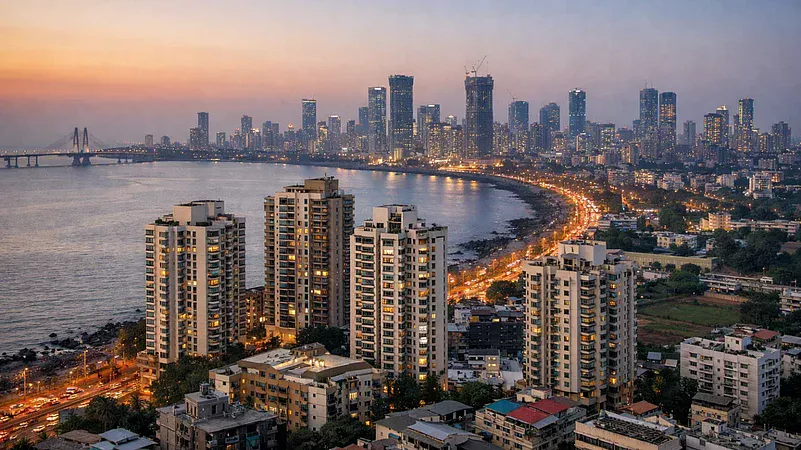
India’s housing market entered 2026 with a notable rise in available homes and steadily increasing property prices, even as buyer activity showed a slight quarterly slowdown. The trend, observed across major urban centres, signals a transition phase in the country’s residential sector one that could reshape how cities expand and how housing demand evolves.

Data for the January–March quarter indicates that the number of homes listed for sale grew both sequentially and annually, while average prices continued to climb. This divergence rising supply alongside moderating demand suggests that developers are betting on long-term urban growth rather than short-term sales cycles. For cities already grappling with land stress and infrastructure gaps, this expansion raises important questions about planning, density, and sustainability. Although demand dipped marginally compared to the previous quarter, it remained higher than last year, pointing to underlying resilience. Analysts attribute the short-term slowdown to seasonal and economic factors rather than a structural decline. However, the uneven spread of demand across cities reveals deeper shifts in urban preference. While some markets recorded sharper pullbacks, others maintained steady interest, indicating that local infrastructure, employment hubs, and connectivity continue to shape housing decisions.

At the same time, a surge in new project launches particularly in southern technology-driven citie has added to the supply pipeline. This expansion is increasingly concentrated in higher-value segments, reflecting a growing tilt towards premium housing. Urban planners caution that such a trend, if left unchecked, could widen affordability gaps, especially in metropolitan regions where land and construction costs are already high. The composition of demand further underscores a pragmatic shift among buyers. Mid-sized homes, particularly two- and three-bedroom units, dominate preferences, suggesting a focus on functionality and long-term occupancy rather than speculative investment. This aligns with post-pandemic housing behaviour, where space, flexibility, and liveability have taken precedence.

Regionally, disparities remain pronounced. In high-cost urban clusters, compact housing continues to dominate due to affordability constraints. In contrast, emerging growth corridors- often supported by new infrastructure such as airports and transport links- are witnessing increased interest in larger homes. Experts note that such infrastructure-led expansion must be carefully managed to avoid unchecked sprawl and environmental degradation. The sustained rise in property values, despite increased supply, indicates disciplined pricing strategies by developers, likely influenced by input costs and cautious optimism about future demand. Yet, this also places pressure on urban inclusivity, as higher prices risk excluding first-time buyers and lower-income households. As India’s housing market matures, the interplay between supply growth, pricing, and demand patterns will be critical. For policymakers and city planners, the focus now shifts to ensuring that expansion aligns with sustainable infrastructure, equitable access, and climate resilience factors that will ultimately define the quality and inclusiveness of urban living in the years ahead.

Also Read : Tata Steel Volumes Reflect Infrastructure Demand
India Real Estate Shifts Despite Demand Dip
RELATED ARTICLES

LEAVE A REPLY

Please enter your comment!
Please enter your name here

- Advertisment -spot_img

Most Popular

Recent Comments

India Building Sector Adapts To Technology Shift

India Building Sector Adapts To Technology Shift

India’s construction sector is undergoing a significant structural shift as digital technologies, sustainability requirements and changing urban needs reshape how buildings and infrastructure are...
Shyam Metalics Investor Meet Draws Industry Attention

Shyam Metalics Investor Meet Draws Industry Attention

A scheduled interaction between a leading metals producer and institutional investors is drawing attention to broader trends shaping India’s manufacturing and infrastructure economy. The upcoming...
Asian Paints Dividend Signals Resilient Housing Demand

Asian Paints Dividend Signals Resilient Housing Demand

A major player in India’s paints and coatings industry has announced a final shareholder payout for FY26, a development that is drawing attention beyond...
SAIL Strategy Signals Shift To Value Steel

SAIL Strategy Signals Shift To Value Steel

India’s largest state owned steel producer is recalibrating its growth strategy for FY27, placing greater emphasis on specialised steel products as infrastructure, manufacturing and...
Jindal Steel Capacity Gains Boost Industrial Efficiency

Jindal Steel Capacity Gains Boost Industrial Efficiency

India’s steel sector is witnessing a new wave of technology led modernisation as producers invest in advanced manufacturing systems designed to improve productivity, product...