HomeLatestIndia Steel Costs Rise As Oil Routes Strain

India Steel Costs Rise As Oil Routes Strain

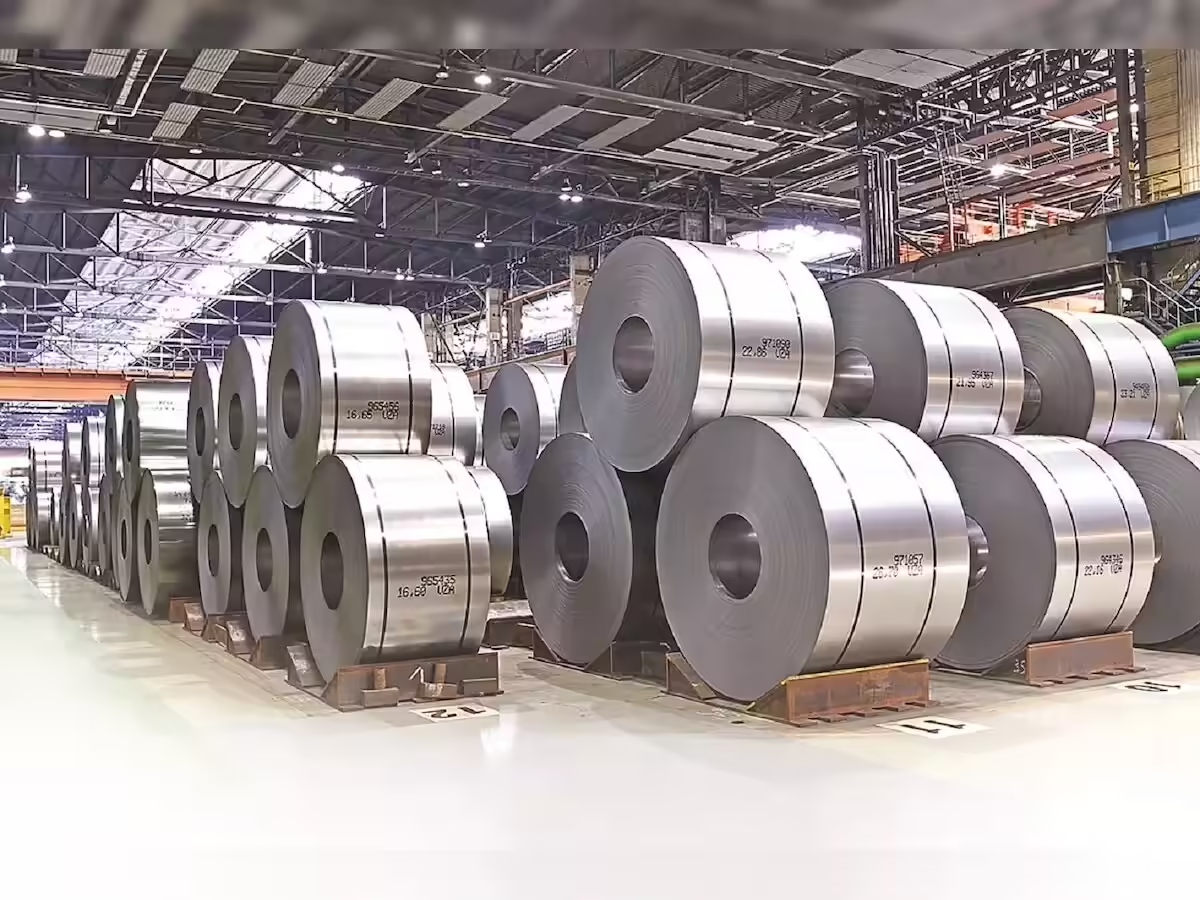
India’s construction and manufacturing sectors may face higher steel prices as conflict-linked disruption in West Asia pushes up oil, freight and raw material costs, exposing how geopolitical shocks can quickly flow into housing budgets, infrastructure spending and factory margins.

Fresh market assessments indicate that tensions involving the US and Iran have lifted shipping insurance premiums, bunker fuel costs and vessel freight rates, all of which are critical to moving iron ore, coking coal, scrap metal and finished steel across global trade routes. Analysts warn that if disruption persists, steel producers and end-users could face a renewed cost cycle. The development places steel costs India at the centre of a wider urban economic challenge. Steel is a core input for metro rail, bridges, industrial sheds, logistics parks, commercial towers and residential projects. Even modest price increases can alter project feasibility, delay procurement decisions or raise final property costs for buyers.Oil prices often act as a multiplier in the steel value chain. Higher crude prices raise transport expenses for mining operations, rail freight, shipping and road logistics. Producers also face more expensive energy inputs, especially in countries where power systems remain linked to fossil fuels. Reports suggest freight rates for Capesize bulk carriers have risen from around $9.80 to $12.20 per tonne since the latest escalation. That makes the current moment significant for India, which imports coking coal, scrap and certain specialised steel inputs. Domestic mills may be partly insulated by local iron ore availability, but imported fuel and raw materials still influence production economics. The steel costs India story is therefore not only about overseas markets, but about domestic inflation risks.

The World Steel Association recently cut its 2026 steel demand growth forecast to 0.3%, citing weaker Middle East demand linked partly to the conflict. While slower demand can sometimes ease prices, supply-chain disruption and higher logistics costs may offset that benefit. For real estate developers, uncertainty can be as damaging as outright inflation. Builders often negotiate contracts months in advance. Volatile steel pricing can complicate bids, squeeze margins and slow new launches, especially in affordable housing where pricing flexibility is limited.Infrastructure agencies may also feel pressure. Public projects with fixed budgets can require redesigns, phased execution or additional funding when input prices rise sharply. In rapidly growing cities, this can delay roads, water systems and transit upgrades.There is a sustainability angle as well. Costlier virgin steel can improve the economics of recycled scrap, efficient structural design and alternative materials. Experts say this may accelerate interest in electric arc furnace steel, modular construction and circular supply chains that use less raw material overall.However, smaller fabricators and MSMEs remain vulnerable. Many engineering workshops, auto suppliers and local construction firms lack hedging tools or large inventories, making them more exposed to sudden commodity swings.

Much now depends on how long freight disruption lasts and whether oil markets stabilise. Recent reports note that crude prices remain elevated but below the worst-case spikes initially feared. For India’s cities and industries, the lesson is increasingly clear: resilience in steel supply will depend not only on domestic capacity, but on diversified sourcing, recycling networks and lower dependence on volatile fossil-fuel trade routes.

Also Read: Jindal Stainless Campaign Targets Fake Steel Risk

India Steel Costs Rise As Oil Routes Strain
RELATED ARTICLES

LEAVE A REPLY

Please enter your comment!
Please enter your name here

- Advertisment -spot_img

Most Popular

Recent Comments

Jindal Steel Capacity Gains Boost Industrial Efficiency

Jindal Steel Capacity Gains Boost Industrial Efficiency

India’s steel sector is witnessing a new wave of technology led modernisation as producers invest in advanced manufacturing systems designed to improve productivity, product...
India Low Carbon Construction Gains Urban Momentum

India Low Carbon Construction Gains Urban Momentum

India’s construction industry is entering a new phase where environmental performance is becoming nearly as important as speed and scale.  The shift comes as India...
Ambuja Outlook Signals Slower Cement Market Growth

Ambuja Outlook Signals Slower Cement Market Growth

India’s cement sector is expected to enter a phase of steadier expansion in FY27, with demand growth likely to ease from recent highs even...
Trump Towers Hyderabad Brings 63 Storey Luxury Housing Project To Kokapet

Trump Towers Hyderabad Brings 63 Storey Luxury Housing Project To Kokapet

A large-scale luxury residential development planned in Hyderabad’s Kokapet district is reinforcing the area's emergence as one of India’s fastest-growing urban real estate corridors....
Marriott Opens Milestone Property In Ranthambore Tourism Hub

Marriott Opens Milestone Property In Ranthambore Tourism Hub

A major hospitality development in Ranthambore is drawing attention to the increasing role of wildlife tourism destinations in India's expanding visitor economy. The opening...