
HomeLatestCoal India Roadmap Reshapes Energy Supply

Coal India Roadmap Reshapes Energy Supply

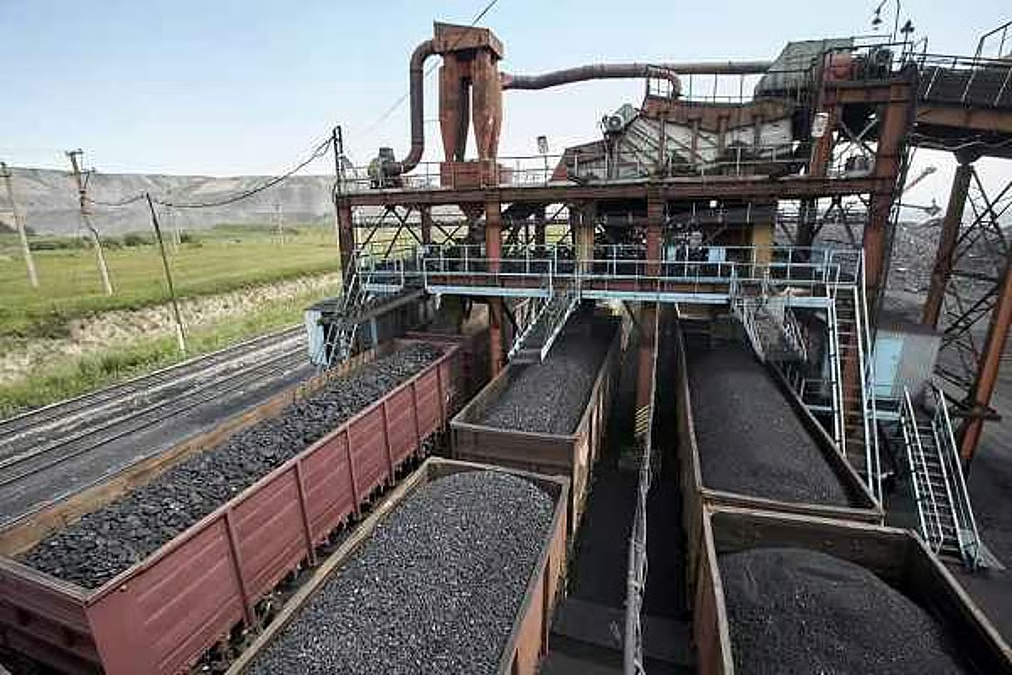
Coal India is preparing a 10-year roadmap aimed at reducing an estimated 243 million tonnes of coal imports through higher domestic production, improved coal quality and lower logistics costs, signalling a major shift in India’s energy supply strategy. The plan matters not only for fuel security but also for industries such as power, steel and cement that rely on stable coal availability to support growth and urban infrastructure. 

According to public reports, the roadmap is expected to run from 2026 to 2036 and focus on replacing what are considered “substitutable” imports with domestic output. Measures under discussion include a detailed audit of import dependence, sector-specific transition plans and a proposed National Washery and Logistics Grid to improve coal processing and transport efficiency. For Coal India, which accounts for more than 80 per cent of India’s domestic coal output, the initiative would reinforce its central role in the country’s industrial economy. The company has also outlined ambitions to raise production to one billion tonnes by 2028-29, a target that would be critical if imports are to be materially reduced. The economic implications are substantial. India remains one of the world’s largest coal consumers, and imported fuel creates pressure on foreign exchange outflows while exposing users to volatile global prices. If domestic supply becomes more reliable and competitively priced, sectors such as cement, steelmaking and electricity generation could gain greater cost visibility for long-term planning.For cities, the consequences are practical. Lower energy volatility can help stabilise construction costs, public transport operations and manufacturing activity.

Cement plants, industrial clusters and freight networks often depend on coal-linked supply chains, meaning changes in sourcing policy can indirectly affect housing delivery, infrastructure schedules and employment.Yet the strategy also raises environmental questions. Increasing domestic coal extraction without parallel investment in cleaner technologies could deepen air quality and land-use pressures in mining regions. Industry experts note that washing coal, improving rail-based transport and modernising equipment can reduce some impacts, but long-term resilience still depends on accelerating renewables and lower-carbon industrial processes.That tension reflects India’s current development challenge: meeting fast-rising energy demand while pursuing climate commitments and cleaner urban growth. Coal remains embedded in the industrial base, but pressure is mounting for companies to reduce emissions intensity even where fossil fuels continue to play a transitional role.For Coal India, execution may prove harder than planning. Land acquisition, environmental clearances, rail evacuation links and mine productivity have historically slowed expansion. Success will likely depend as much on governance and infrastructure coordination as on geological reserves.

The coming decade will show whether import substitution can be achieved without increasing environmental stress or industrial costs. If managed well, the roadmap could strengthen energy security while giving cities and manufacturers more predictable supply. If not, India may remain caught between imported dependence and domestic bottlenecks.

Also Read: Sirca Paints Prepares Annual Results Review

Coal India Roadmap Reshapes Energy Supply
RELATED ARTICLES

LEAVE A REPLY

Please enter your comment!
Please enter your name here

- Advertisment -spot_img

Most Popular

Recent Comments

India Construction Waste Crisis Demands Early Action

India Construction Waste Crisis Demands Early Action

As India accelerates infrastructure delivery and urban expansion,experts are calling for a fundamental shift in how the construction industry addresses material waste. The issue has...
India Construction Growth Climbs Global Rankings Fast

India Construction Growth Climbs Global Rankings Fast

India has strengthened its position as one of the world’s most influential construction markets,with its contribution to global building activity rising sharply amid sustained...
India Infrastructure Push Reshapes Future Urban Networks

India Infrastructure Push Reshapes Future Urban Networks

India is continuing to channel significant public investment into transport networks,industrial capabilities and advanced manufacturing as policymakers seek to sustain economic momentum while preparing...
KD Industries Merger Reflects Circular Economy Push

KD Industries Merger Reflects Circular Economy Push

A proposed corporate restructuring in India’s metal and manufacturing sector is drawing attention to the increasing role of sustainability led business models in industrial...
India Building Sector Adapts To Technology Shift

India Building Sector Adapts To Technology Shift

India’s construction sector is undergoing a significant structural shift as digital technologies, sustainability requirements and changing urban needs reshape how buildings and infrastructure are...