HomeLatestIndia RERA Rules Tested On Structural Defects

India RERA Rules Tested On Structural Defects

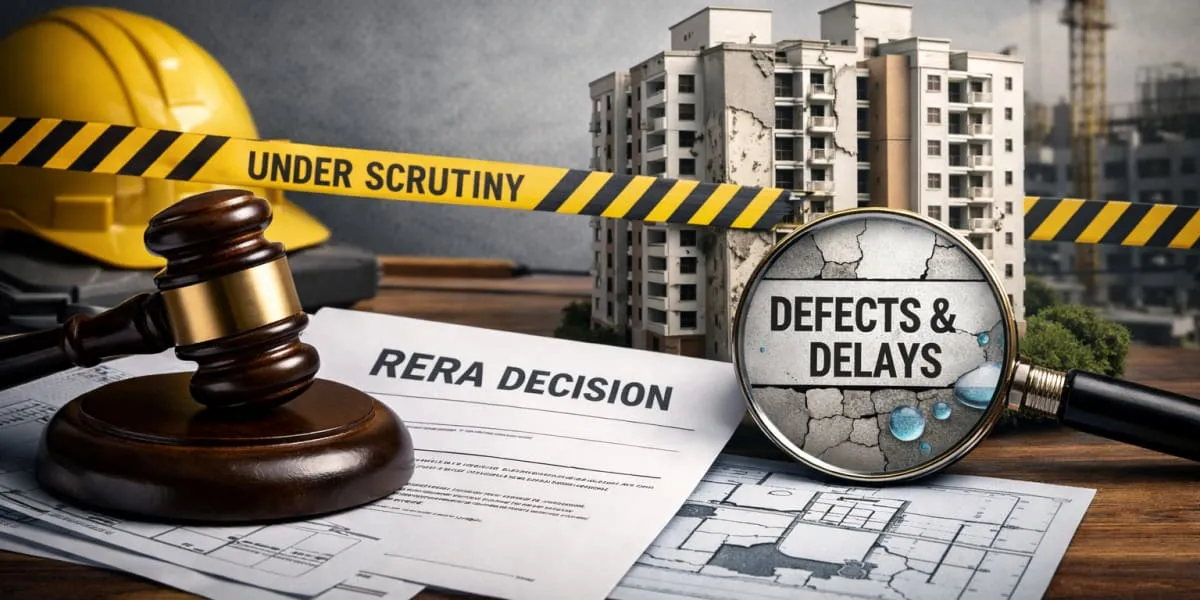
A growing number of urban homebuyers across India are confronting construction quality issues soon after possession, raising fresh questions about the enforcement of structural defects provisions under the Real Estate (Regulation and Development) Act, 2016. From Pune to the National Capital Region, complaints around water seepage, deteriorating finishes and hygiene risks in high-rise developments are prompting closer scrutiny of developer accountability in a rapidly expanding housing market.

In one recent case in Pune, a homebuyer reported leakage within weeks of moving into a newly purchased top-floor apartment. Despite assurances of post-monsoon repairs, the delay highlights a recurring challenge faced by residents timely rectification of faults that may indicate deeper structural defects. Similar grievances have surfaced in high-value projects in northern India, where buyers have publicly flagged crumbling plaster and maintenance lapses inconsistent with premium pricing. At the centre of these disputes lies Section 14(3) of the RERA framework, which places a five-year liability on developers for structural defects and deficiencies in workmanship or services. The law mandates that such issues must be fixed within 30 days of being reported, failing which buyers are entitled to compensation. Urban planners note that while the provision is robust on paper, enforcement often depends on buyers pursuing formal complaints through state regulatory authorities.

The definition of structural defects extends beyond foundational concerns such as columns, beams and slabs to include broader quality lapses and service deficiencies. This wider scope is critical in dense urban environments where vertical expansion and compact construction leave little margin for error. Experts argue that unchecked defects can compromise not only individual homes but also the long-term resilience of entire housing clusters. Recent regulatory developments indicate a gradual tightening of compliance expectations. In southern India, a tribunal ruling reinforced the obligation on developers to either provide mandatory insurance cover or bear repair costs directly. Such decisions are seen as signals that regulators may take a stricter stance on construction quality, particularly as urban populations grow and housing demand intensifies. For homebuyers, due diligence remains a key safeguard. Verifying completion and occupancy certifications, ensuring technical documentation is accessible, and inspecting units thoroughly before possession are increasingly viewed as essential steps. However, industry observers point out that systemic improvements in construction standards and monitoring are necessary to restore trust in the sector.

The issue of structural defects also intersects with broader urban priorities. Poor construction quality can lead to resource inefficiencies, higher maintenance costs and environmental strain due to premature repairs or rebuilding. As Indian cities aim to transition towards more sustainable and climate-resilient development, ensuring durable, high-quality housing will be central to reducing long-term urban risk. With regulatory frameworks in place but unevenly enforced, the coming years may test how effectively institutions can balance rapid real estate growth with accountability. For now, the burden often falls on citizens to assert their rights an imbalance that policymakers may need to address as housing becomes an increasingly critical pillar of urban infrastructure.

Also Read : India Construction Materials Face Supply Shock
India RERA Rules Tested On Structural Defects
RELATED ARTICLES

LEAVE A REPLY

Please enter your comment!
Please enter your name here

- Advertisment -spot_img

Most Popular

Recent Comments

India Property Market Steadies As Costs Rise

India Property Market Steadies As Costs Rise

0
India’s real estate sector is entering a phase of moderated expansion after several years of rapid growth, as rising costs, global instability, and cautious...
India Real Estate Sees Smaller Deal Sizes Surge

India Real Estate Sees Smaller Deal Sizes Surge

0
India’s real estate sector entered 2026 with a notable divergence: transaction activity has increased, but the financial scale of those deals has contracted sharply....
Hyderabad Real Estate Pivots To Shadnagar Corridor

Hyderabad Real Estate Pivots To Shadnagar Corridor

0
Hyderabad’s urban footprint is steadily extending southward, with Shadnagar emerging as a focal point for plotted housing developments. This shift reflects changing buyer preferences...
Bengaluru Office Park Deal Reflects Leasing Stability

Bengaluru Office Park Deal Reflects Leasing Stability

0
A significant capital infusion into a large office campus in Bengaluru is reinforcing the city’s position as a magnet for institutional investment in income-generating...
MHADA Pune Expands Access To Affordable Homes

MHADA Pune Expands Access To Affordable Homes

0
A new round of state-backed housing supply is set to enter the Pune metropolitan region, as 295 apartments are being released under a first-come,...