
HomeLatestDharavi Housing Claims Depend On Ground Units

Dharavi Housing Claims Depend On Ground Units

Mumbai’s ambitious Dharavi redevelopment programme has introduced a stricter framework for determining rehabilitation benefits for residents living on upper floors, placing significant emphasis on documentary proof and the eligibility of ground-floor occupants. The move is expected to affect thousands of families seeking inclusion in one of India’s largest urban renewal projects and could shape future approaches to informal settlement rehabilitation across major cities.

Under a state policy issued in October 2024, residents occupying upper-floor units before the notified cut-off date of November 15, 2022, may qualify for rehabilitation housing outside Dharavi but within the Mumbai Metropolitan Region. The scheme departs from earlier slum rehabilitation models that largely excluded upper-floor households, many of which emerged over decades as population density intensified in Mumbai’s informal settlements. Officials associated with the Dharavi redevelopment exercise said eligibility assessments are being conducted through a layered verification system prioritising documentary evidence. Utility records, registered tenancy or purchase agreements, and government-issued identity documents carrying the upper-floor address are being treated as primary proof of residence.

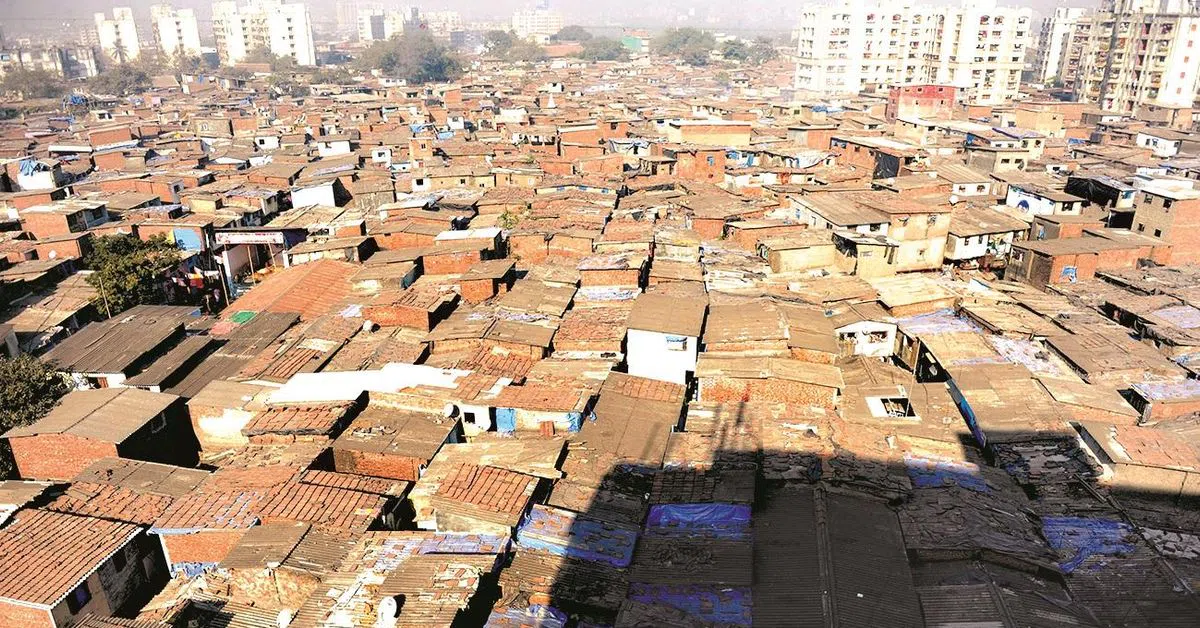
However, complications are emerging for households unable to provide formal records. Authorities have clarified that affidavits considered the weakest category of proof  will only be accepted if the corresponding ground-floor resident is declared eligible under the Dharavi rehabilitation framework. If the lower unit fails scrutiny, dependent upper-floor claims supported solely through affidavits may also be rejected. Urban planners say the rule highlights the longstanding challenge of documenting informal housing arrangements in dense settlements where multiple families often share subdivided structures without formal ownership records. In Dharavi, vertical expansion over time created layered housing patterns that were rarely captured in official municipal databases or property systems.The Dharavi redevelopment project has increasingly become a test case for balancing inclusion with regulatory accountability. While authorities argue that strict documentation norms are necessary to prevent fraudulent claims and multiple allotments, housing rights experts warn that vulnerable households lacking formal paperwork may struggle to access rehabilitation despite years of residence. Officials have also received applications from structures containing more than one dwelling unit on a single upper floor.

In such cases, separate families must independently produce documentary proof under higher verification categories. Alternatively, they may seek recognition collectively as one household through the affidavit route, subject to certification by an eligible ground-floor occupant.The policy further limits rehabilitation to one home per family and excludes applicants already benefiting from housing schemes elsewhere within the Mumbai Metropolitan Region. The restriction is intended to curb speculative claims and ensure scarce rehabilitation housing reaches genuinely displaced residents. For Mumbai, the Dharavi rehabilitation process carries implications beyond housing delivery. The project is tied to broader debates around equitable urban redevelopment, land optimisation, infrastructure resilience, and the future of high-density informal settlements in climate-vulnerable cities. As verification exercises continue, the credibility and inclusiveness of the process are likely to remain under close public scrutiny.

Also Read : Mumbai Corridor Opens New Housing Frontiers
Dharavi Housing Claims Depend On Ground Units
RELATED ARTICLES

LEAVE A REPLY

Please enter your comment!
Please enter your name here

- Advertisment -spot_img

Most Popular

Recent Comments

Mumbai Data Centre Land Strategy Gains Momentum

Mumbai Data Centre Land Strategy Gains Momentum

A significant land monetisation strategy linked to digital infrastructure is set to reshape development priorities in the Mumbai Metropolitan Region, as a leading real...
Mumbai Juhu Project Signals Redevelopment Momentum

Mumbai Juhu Project Signals Redevelopment Momentum

A major residential redevelopment initiative has been launched in Mumbai’s Juhu locality, adding fresh momentum to the city’s ongoing urban renewal programme. The project,...
Mumbai Commercial Sale Highlights Premium Office Demand

Mumbai Commercial Sale Highlights Premium Office Demand

A high-value commercial office transaction in Mumbai has once again drawn attention to the resilience of the city’s premium office property market, underlining sustained...
Yamuna Expressway Luxury Housing Gains Fresh Momentum

Yamuna Expressway Luxury Housing Gains Fresh Momentum

The residential landscape surrounding the upcoming Noida International Airport is witnessing another phase of premium housing expansion, with a new luxury project announced along...
UP RERA Approvals Back Planned Urban Expansion

UP RERA Approvals Back Planned Urban Expansion

Uttar Pradesh’s real estate regulator has approved ten new development projects with an estimated investment of around ₹1,412 crore across five districts, signalling continued...