
HomeBricks & MortarCementIndia Cement Sector Faces Slower Profit Growth

India Cement Sector Faces Slower Profit Growth

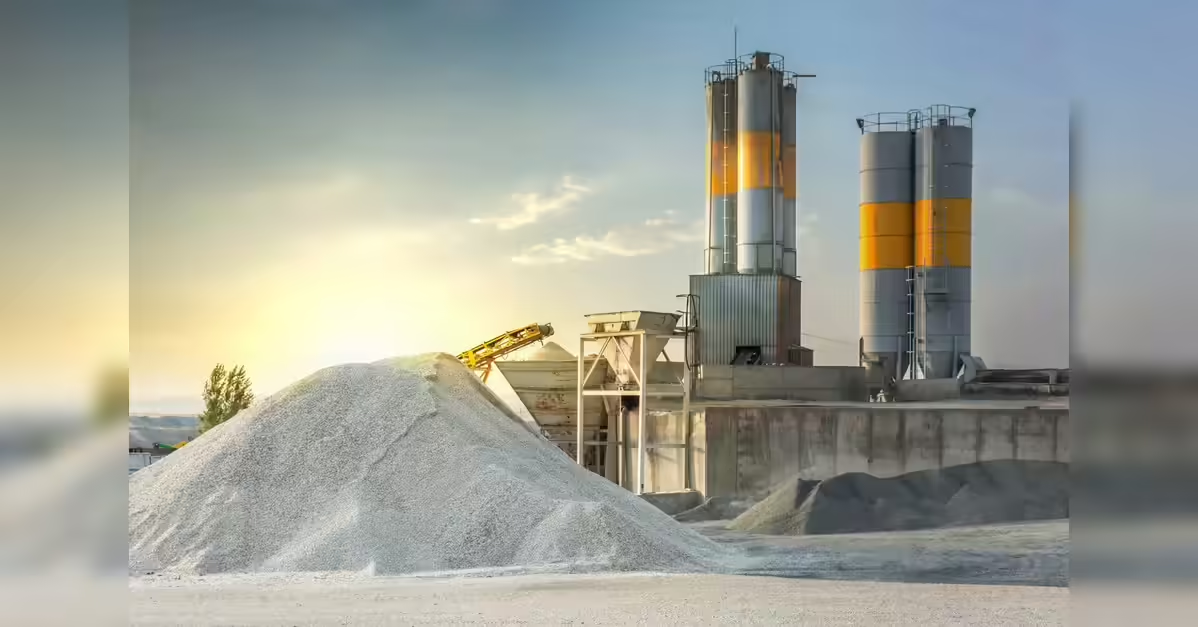
India’s cement industry is facing increasing profitability pressure despite continued infrastructure activity, as rising operational costs and uneven market demand reshape the financial performance of major construction material producers.A leading northern India-based cement manufacturer reported a significant decline in quarterly profit for the January to March period, reflecting mounting cost pressures linked to fuel expenses, logistics and competitive pricing across regional markets.

The latest earnings signal broader stress within the Cement Sector even as government-led infrastructure spending and urban construction projects continue to sustain production volumes.Industry analysts say the divergence between stable demand and weaker profitability highlights the fragile economics of construction material manufacturing in the current environment. While cement consumption remains supported by highways, metro systems, industrial corridors and housing developments, producers are struggling to maintain margins due to elevated energy costs and aggressive market competition.The Cement Sector plays a central role in India’s urban expansion agenda. Cement demand is closely linked to affordable housing projects, commercial real estate construction and public infrastructure upgrades that shape mobility, employment and access to essential urban services. Any prolonged financial weakness within the industry could affect future capacity expansion and infrastructure delivery timelines.

Market observers note that pricing pressure remains particularly intense in northern and western India, where several manufacturers have expanded production capacity in recent years. Increased supply has intensified competition, limiting the ability of companies to pass higher operational costs on to consumers or developers.Urban economists believe this trend may influence future construction economics in rapidly growing cities. If profitability continues to weaken, manufacturers could delay investment in cleaner technologies, logistics upgrades and low-carbon production systems that are increasingly necessary for climate-resilient urban development.At the same time, sustainability experts argue that the sector is under growing pressure to modernise. Cement production remains one of the most carbon-intensive industrial activities globally, and Indian manufacturers are being encouraged to adopt renewable energy integration, alternative fuels and blended cement technologies to reduce environmental impact.Industry specialists also point to transportation and energy infrastructure as key cost drivers affecting the Cement Sector. Rising freight charges, fluctuating petcoke prices and power expenses continue to influence operational efficiency across production hubs. These factors have become increasingly important as urban construction activity expands into tier-two and tier-three cities.

Despite current financial strain, infrastructure demand is expected to remain relatively resilient over the medium term. Public investment in rail, roads, water systems and urban redevelopment projects continues to generate steady cement consumption, particularly in regions witnessing rapid population growth and industrial expansion.However, sector analysts caution that long-term stability will depend on balanced capacity growth, sustainable manufacturing investment and more predictable input costs. Policymakers are also likely to face increasing pressure to support energy-efficient industrial practices as cities pursue lower-emission infrastructure strategies.As India accelerates urbanisation, the Cement Sector’s financial health will remain closely tied to the pace and sustainability of national infrastructure growth. Future industry performance may increasingly depend on whether profitability can coexist with cleaner production methods and affordable construction delivery.

Also Read : Noida Tech Corridor Draws Major R and D Lease
India Cement Sector Faces Slower Profit Growth
RELATED ARTICLES

LEAVE A REPLY

Please enter your comment!
Please enter your name here

- Advertisment -spot_img

Most Popular

Recent Comments

Mumbai Powai Land Lease Supports Data Centre Growth

Mumbai Powai Land Lease Supports Data Centre Growth

A new long-term land lease in Powai for a proposed data centre facility signals continued investment in Mumbai's expanding digital infrastructure ecosystem. The lease,...
Mumbai Real Estate Event Brings Multi City Projects

Mumbai Real Estate Event Brings Multi City Projects

A large-scale residential property exhibition bringing together projects from multiple Indian cities is set to take place in Mumbai, reflecting the changing dynamics of...
Thane Commercial Property Deal Signals Retail Expansion

Thane Commercial Property Deal Signals Retail Expansion

A major commercial property transaction in Thane is reinforcing the city's growing role as a retail and business destination within the Mumbai Metropolitan Region....
Mumbai Worli Redevelopment Expands Urban Renewal Pipeline

Mumbai Worli Redevelopment Expands Urban Renewal Pipeline

A fresh redevelopment project in Worli is adding momentum to Mumbai's ongoing inner-city housing renewal, reflecting the growing preference for rebuilding ageing residential properties...
Bengaluru Hospitality Infrastructure Attracts Strategic Real Estate Capital

Bengaluru Hospitality Infrastructure Attracts Strategic Real Estate Capital

A strategic investment in a major convention and hospitality asset in Bengaluru is highlighting the growing importance of business tourism infrastructure within India's urban...
