
HomeBricks & MortarCementIndia Infrastructure Projects Hit By Global Tensions

India Infrastructure Projects Hit By Global Tensions

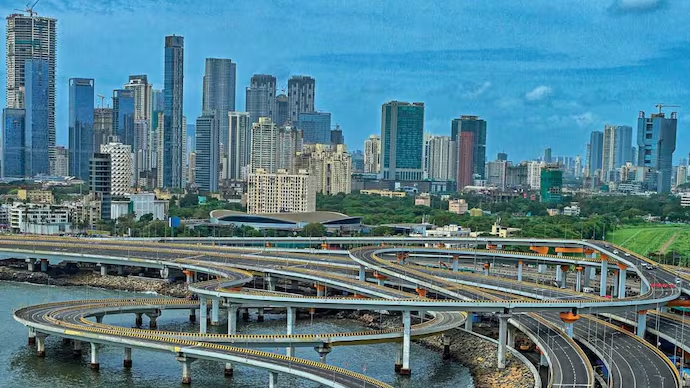
Global conflicts and rising geopolitical instability are beginning to reshape India’s construction economy, with manufacturers of cement, steel, ceramics and industrial chemicals warning of mounting cost pressures and supply uncertainty that could slow urban infrastructure delivery across the country.Industry analysts tracking the construction material manufacturing sector say disruptions in energy markets, shipping routes and mineral supply chains are increasing production costs for essential building inputs used in housing, transport corridors and commercial real estate. The impact is being felt even in domestic projects because Indian manufacturers remain deeply linked to global trade flows for fuel, machinery, chemicals and raw materials.

The concern comes at a time when India is accelerating investments in urban expansion, affordable housing and climate resilient infrastructure. Developers and contractors working on large scale city projects are already facing fluctuating procurement costs, particularly for steel, aluminium, cement additives and imported equipment components. Construction material manufacturing firms are now recalibrating sourcing strategies to manage financial risks associated with prolonged global instability.Experts in industrial logistics note that war-related disruptions often trigger spikes in freight insurance, fuel prices and maritime transport costs. These increases eventually move through the supply chain and raise the cost of urban construction. For rapidly growing Indian cities, this can translate into delayed infrastructure execution, revised project budgets and pressure on housing affordability.Urban economists say the effects extend beyond construction sites.

Escalating material costs influence public infrastructure financing, municipal spending priorities and private sector investment decisions. If input inflation persists, city authorities may struggle to maintain timelines for metro systems, water networks and climate adaptation projects that depend heavily on steel and cement intensive construction.The construction material manufacturing industry is also facing pressure to maintain sustainability commitments while managing volatile energy prices. Several manufacturers have increased investment in renewable power, waste heat recovery and alternative fuels to reduce exposure to imported fossil fuels. Sector observers believe these measures could improve long-term resilience, particularly as global supply chains become increasingly uncertain.At the same time, smaller manufacturers remain vulnerable to financial shocks because of limited access to diversified sourcing networks and higher borrowing costs. Industry bodies have reportedly urged policymakers to strengthen domestic mineral processing, improve logistics infrastructure and encourage circular construction practices that reduce dependence on imported materials.

Urban planners argue that the present volatility highlights the importance of localised supply ecosystems and resource efficient construction models. Greater use of recycled aggregates, low carbon cement alternatives and regional manufacturing clusters could help cities reduce exposure to international disruptions while lowering environmental impact.As geopolitical tensions continue to influence commodity markets, the construction material manufacturing sector is expected to remain under close scrutiny. For India’s urban economy, the challenge will be balancing infrastructure growth with cost stability, supply security and sustainable development goals in an increasingly unpredictable global environment.

Also Read : Jindal Stainless results reflect infrastructure demand
India Infrastructure Projects Hit By Global Tensions
RELATED ARTICLES

LEAVE A REPLY

Please enter your comment!
Please enter your name here

- Advertisment -spot_img

Most Popular

Recent Comments

India Cement Producers Split On Capacity Growth

India Cement Producers Split On Capacity Growth

India’s cement industry is entering a phase of uneven investment strategy, with major producers taking sharply different approaches to expansion as urban infrastructure demand...
India Infrastructure Output Supported By Steel Demand

India Infrastructure Output Supported By Steel Demand

India’s core infrastructure sectors recorded modest growth in April, signalling a slower start to the financial year even as demand for cement, steel and...
Mumbai Midtown Project Signals Shift In Housing Materials

Mumbai Midtown Project Signals Shift In Housing Materials

A large residential development in Nalasopara West has become the latest indicator of how suburban housing markets around Mumbai are reshaping construction supply chains,...
India To Add 40 Percent APAC Office Supply

India To Add 40 Percent APAC Office Supply

India is set to emerge as the dominant contributor to new Grade A office development across the Asia-Pacific region in 2026, underlining the country’s...
Noida INOXGFL Eyes Rs 5000 Crore Green Energy Deal

Noida INOXGFL Eyes Rs 5000 Crore Green Energy Deal

India’s fast-growing renewable energy sector could witness another major consolidation move as a leading clean energy conglomerate emerges as the frontrunner to acquire a...
