
HomeLatestIndia Green Steel Transition Shapes Urban Growth

India Green Steel Transition Shapes Urban Growth

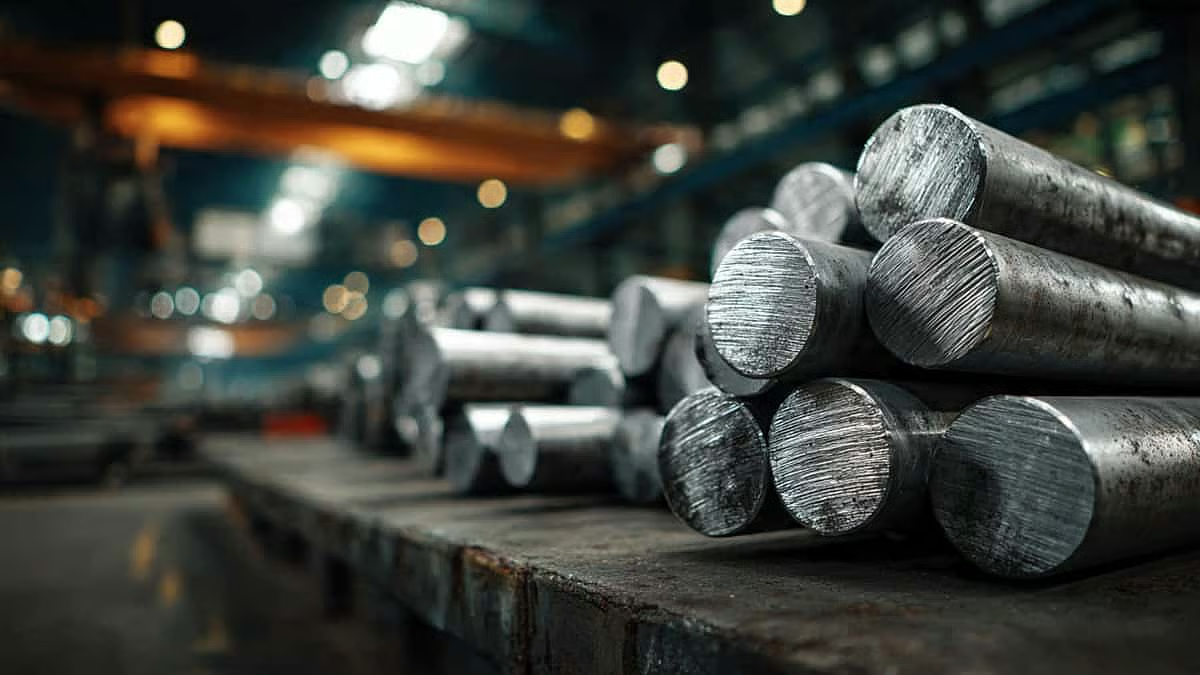
India’s transition towards low-emission steel production is gaining renewed policy and industry attention as researchers and infrastructure planners increasingly warn that conventional steelmaking could become one of the country’s largest urban carbon challenges over the next decade.

New academic assessments examining India’s industrial trajectory suggest that cleaner steel technologies may play a decisive role in reducing emissions linked to construction, transport and manufacturing growth. The findings arrive at a time when Indian cities are expanding rapidly through large-scale housing, metro rail, logistics and industrial corridor projects that depend heavily on steel-intensive materials.The debate around green steel has moved beyond industrial policy into the centre of urban development planning. Steel production remains one of the most carbon-intensive manufacturing activities globally, largely due to its dependence on coal-based blast furnaces. As India continues to urbanise, experts warn that rising steel demand could sharply increase industrial emissions unless production methods evolve simultaneously.Industry analysts estimate that India’s steel consumption will continue climbing alongside infrastructure investment and real estate expansion. However, urban sustainability specialists argue that future construction systems must increasingly account for the embedded carbon generated during material production, not just emissions from buildings after completion.Green steel technologies broadly involve the use of renewable energy, hydrogen-based processing, electric arc furnaces and higher scrap recycling rates to lower carbon output. While these technologies remain expensive and infrastructure-intensive, policy researchers believe India possesses long-term advantages due to its growing renewable energy sector and expanding clean energy investments.The shift also carries economic implications beyond climate targets. Global markets, particularly in Europe and other export-driven economies, are introducing stricter carbon-related trade regulations that may affect traditional steel exporters. Indian manufacturers could face increasing pressure to demonstrate lower-emission production systems if they aim to remain globally competitive.

Urban economists say the transformation may reshape industrial employment patterns, logistics systems and energy infrastructure over the coming decade. Cleaner steel production requires significant investments in renewable electricity networks, storage systems, recycling ecosystems and transport corridors capable of supporting new industrial supply chains.
At the city level, the move towards green steel could influence public procurement policies for transport infrastructure, affordable housing and civic construction projects. Several urban policy experts argue that government-funded infrastructure may eventually prioritise low-carbon building materials as municipalities adopt climate resilience targets and emissions accounting frameworks.At the same time, challenges remain substantial. India continues to rely heavily on coal-based industrial systems, while access to affordable green hydrogen and high-quality scrap metal remains limited. Financing constraints and technology transfer barriers could also slow the pace of transition for smaller manufacturers.

Still, planners increasingly view the green steel transition as central to balancing industrial expansion with climate resilience. As India pursues large infrastructure ambitions, the debate is no longer whether steel demand will rise, but whether the country can decouple urban growth from the environmental costs traditionally associated with heavy industry.

Also Read : India Steel Stocks Defy Seasonal Demand Slowdown
India Green Steel Transition Shapes Urban Growth
RELATED ARTICLES

LEAVE A REPLY

Please enter your comment!
Please enter your name here

- Advertisment -spot_img

Most Popular

Recent Comments

South India Steel Capacity Could Reshape Industrial Growth

South India Steel Capacity Could Reshape Industrial Growth

South India’s steel industry is entering a period of expansion, with installed crude steel capacity reaching approximately 46 million tonnes and production touching 31...
Shree Cement Earnings Test Its Green Growth Strategy

Shree Cement Earnings Test Its Green Growth Strategy

Shree Cement’s falling profitability has raised fresh questions about whether rising sales, energy efficiency and sustainability investments can deliver stronger returns in India’s cement...
India Cement Industry Sees Uneven Growth Amid Inflation

India Cement Industry Sees Uneven Growth Amid Inflation

India’s cement industry is heading towards a gradual demand recovery, but rising fuel and freight expenses could limit earnings growth in the coming quarters....
Pune Real Estate Sees Shift Towards Plotted Projects

Pune Real Estate Sees Shift Towards Plotted Projects

Pune’s property market is seeing fresh efforts to attract buyers towards plotted developments, with Krisala Developers introducing a new campaign for its 63-acre Land...
M SANVI Expands Housing Choices Amid Changing Demand

M SANVI Expands Housing Choices Amid Changing Demand

Delhi-NCR’s residential market is facing a changing set of buyer priorities, with demand for larger homes running alongside concerns about affordability and household budgets....
