HomeBricks & MortarCementPunjab Cement Plant Proposal Faces Local Resistance

Punjab Cement Plant Proposal Faces Local Resistance

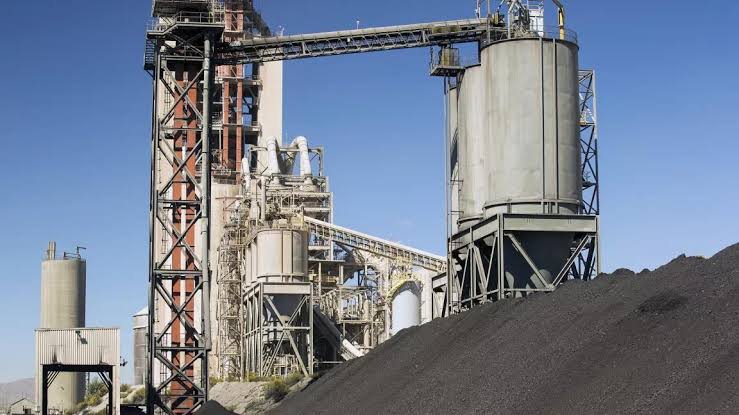
A proposed Cement Plant project in Punjab’s Bathinda region has become the focus of growing community opposition,with several village councils formally expressing concerns over the location and potential impacts of the industrial development.

The emerging dispute highlights a broader challenge facing rapidly developing regions across India balancing industrial investment with environmental protection, public health considerations and local participation in land use decisions.The proposed facility is planned along the Bathinda Mansa corridor, an area characterised by agricultural activity and rural settlements. In recent weeks, local governing bodies have reportedly adopted resolutions raising objections to the project, signalling increasing public scrutiny of industrial developments that could alter the environmental and economic character of surrounding communities.While industrial projects are often associated with employment generation and economic activity, residents and local representatives have questioned whether adequate attention has been given to long term environmental and social implications. Concerns reportedly centre on air quality, dust generation, increased freight movement and the potential effect on agricultural land and water resources.The debate reflects a wider shift in how infrastructure and industrial proposals are assessed across India. Urban planners and sustainability specialists note that communities are increasingly demanding transparency around environmental assessments, resource consumption and cumulative impacts before major projects receive final approval. Public participation, once treated as a procedural requirement, is becoming a more significant factor in determining whether developments gain long-term social acceptance.

The Cement Plant proposal also arrives at a time when India’s cement sector is expanding capacity to meet rising demand from housing construction, transport infrastructure, industrial parks and urban development projects.Demand for building materials is expected to remain strong as cities continue to grow and governments invest in roads, rail networks and public infrastructure.However, experts point out that the location of industrial facilities is becoming as important as their economic contribution. Modern planning frameworks increasingly emphasise compatibility with existing land uses, environmental carrying capacity and resilience to climate-related stresses.Projects that fail to address local concerns at an early stage often face delays, legal challenges or prolonged public opposition.From a governance perspective, the developments in Bathinda underline the growing role of local institutions in shaping development outcomes.Village councils and community bodies are emerging as important stakeholders in discussions around industrial expansion, particularly where projects intersect with agricultural livelihoods and environmental resources.

Environmental analysts also note that the Cement Plant sector faces increasing expectations to reduce emissions,improve resource efficiency and adopt cleaner technologies as India advances its climate commitments.Communities are therefore evaluating proposed facilities not only through an economic lens but also through their environmental footprint and long term sustainability.As regulatory processes continue,attention is likely to focus on environmental clearances, public consultation mechanisms and the project’s ability to address community concerns.The outcome could provide an important case study for how future industrial developments are planned in regions where economic growth,environmental stewardship and citizen participation increasingly need to move together rather than compete with one another.

Also Read : Ramco Cements Updates Leadership Structure For Growth
Punjab Cement Plant Proposal Faces Local Resistance
RELATED ARTICLES

LEAVE A REPLY

Please enter your comment!
Please enter your name here

- Advertisment -spot_img

Most Popular

Recent Comments

India Cement Demand Growth Enters Moderate Phase

India Cement Demand Growth Enters Moderate Phase

India’s construction materials sector may be entering a period of steadier expansion after several years of strong momentum,with industry projections indicating that Cement Demand...
India Steel Construction Supports Faster City Building

India Steel Construction Supports Faster City Building

India’s construction sector is increasingly examining alternative building approaches as cities confront rising population pressures,climate risks and growing infrastructure demands. The discussion comes at a...
India Steel Demand Growth Shapes Global Markets

India Steel Demand Growth Shapes Global Markets

India is increasingly being viewed as the most significant source of future growth in global steel consumption,as large scale infrastructure investment,housing construction and industrial...
Jindal Steel Secures Long Term Renewable Energy

Jindal Steel Secures Long Term Renewable Energy

A major Indian steel producer has entered into a long duration renewable electricity arrangement aimed at securing clean power for its industrial operations over...
Dalmia Bharat Expands Cement Capacity For Growth

Dalmia Bharat Expands Cement Capacity For Growth

One of India’s leading cement manufacturers is preparing for a significant expansion phase,backed by plans to raise fresh capital and substantially increase production capability...