HomeLatestIndia Recycled Metal Supply Risks Urban Growth

India Recycled Metal Supply Risks Urban Growth

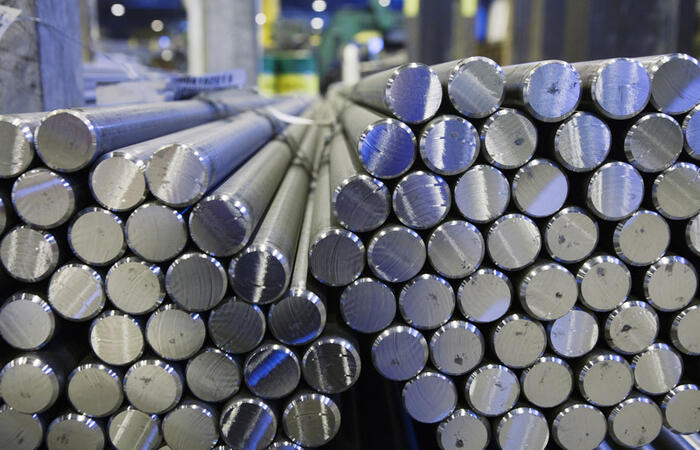
India’s manufacturing sector is assessing the implications of Europe’s tightening controls on metal scrap exports,with industry stakeholders warning that new environmental compliance requirements could reshape global recycling flows and increase costs for domestic producers.

The proposed measures are expected to influence supplies of recycled steel and aluminium that support India’s expanding infrastructure, housing and clean energy industries,making the issue significant for both industrial competitiveness and sustainable urban development.The European Union is moving towards stricter oversight of metal scrap exports under revised waste shipment regulations designed to ensure recyclable materials are processed in environmentally responsible facilities. Countries importing European scrap will be required to demonstrate that their recycling systems meet defined environmental standards before shipments can continue.The policy reflects Europe’s broader ambition to retain valuable secondary raw materials within a circular economy while preventing environmentally harmful waste management practices abroad.For India, the development arrives as recycled metals are becoming increasingly important in reducing industrial emissions.Steel produced from scrap generally consumes far less energy than steel made from iron ore through conventional blast furnace routes,making recycled inputs a key component of national decarbonisation efforts.Aluminium recycling similarly offers significant reductions in energy use compared with primary production, reinforcing the role of secondary materials in cleaner manufacturing.

Industry experts indicate that Metal Scrap Exports from Europe have historically supplemented India’s growing demand for recycled raw materials, particularly among electric arc furnace operators and secondary metal processors.Should access become more restricted, manufacturers may face tighter supplies, greater price volatility and increased dependence on alternative international markets.Such pressures could ultimately influence construction costs,engineering projects and urban infrastructure investments that rely heavily on steel and aluminium products.The evolving regulatory landscape also exposes a broader structural challenge. While India has expanded domestic recycling capacity in recent years, experts believe further investment is needed in modern collection systems, material segregation,traceability and environmentally compliant processing facilities. Strengthening these areas would not only improve resource efficiency but also position Indian recyclers to satisfy emerging international sustainability benchmarks.Urban planners note that reliable access to recycled metals is increasingly essential as cities pursue lower-carbon buildings, mass transit systems, renewable energy infrastructure and circular construction practices.Disruptions in global Metal Scrap Exports could therefore have implications beyond manufacturing, potentially affecting the affordability and pace of sustainable infrastructure projects across rapidly urbanising regions.

Policy specialists suggest the latest European measures may encourage India to accelerate reforms that support domestic scrap recovery,formalise recycling networks and promote greater use of secondary materials across industry.Expanding urban mining recovering valuable metals from demolished buildings,end-of life vehicles and obsolete equipment could reduce dependence on imported scrap while creating skilled employment within the circular economy.As international trade increasingly incorporates environmental performance alongside commercial considerations,India’s response is likely to focus on strengthening recycling standards,diversifying raw material sources and improving resource security.The outcome will influence not only industrial resilience but also the availability of low carbon materials needed to build more sustainable,climate resilient cities.

Also Read : India Electrical Steel Imports Face Trade Review
India Recycled Metal Supply Risks Urban Growth
RELATED ARTICLES

LEAVE A REPLY

Please enter your comment!
Please enter your name here

- Advertisment -spot_img

Most Popular

Recent Comments

Odisha Steel Capacity Set to Reshape Industrial Growth

Odisha Steel Capacity Set to Reshape Industrial Growth

Odisha is preparing for a major expansion of its metals economy, with officials projecting installed steel capacity could reach 150–180 million tonnes within five...
SAIL Coking Coal Project Links West Bengal Blocks

SAIL Coking Coal Project Links West Bengal Blocks

Steel Authority of India Ltd (SAIL) and Bharat Coking Coal Ltd (BCCL) have agreed to jointly develop two adjoining coking coal blocks in West...
India Steel Output Gains As Global Production Slips

India Steel Output Gains As Global Production Slips

India’s steel industry continued to expand in August even as global crude steel production contracted, highlighting the country’s growing role in the international steel...
India Orders Captive Coal Plants to Boost Grid Supply

India Orders Captive Coal Plants to Boost Grid Supply

India is turning to its industrial captive power base as electricity demand remains unusually high for September, with 112 coal-based generating stations ordered to...
Andhra Pradesh Clears Land for Cement Expansion

Andhra Pradesh Clears Land for Cement Expansion

Andhra Pradesh has approved 250 acres for the expansion of an integrated cement facility in YSR Kadapa district, enabling planned production capacity to reach...