HomeBricks & MortarCementIndia Cement Growth Faces Rising Input Costs

India Cement Growth Faces Rising Input Costs

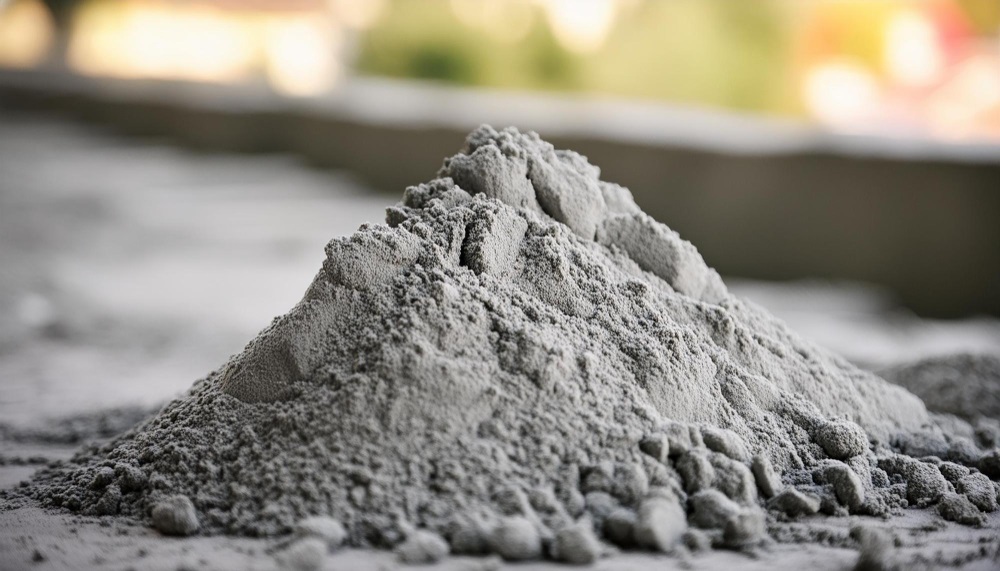
India’s cement market is showing a widening gap between physical demand and financial performance, with The Ramco Cements reporting a sharp profit decline in the June quarter despite higher sales volumes. Consolidated net profit fell 63.3% year-on-year to ₹31.23 crore, while total income increased 9.6% to ₹2,279.79 crore.

The result highlights the pressure that fuel, logistics and other input costs can place on construction economics even when cement demand remains resilient.The numbers point to a difficult operating environment for the India cement market. Profit before tax fell 64.8% to ₹40.39 crore, while earnings before exceptional items and tax dropped to ₹27.77 crore from ₹114.87 crore a year earlier. A ₹12.62 crore exceptional gain from the sale of surplus land provided some support to reported earnings, but did little to change the underlying margin pressure.Operational volumes were stronger. Cement sales rose about 12% to 4.48 million tonnes during the quarter, with capacity utilisation improving to 70% from 68%. Yet EBITDA declined 22% to ₹314 crore and EBITDA per tonne fell to roughly ₹681 from ₹981.

The divergence suggests that additional volumes are not currently translating into equivalent earnings because cost inflation is absorbing much of the benefit.Fuel and power remain central to that equation. Combined power and fuel expenditure increased to around ₹1,326 per tonne of cement from ₹1,222 a year earlier. Higher diesel and polymer costs also affected logistics and packaging. A new mineral-bearing land tax in Tamil Nadu added another cost burden, according to the company’s results commentary.For cities, the implications are broader than one company’s quarterly earnings. Cement is a basic input for housing, roads, water infrastructure, metro systems and commercial construction. When production costs rise faster than selling prices, the pressure can eventually reach project budgets, contractors and developers. That can make affordable housing and public infrastructure harder to deliver within fixed financial allocations.The quarter also underlines why decarbonisation and cost efficiency increasingly overlap. Waste-heat recovery systems can reduce the amount of purchased energy required by cement plants, while renewable electricity and greater use of alternative fuels can lower exposure to fossil-fuel volatility.

The company reported green-energy usage at 37% in the quarter, up from 31% a year earlier, with additional waste-heat recovery capacity planned.Expansion remains on the agenda, with FY27 capital expenditure maintained at about ₹800 crore and plans to raise cement capacity towards 31 million tonnes through debottlenecking and brownfield expansion. But the India cement market now faces a more important test than volume growth: whether additional capacity can deliver reliable, reasonably priced material while reducing energy intensity.For urban India, that balance will matter. Infrastructure demand can remain strong, but its long-term value depends on construction materials becoming both economically predictable and progressively less carbon-intensive.

Also Read : India Cement Industry Eyes Bigger Waste Role
India Cement Growth Faces Rising Input Costs
RELATED ARTICLES

LEAVE A REPLY

Please enter your comment!
Please enter your name here

- Advertisment -spot_img

Most Popular

Recent Comments

JK Lakshmi Cement Results Test Construction Demand

JK Lakshmi Cement Results Test Construction Demand

JK Lakshmi Cement’s first-quarter FY27 performance shows how stronger construction demand is not necessarily translating into higher profitability for cement producers. Revenue increased during...
India Steel Operations Draw New GST Attention

India Steel Operations Draw New GST Attention

A ₹51.23 crore GST intimation issued to a Vedanta group iron and steel subsidiary has brought tax compliance back into focus for India’s resource...
India Metal Exports Rise With Clean Energy Trade

India Metal Exports Rise With Clean Energy Trade

India’s metal-processing exports are gaining traction as global investment in electric vehicles, power grids, renewable energy equipment and industrial electrification increases demand for copper,...
India Chemical Sector Enters A New Industrial Phase

India Chemical Sector Enters A New Industrial Phase

India’s chemicals and petrochemicals industry is becoming a larger pillar of the country’s manufacturing economy, with production, industrial clusters and supporting infrastructure expanding over...
India Steel Sector Faces A Cleaner Growth Test

India Steel Sector Faces A Cleaner Growth Test

India’s steel industry closed FY26 with crude steel production of about 168.4 million tonnes, marking a 10.7% increase from the previous year, as infrastructure,...