HomeNewsIndia Cities Sustain Property Demand Amid Global Uncertainty

India Cities Sustain Property Demand Amid Global Uncertainty

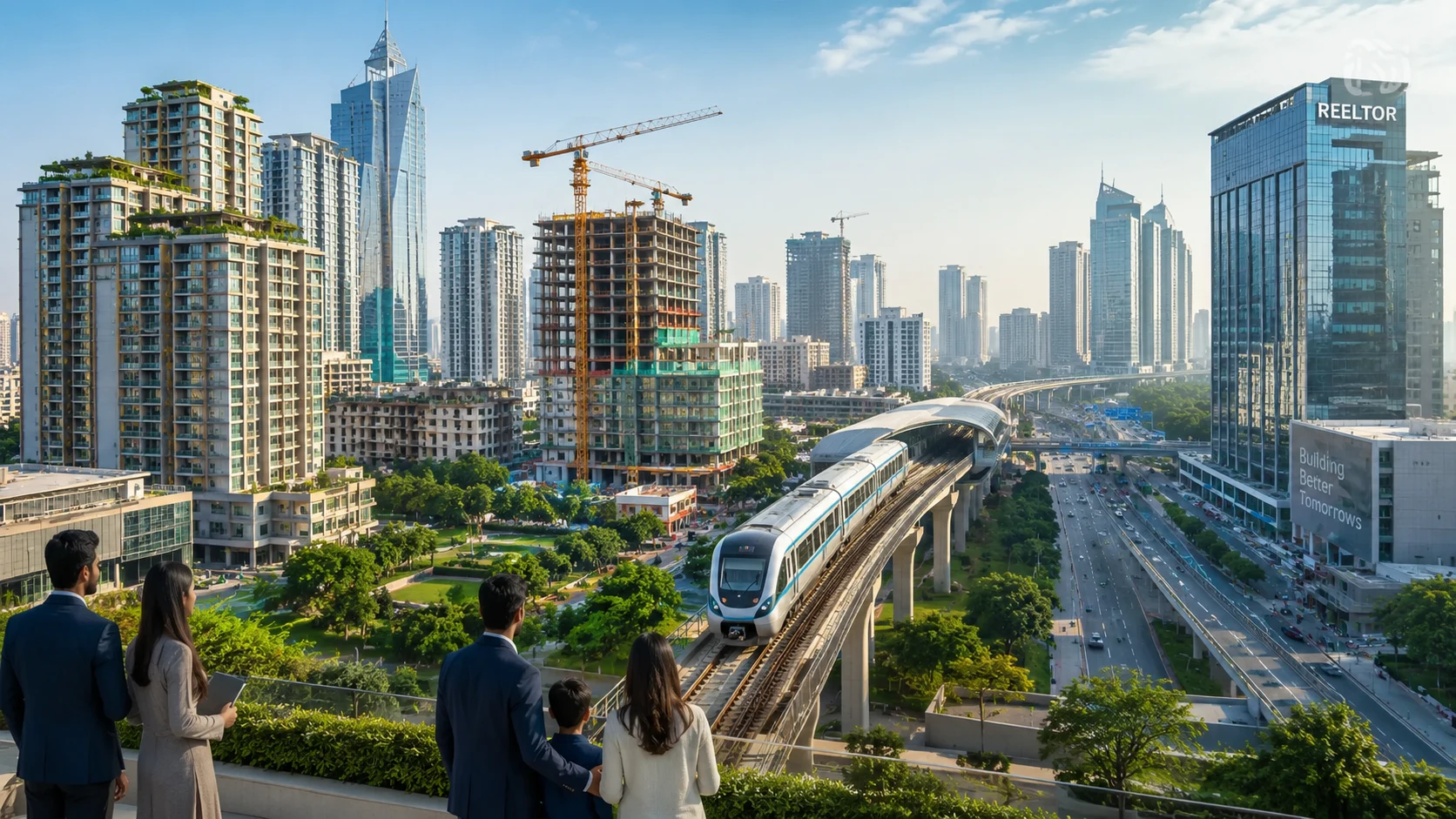
India’s property market is showing resilience despite the continuing West Asia conflict, with investment flows and housing demand holding up in 2026. The immediate shock to developers and buyers appears contained, but higher energy costs, construction inflation and uneven affordability could test the sector’s strength as cities expand and project costs rise.

Capital inflows into Indian real estate are estimated at $3.5–4 billion during the first half of 2026, reflecting continued institutional interest and relatively stronger developer balance sheets. The assessment comes as the sector enters a period where global uncertainty is increasingly interacting with domestic pressures such as land costs, construction expenses and housing affordability. The resilience is not uniform across the market. Office property continues to benefit from demand linked to global capability centres, while industrial and warehousing activity is supported by manufacturing, logistics and domestic consumption. Residential demand is also expected to remain firm in the country’s six largest cities, with projected sales of about 3.55 lakh units during 2026. However, the cost side presents a clearer risk. Persistently high crude oil prices could push project expenses up by roughly 2–3%, particularly affecting developments that are still in early construction stages.

Higher costs could eventually be reflected in property prices or squeeze developer margins, making affordable housing more vulnerable than premium segments. This divergence matters for India’s rapidly growing cities. Premium and luxury housing continues to draw affluent domestic buyers, high-net-worth households and NRIs, while lower-income households remain more exposed to changes in financing and construction costs. Urban expansion, therefore, does not automatically translate into wider access to formal housing. RERA remains an important part of this equation. The Real Estate (Regulation and Development) Act, 2016 was introduced to strengthen transparency, accountability and homebuyer protection, including greater disclosure of project information. As market conditions become more volatile, effective regulatory oversight and timely project delivery will remain important for protecting buyers while maintaining confidence in new housing supply.

Commercial real estate could also face a delayed impact if geopolitical uncertainty causes multinational companies to postpone expansion decisions. Grade A office absorption is nevertheless expected to stay above 90 million sq ft across the top six cities in 2026. For Indian cities, the next phase will depend less on headline demand alone and more on whether growth can remain affordable, financially stable and supported by infrastructure. Keeping housing accessible while controlling construction costs and ensuring compliant project delivery will be critical as urban development moves into a more uncertain global environment.

Also Read: India RERA Faces New Housing Affordability Test
India Cities Sustain Property Demand Amid Global Uncertainty
RELATED ARTICLES

LEAVE A REPLY

Please enter your comment!
Please enter your name here

- Advertisment -spot_img

Most Popular

Recent Comments

Bengaluru Land Auction Tests Commercial Growth Plans

Bengaluru Land Auction Tests Commercial Growth Plans

BENGALURU: A 44.03-acre ITI land parcel in Krishnarajapuram is heading for e-auction with a reserve price of ₹1,685.40 crore, placing a sizeable commercial tract...
Bengaluru Housing Market Faces A New Wealth Divide

Bengaluru Housing Market Faces A New Wealth Divide

A social media account’s account of losing a ₹3.5 crore three-bedroom flat in Mahadevapura to a buyer who allegedly paid the full amount upfront...
India Senior Living Needs Stronger RERA Clarity Ahead

India Senior Living Needs Stronger RERA Clarity Ahead

India’s organised senior living market is moving towards a much larger role in the country’s housing economy, with its value projected to cross ₹1...
Sameera Group Plans RERA Expansion In Tamil Nadu

Sameera Group Plans RERA Expansion In Tamil Nadu

Chennai-based Sameera Group is planning to commit about ₹300 crore to 10 residential developments across Tamil Nadu, widening its footprint beyond major urban centres...
Mumbai Luxury Property Sales Spread Beyond Core Hubs

Mumbai Luxury Property Sales Spread Beyond Core Hubs

Mumbai’s high-end housing market recorded 1,499 registrations worth ₹14,903 crore in the April-June quarter, showing sustained demand for homes priced at ₹5 crore and...