HomeLatestDelhi Redevelopment Tests High Rise Housing Model

Delhi Redevelopment Tests High Rise Housing Model

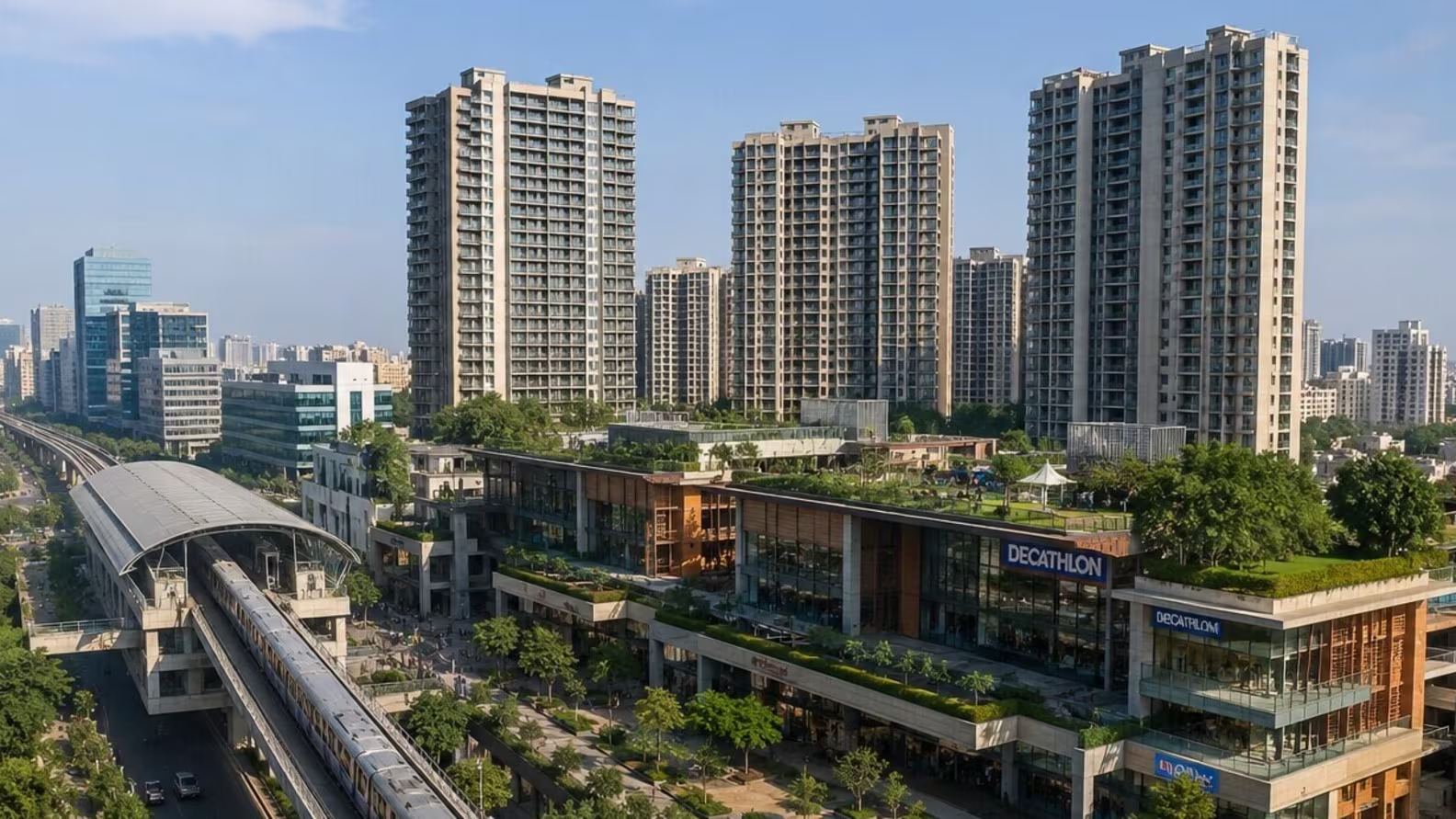
Delhi is preparing to replace ageing government housing in Gulabi Bagh, Bahapur and Kalyanwas with taller residential buildings, bringing land efficiency and transit-linked planning into sharper focus. The proposed redevelopment could increase the number of homes accommodated on existing public land, but questions around resident relocation, project costs, construction timelines and regulatory oversight remain unanswered.

The three sites currently contain government quarters used to accommodate eligible employees. Their redevelopment comes as Delhi moves towards denser development around public transport corridors. Under the Transit-Oriented Development (TOD) framework, higher-density and mixed-use development is encouraged around metro and other mass-transit infrastructure. Delhi’s 2026 TOD regulations specifically provide for planned development within defined areas around Metro and RRTS corridors. For the city, the policy shift has a wider significance. Rebuilding on land that already has an urban use can reduce pressure to open new peripheral areas for housing. If planned well, taller buildings can also support shorter infrastructure networks and better access to public transport. But density alone does not guarantee sustainability. Energy-efficient buildings, shaded pedestrian routes, drainage capacity, green cover, waste management and reliable water supply will determine whether redevelopment improves the neighbourhoods around these colonies.

The proposal also revives a long-standing redevelopment approach in Delhi. Government planning documents have previously identified Kalyanwas and Gulabi Bagh for redevelopment under the TOD concept, indicating that the idea has been under consideration for years rather than emerging entirely as a new planning direction. The people living in the existing quarters will be central to how the scheme is received. Authorities have yet to publicly detail whether temporary accommodation will be arranged, how allotments will be handled during construction or whether residents will return to the redeveloped complexes. Those decisions could determine the social cost of the transition. RERA is another point requiring clarity, although the law primarily regulates real estate projects involving promoters and homebuyers rather than ordinary government accommodation.

The central government reiterates that RERA is designed to protect homebuyers and requires registration where the Act applies. Delhi’s Land and Building Department is responsible for implementing RERA in the capital. Whether any part of these projects falls within its regulatory scope will depend on the eventual development and allotment structure. The redevelopment therefore presents Delhi with an opportunity to make better use of scarce public land without simply maximising built-up area. The next stage will need clear project details, resident safeguards, infrastructure assessments and measurable environmental standards before demolition and construction begin.

Also Read: Sonipat Emerges as NCR Housing Pressure Spreads
Delhi Redevelopment Tests High Rise Housing Model
RELATED ARTICLES

LEAVE A REPLY

Please enter your comment!
Please enter your name here

- Advertisment -spot_img

Most Popular

Recent Comments

Asian Paints Faces Festive Demand And Margin Test

Asian Paints Faces Festive Demand And Margin Test

India’s paint market is heading into the Diwali season with investors looking for a demand recovery after a weak first half of FY27. Major...
India Steel Consumption Growth Set to Shape Cities

India Steel Consumption Growth Set to Shape Cities

India’s steel market is entering another period of expansion, with consumption expected to rise by 7–8% or more over the next few years as...

UltraTech Cement Crosses 2 GW Green Power Mark

UltraTech Cement Crosses 2 GW Green Power Mark

India’s cement industry is moving deeper into a power transition as UltraTech Cement takes its captive green energy capacity beyond 2 GW, with clean...
NCR Housing Sales Expose A Widening Affordability Gap

NCR Housing Sales Expose A Widening Affordability Gap

India’s housing market entered a more selective phase in 2026, with sales across eight major cities holding broadly steady while demand moved towards higher-value...

Raymond Realty Gains From Sustained MMR Housing Demand

Raymond Realty Gains From Sustained MMR Housing Demand

Mumbai’s housing market is showing pockets of strong buyer activity, with Raymond Realty reporting a sharp rise in quarterly sales bookings across its projects...