HomeLatestIndia Real Estate Demand Tests Urban Infrastructure

India Real Estate Demand Tests Urban Infrastructure

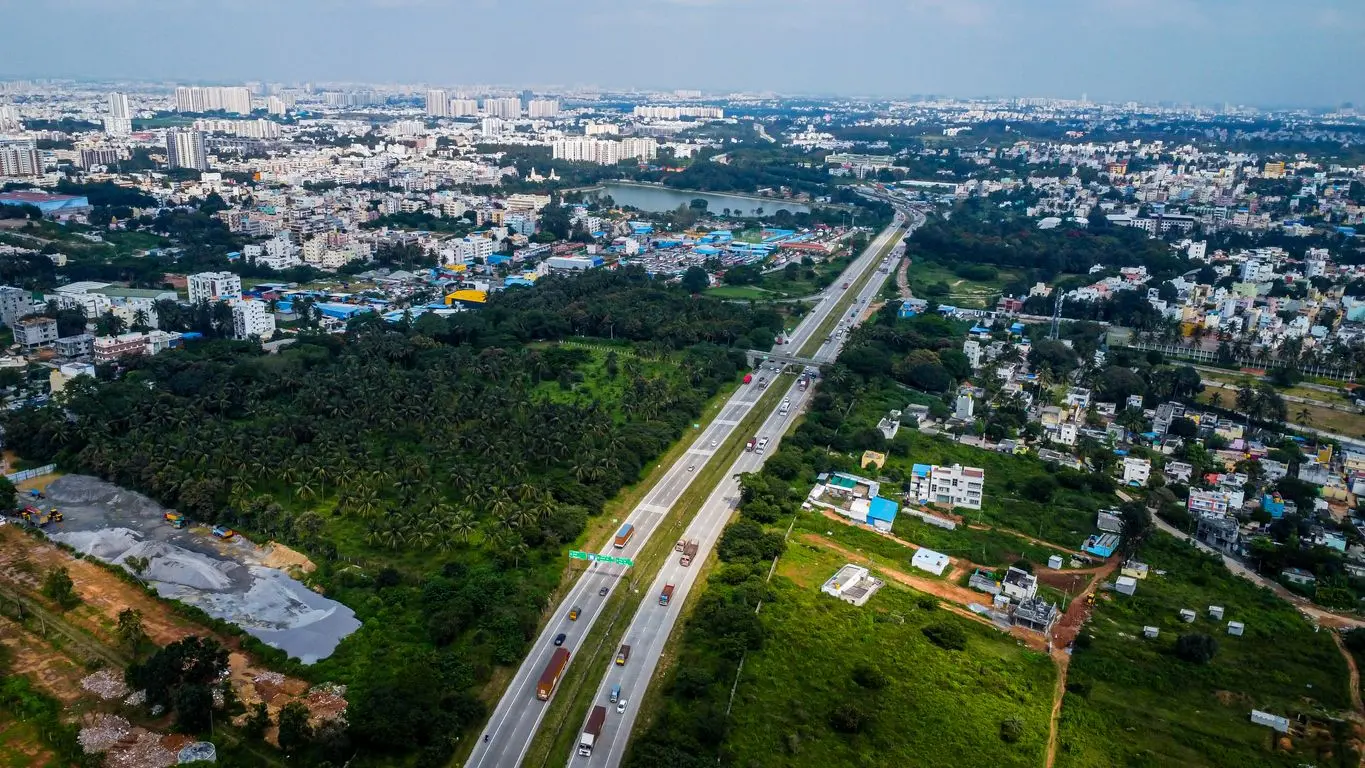
India’s real estate demand is increasingly concentrating in higher-value housing while office leasing reaches new records, signalling a deeper change in how major cities are growing. The shift is supporting construction and investment, but it also raises questions about affordability, transport capacity, land use and whether new development is keeping pace with wider urban needs.

Residential sales across India’s seven largest cities reached 70,631 units in the first quarter of 2026, an 8% year-on-year increase, according to JLL. The strongest momentum came from homes priced at ₹1 crore and above, which represented 71% of sales, compared with 59% in the same quarter last year.  The change is more than a rise in luxury purchases. JLL recorded a 24% decline in sales of homes below ₹1 crore, while sales in the ₹1 crore-plus segment increased 30%. New launches also moved towards costlier properties, with launches above ₹1 crore rising 45% year on year. The ₹1.5–3 crore segment recorded a 134% increase in launches. That premiumisation has an important urban consequence. As developers add larger and higher-priced projects, the availability of housing for middle-income households becomes a critical planning issue. Rising property values can also push demand towards peripheral areas, increasing pressure on roads, public transport, water networks and other civic infrastructure.

Commercial property is expanding alongside housing. CBRE reported 45.5 million sq ft of office absorption during January-June, the strongest half-year performance recorded in its series. Global capability centres accounted for 43% of H1 leasing, while Bengaluru, Delhi-NCR and Mumbai remained major demand centres. The quality of that new office supply is also becoming relevant to urban sustainability. CBRE said 76% of office completions in the second quarter were green-certified, while 73% of leasing activity was concentrated in certified buildings. This indicates that energy performance and environmental standards are becoming more closely connected with occupier demand. 

Residential activity remained substantial in the second quarter, with CBRE reporting more than 61,000 sales alongside about 63,800 new launches. The firm also noted a rising share of high-end apartment sales. For cities, the next phase of real estate demand will therefore be measured not only by sales and office absorption. Housing near employment, reliable public transport, access to schools and healthcare, climate-resilient infrastructure and efficient use of land will increasingly determine whether expansion produces more liveable urban districts.India’s real estate demand remains strong, but its composition is changing. The challenge for planners and developers is to ensure that investment-led growth does not widen affordability gaps or outpace the infrastructure needed to support everyday urban life.

Also Read : India Real Estate Expands Into New Urban Sectors 
India Real Estate Demand Tests Urban Infrastructure
RELATED ARTICLES

LEAVE A REPLY

Please enter your comment!
Please enter your name here

- Advertisment -spot_img

Most Popular

Recent Comments

Palnadu Gains New Cement Capacity As Andhra Expands

Palnadu Gains New Cement Capacity As Andhra Expands

Andhra Cements has begun commercial operations at its expanded grinding facility at Durga Cement Works in Dachepalli, Palnadu district, taking capacity from 1.82 million...

Tamil Nadu Captive Power Plants Face New Grid Role

Tamil Nadu Captive Power Plants Face New Grid Role

Tamil Nadu’s large coal-based captive power plants are being asked to increase electricity generation and place unused capacity into the market as the Centre...

Assam Approves JK Lakshmi Cement Industrial Project

Assam Approves JK Lakshmi Cement Industrial Project

Assam has cleared a proposed Rs. 11,000 crore JK Lakshmi Cement investment, covering one clinker manufacturing facility and four cement grinding units. The decision,...
Arvind SmartSpaces Expands Vertical Housing in Bengaluru

Arvind SmartSpaces Expands Vertical Housing in Bengaluru

Bengaluru’s Sarjapur Road is set to see another high-rise residential development after Arvind SmartSpaces added a 2.5-acre project through a joint development arrangement. The...
Mumbai Zaoba Wadi Redevelopment Brings Homes And Height

Mumbai Zaoba Wadi Redevelopment Brings Homes And Height

A long-delayed redevelopment in Mumbai’s Thakurdwar is moving ahead with Godrej Properties joining Man Infraconstruction Ltd (MICL) and Shreepati Group on a 2.5-acre site....