HomeMarket AnalysisDelhi-NCRDelhi NCR Retail Leasing Signals Uneven Urban Demand

Delhi NCR Retail Leasing Signals Uneven Urban Demand

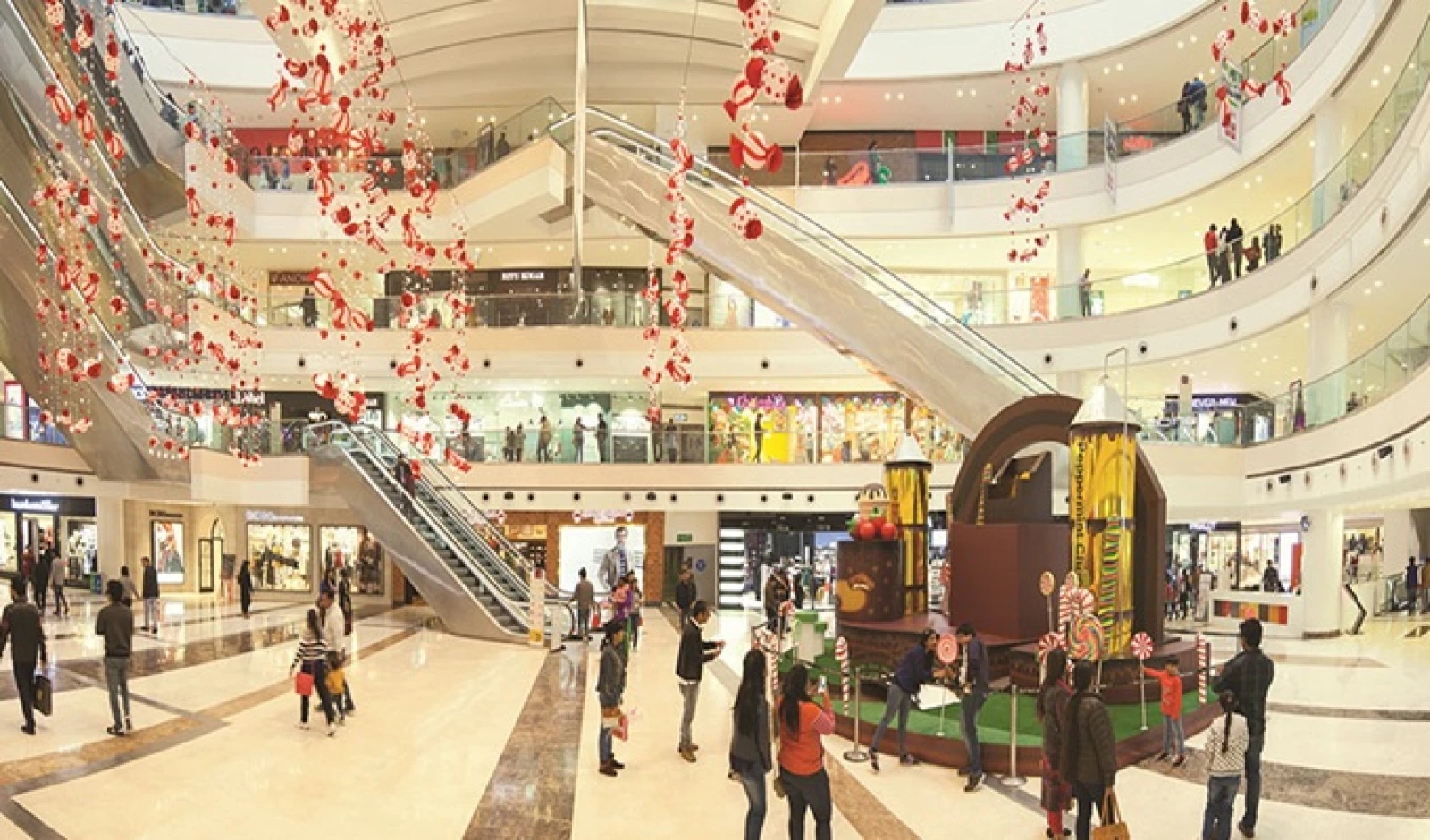
India’s retail property market is showing a sharper divide between high-street locations and shopping malls, with retailers leasing 2.22 million square feet across eight major cities in Q3 2026. While quarterly activity fell from the previous quarter and a year earlier, demand remained broadly stable over the first nine months, pointing to selective expansion rather than a broad-based slowdown.

Main streets captured nearly 68% of quarterly leasing, while malls accounted for about 32%. The shift matters for cities because established retail corridors often depend on existing roads, public transport, pedestrian movement and surrounding mixed-use neighbourhoods. Stronger demand in these areas could increase pressure on already busy streets unless future commercial growth is matched by better mobility and public infrastructure. Delhi NCR, Hyderabad and Mumbai together generated 61% of quarterly leasing. Delhi NCR remained the largest market at 0.55 million square feet, followed by Hyderabad at 0.45 million square feet. Mumbai recorded 0.35 million square feet. Hyderabad was the only one of the three to record sequential growth, while leasing in the other two markets declined from the previous quarter.

The wider numbers show an uneven national picture. Bengaluru recorded 0.24 million square feet, Chennai 0.18 million square feet and Pune 0.21 million square feet. Ahmedabad and Kolkata recorded smaller volumes, although both registered year-on-year growth. Chennai’s leasing was lower sequentially but remained above its level a year earlier, highlighting how retailer demand can vary sharply between quarters. Domestic brands accounted for more than 86% of leasing, indicating that expansion by Indian retailers remains an important source of commercial demand. Fashion, food and beverage, and lifestyle-related businesses together made up more than half of quarterly activity. This mix also reflects changing consumer patterns, where retail increasingly overlaps with dining, entertainment and experience-led destinations. At the same time, the supply constraint is becoming harder to ignore. Grade A mall vacancy fell to 4.8%, while no new Grade A mall space entered the eight-city market for the third consecutive quarter. For retailers, limited availability can restrict expansion choices and push demand towards established high streets. For cities, it raises a different question: whether new retail capacity will be integrated with transport, parking, walking networks and surrounding infrastructure.

Prime high-street rents increased 6.8% year-on-year, although rental gains varied by location. Around 12.7 million square feet of Grade A mall space is expected to enter these markets through 2028, including about 1.35 million square feet during 2026. The next phase of retail leasing will therefore depend not only on how much space is delivered, but where it is built and how efficiently people can reach it. Well-connected, accessible retail districts could support commercial growth without adding unnecessary pressure to already congested urban corridors.

Also Read : Mumbai Wadhwa Group Moves Towards Public Markets
Delhi NCR Retail Leasing Signals Uneven Urban Demand
RELATED ARTICLES

LEAVE A REPLY

Please enter your comment!
Please enter your name here

- Advertisment -spot_img

Most Popular

Recent Comments

India Steel Prices Climb As Construction Demand Returns

India Steel Prices Climb As Construction Demand Returns

India’s steel market is entering a firmer phase, with prices of scrap, ingots, rebar and sponge iron moving higher across key trading centres. The...

UltraTech Pushes Cleaner Power Into Cement Production

UltraTech Pushes Cleaner Power Into Cement Production

UltraTech Cement’s integrated unit in Chhattisgarh has been meeting its full monthly electricity requirement through renewable power and waste heat recovery since April 2026,...
India Industrial Transition Reshapes Cement Sector

India Industrial Transition Reshapes Cement Sector

India’s industrial landscape is seeing a fresh push towards restructuring, with coal resources being assessed for fertiliser production and a major cement consolidation moving...
Dalmia Cement Shifts Tamil Nadu Freight Electric

Dalmia Cement Shifts Tamil Nadu Freight Electric

Tamil Nadu is seeing a shift in how industrial freight moves, with Dalmia Cement deploying 24 heavy-duty electric trucks on the roughly 140-kilometre corridor...

Hyderabad RERA Refund Ends Plot Booking Dispute

Hyderabad RERA Refund Ends Plot Booking Dispute

A Telangana real estate dispute over a ₹1 lakh booking payment has ended after the money was returned to the buyer and the complainant...