HomeBricks & MortarCementUltraTech Pushes Cleaner Power Into Cement Production

UltraTech Pushes Cleaner Power Into Cement Production

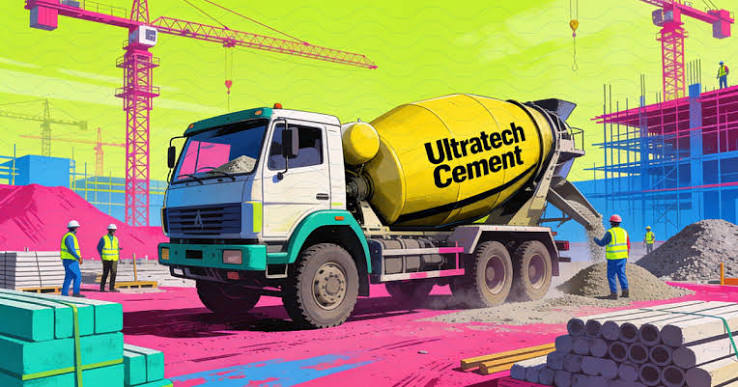
UltraTech Cement’s integrated unit in Chhattisgarh has been meeting its full monthly electricity requirement through renewable power and waste heat recovery since April 2026, marking a significant shift in how energy-intensive cement production can reduce reliance on conventional power.

The development matters beyond a single factory. Cement remains one of the most energy-intensive building-material sectors, and reducing electricity-related emissions can influence the carbon footprint of future housing, transport and infrastructure. UltraTech’s experience also highlights the growing role of renewable power and industrial waste heat in keeping large manufacturing operations running reliably. The unit, commissioned in 2024, has grey cement capacity of 3.3 million tonnes a year. Its electricity requirement is being covered through a combination of renewable energy procurement and Waste Heat Recovery Systems, which generate electricity by recovering heat that would otherwise be lost during manufacturing. 

The wider network shows a similar movement, although progress remains uneven. UltraTech said nearly one-third of its 76 manufacturing units had crossed 50% green-energy utilisation since April, while five units had exceeded 95%. The company is also introducing battery energy storage systems to support greater renewable-power integration.  As of the first quarter of FY27, UltraTech reported 1,897 MW of captive green-energy capacity. This included 1,463 MW from renewable sources such as solar, wind and hybrid systems, alongside 434 MW from waste heat recovery. The company has also said it has not added new captive thermal-power capacity at its integrated units for more than a decade.  For cities and construction markets, the significance lies in what happens upstream. Buildings, roads and urban infrastructure depend heavily on cement, meaning cleaner manufacturing can reduce some of the embedded emissions associated with urban expansion. However, renewable electricity alone does not eliminate cement’s wider carbon burden, particularly emissions generated during clinker production.

That makes efficiency, alternative fuels, lower-carbon materials, waste heat recovery and cleaner electricity complementary rather than standalone solutions. Industry experts increasingly view this combination as necessary as construction demand grows and cities face tighter climate and resource constraints. UltraTech has committed to raising green power’s share of its total electricity mix to 85% by 2030 and 100% by 2050 under its RE100 commitment. The immediate challenge will be extending such Kukurdih green energy performance across more facilities while maintaining reliable production and managing the broader emissions profile of cement manufacturing. 

Also Read : India Industrial Transition Reshapes Cement Sector
UltraTech Pushes Cleaner Power Into Cement Production
RELATED ARTICLES

LEAVE A REPLY

Please enter your comment!
Please enter your name here

- Advertisment -spot_img

Most Popular

Recent Comments

India Steel Prices Climb As Construction Demand Returns

India Steel Prices Climb As Construction Demand Returns

India’s steel market is entering a firmer phase, with prices of scrap, ingots, rebar and sponge iron moving higher across key trading centres. The...
India Industrial Transition Reshapes Cement Sector

India Industrial Transition Reshapes Cement Sector

India’s industrial landscape is seeing a fresh push towards restructuring, with coal resources being assessed for fertiliser production and a major cement consolidation moving...
Dalmia Cement Shifts Tamil Nadu Freight Electric

Dalmia Cement Shifts Tamil Nadu Freight Electric

Tamil Nadu is seeing a shift in how industrial freight moves, with Dalmia Cement deploying 24 heavy-duty electric trucks on the roughly 140-kilometre corridor...

Hyderabad RERA Refund Ends Plot Booking Dispute

Hyderabad RERA Refund Ends Plot Booking Dispute

A Telangana real estate dispute over a ₹1 lakh booking payment has ended after the money was returned to the buyer and the complainant...

Hyderabad Office Leasing Reflects Growing Corporate Demand

Hyderabad Office Leasing Reflects Growing Corporate Demand

Hyderabad’s office market has recorded another large-format commercial lease, with 1.19 lakh sq ft taken up at Phoenix Centaurus under a five-year agreement. The...