HomeUrban NewsKolkataKolkata Debate Puts Infrastructure Before New Housing

Kolkata Debate Puts Infrastructure Before New Housing

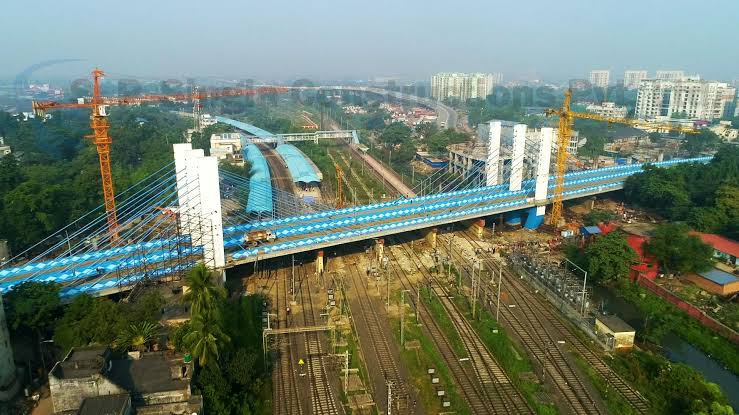
India’s property market is entering a broader phase of expansion, with investment and housing activity increasingly spreading beyond established metropolitan centres. Discussions at the 24th NATCON in Kolkata have highlighted the rising role of Tier II and Tier III cities, but also raised a more important urban question: whether infrastructure and civic capacity can keep pace with new development.

The India real estate growth outlook remains substantial. A CREDAI–ANAROCK assessment puts the market at about $600 billion in 2025, up from $120 billion in 2017, with a projection of $1 trillion by 2030 and nearly $5.8 trillion by 2047. The sector’s contribution to GDP could rise from 6% in 2017 to around 13% by 2030, while employment could reach 30 million.  Yet the expansion is not being driven only by the largest housing markets. Smaller cities are gaining attention alongside data centres, warehousing and hospitality. For households, this could widen the choice of locations, but a lower property price alone does not make an emerging market a viable place to live.

Infrastructure will increasingly determine whether that growth produces functional cities or simply pushes development outward. Roads, public transport, drainage, water supply, power and social infrastructure need to expand alongside housing. Industry discussions in Kolkata have increasingly pointed towards an infrastructure-first approach, reflecting the risks of building large residential clusters before adequate civic systems are available. Housing demand in the major markets also remains significant. Residential sales value across the top seven cities rose from ₹2.35 lakh crore in FY22 to ₹6.10 lakh crore in FY26, while quarterly sales value remained above ₹1.3 lakh crore for seven consecutive quarters. That momentum, however, does not automatically translate into affordability. Recent market data shows a growing concentration of activity in higher-value housing, making access to reasonably priced homes an important test for the next development cycle. The India real estate growth story will therefore depend not just on the value of projects under construction, but on who can afford to live in the cities being created. 

Technology is another part of the shift. Developers are exploring artificial intelligence for planning, construction monitoring, customer engagement and building operations. Its longer-term value will depend on whether it improves delivery, transparency, resource efficiency and maintenance rather than simply becoming another sales tool. For emerging cities, the next stage of property growth therefore carries both opportunity and risk. Better connectivity can create jobs and housing choices, but poorly sequenced expansion can increase congestion, infrastructure stress and environmental pressure. The stronger model will be one where housing follows economic opportunity and public infrastructure while water, mobility, drainage, green space and climate resilience are treated as core urban requirements rather than afterthoughts.

Also Read : Delhi NCR Home Prices Reach New Q3 Highs
Kolkata Debate Puts Infrastructure Before New Housing
RELATED ARTICLES

LEAVE A REPLY

Please enter your comment!
Please enter your name here

- Advertisment -spot_img

Most Popular

Recent Comments

Asian Paints Faces Festive Demand And Margin Test

Asian Paints Faces Festive Demand And Margin Test

India’s paint market is heading into the Diwali season with investors looking for a demand recovery after a weak first half of FY27. Major...
India Steel Consumption Growth Set to Shape Cities

India Steel Consumption Growth Set to Shape Cities

India’s steel market is entering another period of expansion, with consumption expected to rise by 7–8% or more over the next few years as...

UltraTech Cement Crosses 2 GW Green Power Mark

UltraTech Cement Crosses 2 GW Green Power Mark

India’s cement industry is moving deeper into a power transition as UltraTech Cement takes its captive green energy capacity beyond 2 GW, with clean...
NCR Housing Sales Expose A Widening Affordability Gap

NCR Housing Sales Expose A Widening Affordability Gap

India’s housing market entered a more selective phase in 2026, with sales across eight major cities holding broadly steady while demand moved towards higher-value...

Raymond Realty Gains From Sustained MMR Housing Demand

Raymond Realty Gains From Sustained MMR Housing Demand

Mumbai’s housing market is showing pockets of strong buyer activity, with Raymond Realty reporting a sharp rise in quarterly sales bookings across its projects...