
Chennai Distributor Speed-A-Way Earns Nippon Paints India Global Top 20 Recognition

Bengaluru To Host SCHWING Stetter India Largest Innovation Lineup EXCON 2025

Bengaluru is set to host SCHWING Stetter India’s largest-ever showcase at EXCON 2025, unveiling an unprecedented lineup of construction and concrete innovations. Spanning over 7,649 sq m at the BIEC, the exhibition will feature next-generation machinery, AI-enabled safety systems, clean-energy solutions, and advanced digital platforms. The showcase highlights India’s push for faster, greener, and more efficient infrastructure, offering visitors an immersive glimpse into the future of sustainable and technologically advanced construction practices.
The centerpiece of the company’s participation will be the SCHWING Innovation Booth, an interactive space designed to demonstrate how intelligent machines, automated workflows, and eco-conscious material solutions can collectively transform construction operations. Developed in collaboration with global technology partners, the exhibit reinforces the company’s focus on integrating performance, safety, and sustainability, setting a benchmark for future-ready infrastructure development in India.Speaking about the significance of the exhibition, VG Sakthikumar, Chairman and Managing Director of SCHWING Stetter India, stated, “India is asking for taller, faster, and greener infrastructure – and at EXCON 2025, we are answering that call. This is our most ambitious showcase ever, where visitors can experience the next era of concrete and construction technology in a single space.”
Visitors will encounter several India-first innovations, including clean-energy machinery concepts, AI-assisted operational tools, next-generation digital control interfaces, and immersive engineering visualisations. The exhibition also offers a narrative journey through the company’s technological evolution, illustrating how smart construction solutions can reduce carbon emissions, enhance worker safety, and improve productivity across project sites.Industry analysts suggest that as India scales up its urban infrastructure, adoption of digital and low-carbon construction technologies is critical. “Advanced machinery with integrated automation and eco-friendly systems is no longer optional; it is essential for building sustainable cities,” an analyst commented. By demonstrating a combination of efficiency, automation, and environmental responsibility, SCHWING Stetter India positions itself as a catalyst for inclusive and sustainable infrastructure growth.EXCON 2025 will run from 9th to 13th December, with SCHWING Stetter India stationed at Booth OD27 in the Orange Lot. Dedicated media roundtables are scheduled for 10th and 11th December, offering insights into sector trends and emerging construction technologies. The event serves as a platform for stakeholders to explore tools that align with India’s urban development goals while fostering safer, cleaner, and digitally integrated construction practices.
SCHWING Stetter India, a leading provider of concrete equipment and technology solutions, delivers an extensive portfolio, including concrete pumps, batching plants, self-loading mixers, transit mixers, recycling systems, and automation platforms. Supported by a robust service and training infrastructure, the company continues to advance performance innovation and operational efficiency while promoting environmentally responsible practices across India’s construction sector.
Also Read: India Tracks Growing Steel Sector Coal Risks As Blast Furnace Expansion Continues Rapidl
Bengaluru To Host SCHWING Stetter India Largest Innovation Lineup EXCON 2025
India Tracks Growing Steel Sector Coal Risks As Blast Furnace Expansion Continues Rapidly

India’s steel sector is facing increasing energy security challenges as blast furnace expansion drives higher demand for metallurgical coal. With nearly 90% of its requirements imported—primarily from Australia—producers are exposed to rising supply, climate, and financial risks abroad. Analysts warn that continued reliance on imported coal could trigger structural price pressures, while domestic initiatives in scrap steel recycling and green hydrogen are emerging as strategic alternatives for long-term resilience.
The country’s reliance on Australian metallurgical coal has become a strategic concern. Australia, the world’s leading exporter, is experiencing rising operational, regulatory, and climate pressures that threaten future output. Industry experts note that past export forecasts have consistently been overestimated, with actual shipments falling short. Additionally, mining expansion is slowing, as companies favour acquisitions over navigating increasingly stringent environmental approvals and lengthy project timelines.Environmental and climate-related risks are amplifying supply uncertainties. Methane emissions from Australian coal operations are under greater scrutiny, and regulatory targets for emission reductions could constrain new mine development. Seasonal flooding and extreme rainfall events in Queensland, Australia’s largest producing region, also disrupt logistics and have the potential to sharply spike costs. Combined with rising labour and operational expenses, these factors could translate into persistent price pressures for Indian steelmakers.
Financial constraints are further shaping the sector’s future. Banks in Australia and other major markets are increasingly cautious about lending to new metallurgical coal projects, reflecting a global pivot towards low-carbon steel production. Carbon capture technology has yet to offer a commercially viable solution for blast furnace emissions, leaving traditional coal-based steelmaking exposed to long-term financial and environmental risk. Analysts argue that without strategic shifts, Indian producers could face structural cost disadvantages relative to emerging green steel markets.Domestically, alternatives are gaining traction. Scrap steel recycling through electric arc furnaces presents a circular, low-carbon source of material, reducing dependency on imports. While significant volumes will take time to accumulate, developing collection, processing, and logistics infrastructure now positions India to capitalise on this growing resource. Similarly, green hydrogen offers a domestic, carbon-light alternative for steelmaking. India’s abundant renewable energy potential allows cost-competitive production, and prioritising its use for domestic steel could safeguard energy security while supporting the sector’s decarbonisation pathway.
These developments highlight a broader industrial transition. Shifting away from imported metallurgical coal not only mitigates supply and price risks but also aligns India’s steel sector with global low-carbon trends. For policymakers and industry leaders, accelerating the adoption of scrap recycling and hydrogen-based steel production is emerging as a crucial strategy to ensure the sector remains resilient, competitive, and environmentally sustainable in the decades ahead.
Also Read: Mumbai Thermocool Home Appliances Launches India’s Naya Andaz Campaign With Saif Ali Khan
India Tracks Growing Steel Sector Coal Risks As Blast Furnace Expansion Continues Rapidly
Mumbai Thermocool Home Appliances Launches India’s Naya Andaz Campaign With Saif Ali Khan

Mumbai-based Thermocool Home Appliances has unveiled its new brand campaign, India’s Naya Andaz, featuring actor Saif Ali Khan. The initiative marks a strategic shift in the company’s identity, blending modern design, style, and functionality across its product range, including coolers, refrigerators, air conditioners, and washing machines. With a multi-channel rollout spanning digital, on-ground, and television activations, Thermocool aims to resonate with aspirational, lifestyle-conscious Indian consumers.
Industry experts note that the campaign reflects a broader shift in Indian consumer behaviour, where households increasingly value appliances that merge efficiency with contemporary aesthetics. “Modern consumers are looking for products that complement their lifestyles and personal style,” said a senior marketing analyst. “Thermocool’s new identity positions the brand as a relevant choice for aspirational urban households seeking both performance and design.”The campaign’s phased rollout is planned over the next few months, beginning with a digital-first strategy that will later extend to on-ground engagements and a wider television presence. By leveraging multiple touchpoints, the company seeks to strengthen brand visibility across metropolitan and emerging urban centres alike. “This is a decisive moment for Thermocool,” added a consumer insights specialist. “It signals a transformation from a traditional appliance brand to a modern lifestyle partner for Indian homes.”
Thermocool executives emphasise that the campaign embodies their “Aspired Living” philosophy, which aims to elevate everyday experiences through products that combine utility with aspirational appeal. According to the company, Saif Ali Khan was chosen for his ability to connect with a diverse, fashion-conscious audience, enhancing the brand’s modern and stylish persona.The initiative also reflects an understanding of India’s rapidly evolving lifestyle trends. Urban households increasingly prioritise innovation, energy efficiency, and design alongside price, pushing appliance brands to adapt. “The campaign resonates with consumers who seek products that fit seamlessly into contemporary urban living,” said a market strategist. Thermocool’s messaging thus highlights both functionality and modern aesthetics as defining elements of its product portfolio.Marketing leadership further points to the brand’s recent growth trajectory as a backdrop for the campaign. The strategy is designed to consolidate Thermocool’s market presence while deepening consumer engagement. “Saif Ali Khan brings significant aspirational value,” said the director of sales and marketing. “Our aim is to strengthen emotional and functional connections with households nationwide, making Thermocool a preferred choice for Indian homes.”
While style and aspiration remain central to the campaign, experts also see a subtler emphasis on energy-conscious appliances, reinforcing sustainable living trends among urban consumers. Thermocool’s initiative thus exemplifies how Indian appliance brands are navigating the intersection of commercial growth, lifestyle evolution, and environmental awareness.
Also Read:Delhi Region Strengthens Adani Entry As JAL Bankruptcy Unlocks Huge Realty Opportunity
Mumbai Thermocool Home Appliances Launches India’s Naya Andaz Campaign With Saif Ali Khan
Delhi Region Strengthens Adani Entry As JAL Bankruptcy Unlocks Huge Realty Opportunity

Delhi region’s property market is set for a significant realignment as Adani Group emerges poised to gain control of a vast land bank tied to the bankrupt Jaiprakash Associates Ltd, giving the conglomerate a ready-made platform to accelerate its North India expansion. With lenders approving Adani Enterprises’ resolution plan, the group is expected to inherit strategic parcels across Noida, Greater Noida and the Yamuna Expressway, positioning it to reshape stalled projects and influence future urban development in the region.
People tracking the insolvency proceedings estimate that the acquisition could eventually grant the group access to roughly 3,500–4,000 acres of land. These parcels include areas within the proposed Jaypee Sports City zone and other tracts along emerging growth corridors where large-scale township, mixed-use, and infrastructure-led developments have been delayed for years. While these figures are based on market assessments, the potential scale alone marks one of the most significant real estate pivots in the recent history of the National Capital Region (NCR).Sector analysts say the move effectively gives Adani Realty a ready platform for rapid expansion in a region where land consolidation has remained a persistent challenge. “Very few developers have the financial depth needed to absorb such diverse land assets and turn them around,” said an industry expert, noting that Adani’s entry could accelerate long-stalled parcels and intensify competition with entrenched NCR players. The acquisition is also expected to attract institutional interest, given the strategic location of the assets.
For the NCR, the development arrives at a time when demand for mid-income housing, Grade A commercial spaces, logistics hubs, and data centre–ready sites continues to grow. The corridor around the Yamuna Expressway, in particular, has been positioned as a future hub for integrated cities and mobility-led economic activity. With a large consolidated land pool under a single developer, planners believe the region could see renewed investment momentum that aligns better with contemporary priorities such as climate resilience, gender-neutral urban spaces, and public transport connectivity.Adani Enterprises confirmed on 19 November that it had received a letter of intent from lenders, marking a significant advancement in the multi-layered resolution process. The completion of this acquisition will depend on regulatory, financial, and project-specific clearances, but observers say the approval signals a strong shift in how large, distressed land parcels may be revived going forward.Urban development specialists emphasise that the real challenge lies in executing redevelopment in a way that reduces environmental stress and supports more inclusive growth. Large tracts under redevelopment offer an opportunity to adopt low-carbon construction, integrate renewable energy systems, and design neighbourhoods that prioritise walkability and public amenities — elements that can help the NCR transition towards more sustainable urban form.
For homebuyers and city residents, the consolidation of the JAL assets could finally unlock long-delayed plots and bring clarity to redevelopment timelines. For the wider region, it marks the beginning of a new competitive phase in which scale, financial discipline, and sustainability are likely to define the winners in North India’s real estate landscape.
Also Read:Srinagar Hosts JK Cement’s Second Retailers Meet Highlighting Regional Market Growth
Delhi Region Strengthens Adani Entry As JAL Bankruptcy Unlocks Huge Realty Opportunity
Bengaluru Property Market Sees East Rentals Hit Rs 86000- Rs 3.1 Lakh

Bengaluru’s eastern corridor has moved to the forefront of the city’s housing market, with new research showing sharp rental escalation and rising residential interest across its major micro-markets. The latest quarterly assessment by a global property consultancy indicates that areas such as Whitefield, Sarjapur Road and Bellandur have emerged among India’s most rapidly appreciating rental zones, underscoring the region’s growing importance in the national real estate landscape.
The report highlights average monthly rents ranging widely across the eastern belt, reflecting the diversity of housing stock and the continued influx of technology-sector workers. Analysts note that both mid-segment and premium homes recorded steady quarterly improvement and a solid annual rise signals of deep, sustained demand from professionals employed in nearby corporate hubs. A senior market researcher involved in the study observed that East Bengaluru’s rental performance is closely tied to its status as the city’s technology base, hosting large campuses, global capability centres and expanding innovation clusters. Connectivity improvements have further amplified the region’s appeal. Major transit upgrades from the Purple Line metro extension to new cross-city lines linking the southern belt, airport zones and emerging commercial hubs are reshaping travel patterns. Infrastructure specialists say these projects are not only cutting commute times but also distributing economic activity more evenly across the city. Road projects such as the Peripheral Ring Road, Varthur corridor expansion, and key link flyovers are expected to ease longstanding congestion, making the area more accessible for both residents and employers.
Developers are responding with significant investments. Several leading firms have acquired sizeable land parcels for townships, premium gated communities and mixed-use projects. These developments, according to industry insiders, are designed to meet a new wave of preferences: larger layouts, community-centric public spaces, and enhanced environmental performance. A senior urban planner noted that East Bengaluru’s growth model increasingly blends residential expansion with compact, transit-linked design an approach that could reduce pressure on overstretched western and central districts. Shifts in consumer behaviour are also shaping the market. Demand for “villaments” low-rise homes offering the privacy of villas with the amenities of apartments has risen sharply. This format appeals particularly to families seeking more space without compromising on security or maintenance. Real estate advisors say this trend illustrates a broader transition: homebuyers in Bengaluru are prioritising flexible, future-proof living arrangements as hybrid work cultures persist.
Despite rising prices estimates suggest a notable increase over the past five years East Bengaluru remains attractive to long-term buyers and investors seeking rental stability and capital appreciation. Yet, as experts caution, the region’s rapid expansion must be supported by inclusive planning, resilient infrastructure and environmentally sensitive development. With its strategic location and strong mobility pipeline, East Bengaluru is well placed to become a more balanced, sustainable urban district if growth is guided thoughtfully in the coming decade.
Also Read: Mumbai Witnesses Piramal Realty Deliver Revanta Phase One Boosting Local Residential Development
Bengaluru Property Market Sees East Rentals Hit Rs 86000- Rs 3.1 Lakh
Srinagar Hosts JK Cement’s Second Retailers Meet Highlighting Regional Market Growth
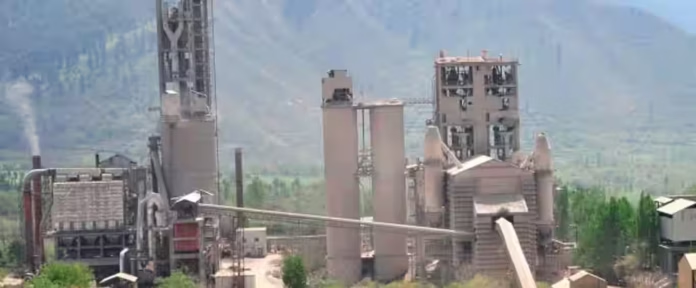
Srinagar hosted JK Cement’s second retailers’ meet, where the company celebrated top-performing partners from across Kashmir and reaffirmed its strategy to strengthen market presence in the region. Retailers were honoured with awards as officials highlighted rising sales momentum, the importance of collaborative growth, and the technical support offered to enhance construction quality. With its Srinagar manufacturing unit now operational, the company emphasised deeper engagement and smoother supply to build a stronger, more connected market across Jammu and Kashmir.
Industry officials said the event served as a platform to acknowledge the expanding role retailers play in shaping material choices across Kashmir’s housing and infrastructure market. With construction demand shifting towards more durable, low-impact materials, retail partners remain critical in steering customers towards quality-assured products that support safer and climate-resilient buildings.During the meet, top-performing retailers were recognised with awards, while all attendees received appreciation gifts—an industry practice seen as a gesture of strengthening trust and long-term collaboration within the supply chain. A senior sales executive at the company noted that the region had shown “encouraging traction” over the past quarter, driven by rising homebuilding activity and the gradual shift towards formalised construction practices.
The gathering also included a technical briefing, during which experts from the company outlined measures aimed at improving construction standards, such as material-handling guidance, on-site advisory support, and training modules for local masons. Industry observers pointed out that such initiatives are particularly relevant in Himalayan geographies like Kashmir, where buildings must withstand temperature variations, seismic activity, and challenging topography.For many retailers, the technical sessions reflected a growing emphasis on responsible urban growth. Several attendees said that increasing consumer awareness about structural safety and energy efficiency has begun to influence purchasing decisions. As more households and small developers seek long-term durability rather than short-term cost savings, the demand for quality-certified cement is expected to continue rising.The company’s representatives reiterated their commitment to transparency and cooperative growth with local partners, especially following the operationalisation of their manufacturing facility in Srinagar. According to industry experts, the local unit has helped reduce logistical delays, enabled more consistent supply and made it easier to introduce product innovations suited to the region’s climate.
Urban planners note that as Kashmir continues its transition towards more regulated development, the role of material suppliers and retailers becomes increasingly important. Ensuring that construction inputs meet safety and environmental benchmarks is essential for building future-ready, low-carbon settlements across the valley. Events that strengthen retailer engagement, experts say, help mainstream these standards at the neighbourhood level.The company said it plans to continue similar outreach programmes across Jammu and Kashmir, viewing retail partnerships as an essential pillar in shaping safer, more sustainable, and more connected urban growth in the region.
Also Read: Mumbai Witnesses Piramal Realty Deliver Revanta Phase One Boosting Local Residential Development
Srinagar Hosts JK Cement’s Second Retailers Meet Highlighting Regional Market Growth
Mumbai Witnesses Piramal Realty Deliver Revanta Phase One Boosting Local Residential Development

Mumbai’s eastern suburbs have reached a significant point in their ongoing transformation as Phase One of a major mixed-use residential development at the edge of the Sanjay Gandhi National Park has now been completed. The project, spread across twelve acres in Mulund, has moved from being a construction-driven site to an active neighbourhood following the handover of homes and supporting community infrastructure. For a city grappling with density, affordability challenges, and climate vulnerability, the scheme’s evolution offers a glimpse into how integrated urban precincts could shape future development.
The first phase comprises four residential towers, all of which have now received the required occupancy clearances. According to representatives from the developer, more than a thousand homes have been handed over, allowing the precinct to transition into a lived environment rather than a planned blueprint. Urban planners observe that such scale is crucial in suburbs like Mulund, which sit at the interface of metropolitan expansion and ecologically sensitive land. With the national park forming the backdrop to the site, the project’s setting is uncommon in Mumbai’s high-rise landscape. Complementing the residential blocks is a substantial community centre that anchors the project’s social fabric. The facility includes wellness, activity, and leisure spaces designed to cater to varied age groups a shift from earlier models where clubhouses were limited to basic recreation. A senior architect familiar with the project noted that podium-level amenities, including landscaped zones, swimming facilities, and open theatres, reflect an increasing emphasis on shared spaces that can foster inclusive neighbourhoods. Such features are becoming essential as the city explores ways to create equitable access to green and recreational areas within private developments.
Attention is now turning to the project’s next phase, which will introduce two additional towers and a second community hub. Industry observers argue that the timing aligns with growing demand for homes near employment clusters while maintaining proximity to natural assets. Mulund’s improving connectivity through arterial roads, the upcoming Goregaon Mulund Link Road, and several emerging metro lines makes it increasingly central to Mumbai’s wider east–west mobility narrative. The development’s location adjacent to a large protected forest brings unique responsibilities. Environmental specialists emphasise that projects in such zones must prioritise passive climate design, biodiversity-sensitive landscaping, and long-term resilience measures. While private real estate cannot fully compensate for the city’s shrinking public open spaces, developments that consciously integrate nature may help mitigate heat stress and improve liveability in high-density districts.
As Phase Two progresses, stakeholders say the precinct will continue evolving as a transit-linked, socially active residential cluster. For Mumbai, where fragmented development patterns often override community needs, projects like these may encourage a more balanced approach one that aligns housing supply with sustainability targets and everyday quality of life.
Mumbai Witnesses Piramal Realty Deliver Revanta Phase One Boosting Local Residential Development
Gurugram Witnesses Max Estates Launch New Residential Development Bringing Lifestyle Upgrades For Buyers

Gurugram has become home to a new large-scale residential development aimed at integrating urban living with climate-responsive design, as Max Estates announced the launch of Estate 361. Spanning a substantial land parcel in the city’s emerging growth corridor, the project marks another shift in the Delhi NCR housing market towards nature-led, low-impact communities that prioritise liveability as much as infrastructure.
According to company representatives, Estate 361 is designed around a landscape-first masterplan that reserves a significant portion of the land for ecological restoration. At its core is an expansive green zone, which developers say is meant to serve as a “forest edge” for residents part of a growing trend in Indian real estate where access to natural environments is becoming a determinant of quality housing. The area features a large stretch of curated vegetation comprising over a thousand indigenous trees and dozens of native plant species selected to withstand Gurugram’s semi-arid climate. Urban planners note that such choices are vital at a time when NCR faces worsening air quality and rising heat levels each year. The project has secured IGBC Platinum pre-certification, one of the country’s highest ratings for green buildings. Industry analysts say this reflects a continued movement among developers to align with global sustainability standards as homebuyers increasingly prioritise energy efficiency and lower environmental footprints. A senior green-build expert commented that certifications such as IGBC’s help steer large developments toward better water management, reduced heat gain, and improved long-term resilience factors that could define property value in the coming decade.
The first phase of Estate 361 includes a major community centre known as The Hub, envisioned as a social and recreational anchor for the neighbourhood. Spread across a considerable built area, the facility will offer a suite of amenities such as an all-weather pool, fitness and wellness spaces, racket courts, dining areas, and multi-purpose zones. Additionally, a substantial terrace garden has been integrated into the design, offering residents access to elevated greens in a dense and rapidly urbanising district. Urban designers point out that such open public spaces can significantly improve community health outcomes while expanding non-commercial social infrastructure in private developments.
While Estate 361 is a premium offering, its emphasis on ecological integration and inclusive public spaces mirrors a wider societal push toward greener and more equitable cities. Gurugram, long criticised for fragmented planning and limited green cover, may benefit from private-sector initiatives that rethink conventional high-rise living. As the city grapples with climate vulnerability and demographic pressure, developments that foreground sustainability could play a modest yet meaningful role in improving urban conditions for future residents.
Also Read: Navi Mumbai Hosts Property Expo Displaying 500 Projects From Leading Developers
Gurugram Witnesses Max Estates Launch New Residential Development Bringing Lifestyle Upgrades For Buyers
Navi Mumbai Hosts Property Expo Displaying 500 Projects From Leading Developers

Navi Mumbai’s real estate landscape is preparing for a moment of reflection and recalibration as the city hosts one of its largest property showcases later this year. The forthcoming Navi Mumbai Property Expo, organised by a leading developer association, arrives at a time when the region is undergoing a rare convergence of infrastructure upgrades, shifting homebuyer expectations and intensifying demand for sustainable neighbourhoods.
Industry observers say the four-day event is likely to function as a barometer for the city’s next phase of urban growth. More than 50 developers will exhibit an estimated 500 residential, commercial, township and luxury projects, giving prospective buyers a snapshot of how supply is evolving in a rapidly expanding metropolitan corridor. An official involved in the planning noted that the breadth of offerings from affordable units to premium high-rise developments demonstrates how the market has widened as connectivity improves across the Mumbai Metropolitan Region. The expo’s theme, which positions Navi Mumbai as a gateway to future growth, signals how deeply infrastructure is shaping the region’s identity. Multiple large-scale projects including the long-awaited international airport, the trans-harbour link to South Mumbai, metro corridors and upgraded arterial roads are expected to reconfigure travel patterns and shorten commute times. Urban planners say these improvements will not only make housing clusters more accessible but also redefine where residents choose to live and work.
Developers are preparing for this shift by foregrounding integrated living models. Several projects showcased at the expo will emphasise walkability, mixed-use zoning and community-scale amenities, echoing global trends towards compact and low-carbon development. A senior planner associated with the event said the growing interest in redevelopment, particularly in older neighbourhoods, suggests a transition towards denser, more efficient land use. A dedicated seminar on redevelopment will help residents understand design, regulation and financial implications an approach aligned with the larger goal of creating equitable and long-lasting urban upgrades. Financial institutions are also participating in greater numbers, offering on-site loan assistance and purchase counselling. Analysts point out that as interest in mid-range and premium housing increases, buyers are seeking more transparent and data-driven decision-making tools. The presence of banking partners reflects this trend and may encourage first-time purchasers who are still navigating affordability challenges.
Organisers say the event aims to deliver a curated experience that speaks to the city’s changing urban aspirations. For many attendees, the expo will serve as a window into what Navi Mumbai could become in the next decade a region defined by multimodal connectivity, employment clusters and more sustainable forms of housing. Whether this vision materialises will depend on how effectively the city manages growth pressures while ensuring inclusive access to homes, mobility and public amenities.
Also Read: Indore Marks Shubhashish Homes Expansion Through Significant 32 Acre Township Agreement