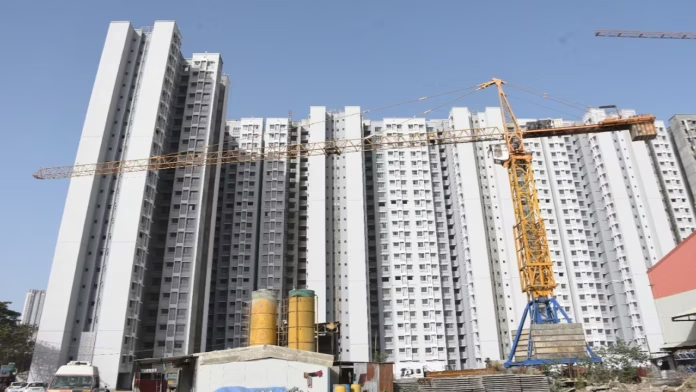
CREDAI Bengaluru President Advocates for Mumbai Model Redevelopment

Rajasthan gets 2.7L more homes under PMAY-G

Rajasthan’s efforts to alleviate rural housing shortages have received a significant boost with the approval to construct 2,73,752 additional homes under the Pradhan Mantri Awas Yojana-Gramin (PMAY-G).
This move, sanctioned by the Union Ministry of Rural Development, promises to improve the quality of life for thousands of families across the state who have long been waiting for their own pucca homes. The new homes will primarily benefit families identified in the 2018 Awas Plus survey, many of whom have been waiting for permanent housing for over six years. This latest allocation places Rajasthan among the top five states in terms of implementing the PMAY-G scheme, a vital part of the government’s push for rural housing development.
For families that have been living in temporary or substandard conditions, the approval comes as a beacon of hope. The state has already completed the construction of nearly 20 lakh homes out of the 22.23 lakh previously sanctioned under the scheme. With this new sanction, the dream of homeownership for many is set to become a reality. Rajasthan’s Chief Minister expressed that this approval marks a significant milestone, stating that families who have waited since 2018 will now finally be able to build their permanent homes. The relief provided by the PMAY-G scheme goes beyond just providing shelter—it offers these families a chance for a better, more secure future.
The PMAY-G scheme, launched by the Government of India, aims to provide affordable housing to rural families by offering financial support for the construction of pucca homes. Rajasthan’s implementation of this scheme has been robust, and the recent approval marks another step forward in its commitment to rural development. Out of the 2.7 lakh homes approved, officials indicated that the disbursement of funds will begin shortly, with district collectors instructed to begin formal approval processes. The initial instalment of financial assistance is expected to reach eligible families in the coming weeks, ensuring that the construction of homes begins without delay.
This step comes at a time when rural housing demand is at an all-time high. While Rajasthan has made commendable progress in building homes under PMAY-G, the approval of these additional houses will help the state tackle its housing deficit, particularly in remote and underserved areas. The state is now poised to address the needs of families who have faced prolonged uncertainty about their housing situation. Despite the successes, the housing sector still faces a number of challenges, particularly in terms of construction costs, land acquisition, and availability of skilled labour. However, the PMAY-G initiative offers a promising solution by providing direct financial assistance to eligible families, allowing them to build homes that meet basic infrastructural and safety standards.
Additionally, the approval of these new homes presents opportunities for local economies. As construction activity picks up in rural areas, it is expected to generate employment, stimulate demand for materials, and boost local markets. This ripple effect can contribute significantly to the economic well-being of communities across the state. The central government’s approval also indicates that Rajasthan is moving towards achieving its goal of providing housing for all under the PMAY-G scheme. The state’s rural development department has worked diligently to ensure that housing remains a priority. Officials indicate that the new homes will not only improve living conditions but also reduce the migration of rural populations to urban areas, thus helping to preserve local cultures and communities.
Housing is a fundamental pillar of sustainable development. Access to permanent homes enhances the social, economic, and emotional well-being of rural families. Beyond providing shelter, these homes will offer families greater security, improved health outcomes, and enhanced opportunities for economic mobility. With the provision of water, sanitation, and electricity—key components of the PMAY-G scheme—these homes will improve living standards and reduce the vulnerability of rural households to seasonal hazards and climate change. Families that once lived in temporary or substandard housing will now enjoy the stability of well-constructed homes built with access to basic amenities.
The PMAY-G initiative also aligns with broader sustainability goals, particularly in rural areas. As the government continues to focus on providing homes that are energy-efficient and resilient, these new houses are expected to meet eco-friendly standards, contributing to the reduction of carbon emissions and promoting sustainable living practices in rural communities. The government’s continued focus on building homes through this initiative demonstrates a commitment to bridging the urban-rural divide. It also reflects a broader agenda to ensure that all citizens, regardless of their background or geographical location, have access to a decent standard of living. As housing development continues to grow under PMAY-G, it is expected to pave the way for more inclusive and equitable growth, empowering rural communities and contributing to the creation of sustainable cities.
As Rajasthan moves forward with the construction of these 2.7 lakh homes, there is hope that other states will take inspiration from its success in implementing the PMAY-G scheme. The state’s track record and commitment to addressing housing issues have made it a model for rural development initiatives across India. For many families in Rajasthan, the promise of a permanent home has been a long-awaited dream. With the approval of these additional houses, that dream is now closer to reality. The continued support from the government for rural housing is a step towards a more equitable and sustainable future for all of India’s citizens, both in urban and rural areas.
As the process of disbursing funds and approving homes begins, Rajasthan’s rural development efforts will continue to transform the lives of its residents, bringing them one step closer to securing a permanent and safe home.
Rajasthan gets 2.7L more homes under PMAY-G
Nuvoco boosts cement capacity in Kutch

Nuvoco Vistas Corporation Ltd, the cement division of Nirma Ltd, is ramping up its infrastructure in Gujarat with a renewed capital expenditure plan totalling ₹1,500 crore.
The company is setting up a new two million tonnes per annum (MTPA) cement grinding unit in Kutch, aimed at reviving and expanding the production footprint of recently acquired Vadraj Cement.The investment marks a ₹300 crore increase from Nuvoco’s initial ₹1,200 crore plan to restore Vadraj’s production units in Kutch and Surat. The company intends to commission the new Kutch grinding facility, alongside Vadraj’s existing assets, by December 2027.The Kutch unit is a strategic move to localise Nuvoco’s cement supply for the Gujarat market, which currently relies on production from Rajasthan. According to the company’s top management, this expansion will not only ease supply bottlenecks in Gujarat and north Maharashtra but will also release Rajasthan’s capacities to serve northern markets more efficiently.
Nuvoco’s revived Vadraj assets include a 3.5 MTPA clinker unit in Kutch, a 6 MTPA grinding unit in Surat, vast limestone reserves, and a captive jetty. Once operational, these additions will raise Nuvoco’s overall cement production capacity to approximately 31 MTPA.The ₹1,500 crore project will be funded in three phases—₹600 crore each in 2025 and 2026, followed by ₹300 crore in 2027. To ensure capital discipline, the company has capped its existing operations’ annual capex at ₹100–150 crore, allowing internal accruals to fund the bulk of the Vadraj expansion.On the financing front, Nuvoco will make an upfront payment of ₹1,800 crore for acquiring Vadraj, of which ₹600 crore will be secured as long-term debt. The remaining ₹1,200 crore will be raised through Compulsory Convertible Preference Shares (CCPS) and Compulsory Convertible Debentures (CCDs).
These instruments offer long-term maturity with deferred interest costs, ensuring the company’s balance sheet remains robust and relatively unburdened.
A bridge loan of ₹1,200 crore will temporarily support this structure until formal financing is secured. The company has already identified investors willing to contribute via these instruments, with the expectation of repayment at maturity.
In recent years, Nuvoco has significantly reduced its net debt—from ₹6,730 crore in FY21 to ₹3,640 crore in FY25. With stable operations and focused deleveraging, the company remains confident operating with a net debt in the ₹3,500–4,000 crore range.
The expansion in Gujarat strengthens Nuvoco’s ability to meet regional demand while aligning with broader goals of decentralised, sustainable infrastructure growth. Efficient logistics, proximity to raw material sources, and port-based operations in Kutch underscore the company’s commitment to reducing its carbon footprint and operational costs.As India’s infrastructure sector continues to surge, Nuvoco’s calibrated investment into long-term assets positions it to serve a growing construction market while promoting regional development in a strategically important industrial belt.
Also Read :Rahul Vaidya Sells Oshiwara Flats for ₹5 Crore
Nuvoco boosts cement capacity in Kutch
Malad society secures legal nod for land

a Mumbai city civil court has upheld the right of a Malad-based housing society to execute a deemed conveyance under the Maharashtra Ownership Flats Act (MOFA), rejecting a challenge raised by the original landowners.
The judgement marks a critical affirmation of cooperative housing rights in the face of legacy ownership disputes and underscores the importance of legal frameworks that support equitable urban housing.The dispute revolved around a land parcel in Valnai, Malad, where the cooperative society claimed its right to formal ownership through deemed conveyance—an entitlement granted under MOFA for societies whose developers fail to transfer title deeds after completion of projects. The original landowners had sought an injunction against the society, alleging that part of the land was still earmarked for their private residential extension, and not for common development.At the core of the legal contention was the claim that while an agreement with the builder was made for the development of 8,000 sq ft, an additional 2,500 sq ft was to remain with the family.
However, they alleged that only 1,780 sq ft was ultimately reserved for them, prompting them to legally contest the deemed conveyance awarded by the district deputy registrar.Despite their objections, the registrar had approved the conveyance in favour of the housing society. The landowners then moved the court, seeking interim relief against the society’s activities, including any attempts to alter property boundaries, create third-party interests, or assert possession rights over the contested land.The housing society, represented through legal counsel, contended that the conveyance process had been duly executed as per MOFA regulations, which mandate the transfer of title to the society when developers fail to do so within the stipulated timeframe. The court, while taking note of the dispute, ruled that questions of actual possession must be substantiated with concrete evidence, and refused to grant any ad-interim injunction.
This ruling holds wider implications for the over 90,000 cooperative housing societies across Maharashtra, many of which are still waiting for legal title transfers decades after project completion. The judgement affirms the rights of flat purchasers and housing societies to claim legal ownership when procedural delays or disagreements with original landowners persist.In Mumbai’s context—where real estate disputes are often prolonged and fuelled by ambiguity in agreements—such legal clarity is vital for ensuring that collective housing models continue to thrive. As cities push towards becoming more inclusive and sustainable, cooperative ownership backed by strong legal protections could be key to making homeownership accessible and transparent for the middle class.The court’s refusal to obstruct the society’s rights under MOFA reinforces the legislative intent behind the Act—to empower homebuyers and provide them with legal certainty over their property. In a city grappling with space constraints, complex titles, and skyrocketing property prices, such decisions provide a much-needed boost to housing justice.
Also Read : Nirala World-Backed Fund Revives Stalled Noida Projects
Malad society secures legal nod for land
Alt DRX raises funds to reshape property investing

Bengaluru-based proptech innovator Alt DRX has raised ₹23 crore (approximately USD 2.7 million) in its Pre-Series A funding round, marking a major stride in its mission to revolutionise property ownership through technology.
With participation from notable institutional investors and media-backed funds, the startup is building momentum to expand its tokenised digital real estate marketplace across India.The capital infusion comes at a critical juncture for India’s urban landscape, where traditional property investment remains largely inaccessible to the average citizen. Alt DRX is addressing this gap by enabling individuals to invest in residential real estate one square foot at a time. Its blockchain-based platform allows for algorithmic pricing, instant settlements, and real-time transparency—bringing financial inclusion and technological sophistication into a sector historically marked by opacity and high entry barriers.
The latest funding round drew contributions from a diverse pool of backers including Qatar Development Bank, Times of India Brand Capital, Hindustan Media Ventures, Zee Group, WeFounder Circle Angel Fund, and others.
The firm intends to deploy the fresh capital for residential asset acquisitions, regulatory compliance, technology upgrades, and wider market outreach.
Headquartered in India’s startup capital, Alt DRX is already recording a run-rate of approximately 100,000 transactions annually. This figure highlights a rapidly growing user base attracted by the platform’s simplicity and accessibility. Investors on the platform earn returns from rental income generated by residential properties, and they can liquidate their holdings—represented in square footage—directly through a user-friendly mobile application.
This model could be particularly transformative for India’s younger urban population and gig economy workforce, many of whom remain priced out of conventional real estate investment. By offering fractional ownership with low entry thresholds, Alt DRX is helping dismantle one of the final barriers to wealth-building for India’s aspirational middle class.However, rapid digitisation in the real estate sector comes with its own set of challenges. The broader proptech space is navigating issues around regulatory clarity, asset verification, and consumer trust. Alt DRX’s transparent blockchain architecture is one step toward addressing these, but long-term success will hinge on robust compliance and ethical data management, especially as the platform scales nationally.The startup’s growth also prompts important questions about the sustainability of urban development in India.
As property tech unlocks demand in underutilised and emerging housing markets, it must align with the broader goal of building equitable and climate-resilient cities. With every square foot made accessible online, the responsibility to ensure energy efficiency, green building practices, and inclusive zoning becomes more urgent.
Alt DRX’s funding round signals growing investor confidence in the future of fractional real estate ownership. If channelled responsibly, such innovations could transform how Indians interact with property—not just as buyers, but as citizens shaping the future of urban India.
Also Read : SG Real Estate Fund Revives Noida Projects with ₹125 Crore Investment
Alt DRX raises funds to reshape property investing
PVC Foam Market Grows on Green Building Demand

The global PVC rigid foam market is projected to grow from $2.0 billion in 2023 to $3.1 billion by 2033, at a compound annual growth rate (CAGR) of 4.3%, driven by expanding construction and automotive sectors, especially in the Asia-Pacific region.
Economic expansion and infrastructure investments are major factors propelling demand for PVC rigid foam, a lightweight, cost-effective, and energy-efficient material. According to the International Monetary Fund (IMF), global GDP is expected to grow at 3.2% annually through 2025, sustaining momentum for construction and manufacturing. However, inflation and regional slowdowns, like Argentina’s projected 3.7% GDP contraction, may impact growth. Rising input costs and geopolitical tensions continue to affect supply chains and pricing, particularly due to dependencies on petroleum-based PVC resin. Asia-Pacific accounted for the largest market share in 2023 and is expected to maintain its lead. Countries like China and India are integrating PVC rigid foam into major housing and urban development schemes. China’s New Urbanisation Plan and India’s Smart Cities Mission, alongside affordable housing efforts, have accelerated the use of sustainable materials. Australia’s focus on net-zero energy buildings further supports demand for PVC rigid foam for insulation and thermal control.
In the automotive sector, PVC rigid foam is being increasingly adopted for dashboards and interior panels to reduce vehicle weight and improve fuel efficiency. Electric vehicle manufacturers are turning to such materials for energy savings. The signage and advertising industry also contributes significantly to demand, relying on PVC rigid foam for its durability, printability, and resistance to weather and UV exposure. Despite positive trends, environmental concerns and regulatory pressure present challenges. Compliance with EU REACH and US EPA standards is pushing companies to develop low-VOC, chlorine-free, and recyclable alternatives. Fluctuating raw material costs and recycling complexities have made production costlier, prompting innovation in sustainable formulations and hybrid materials. Manufacturers are responding with co-extruded foams and bio-based products. Technological advancements such as nanotechnology-based additives for flame resistance are emerging, with companies like Nyacol Nano Technologies investing in high-performance coatings. The closed-loop recycling ecosystem is gaining traction, supported by corporate funding initiatives to expand access and capacity.
With rising awareness around green building and sustainability, the market for PVC rigid foam is set to remain robust. Its versatility and affordability make it a critical solution in infrastructure, mobility, and industrial applications, positioning it for consistent growth through the next decade.
PVC Foam Market Grows on Green Building Demand
UP Govt Pushes Cow Dung Paint for State Buildings

Uttar Pradesh Chief Minister Yogi Adityanath has proposed a shift towards eco-conscious development by advocating the use of cow dung-based natural paint on government buildings across the state.
This sustainable alternative to chemical paints is not only cost-effective and non-toxic but also bolsters rural livelihoods by boosting demand for cow-based products. Chairing a high-level review meeting, the CM outlined a comprehensive strategy to link traditional cow-based practices with modern dairy technologies to transform the rural economy. He directed the Animal Husbandry and Dairy Development Department to adopt advanced methods in cow care, milk production, and dairy efficiency, with a clear focus on benefiting farmers and self-help groups in rural Uttar Pradesh. One of the core elements of this strategy is making cow shelters self-sustaining. Adityanath urged officials to promote organic manure, dung paint, and cow urine-based products as income-generating initiatives. The government has reclaimed nearly 41,000 hectares of encroached pastureland, using over 12,000 hectares for cultivating green fodder — a move that has created rural employment, especially for women-led groups.
To further this mission, the Chief Minister called for organising state-level competitions to showcase indigenous cow breeds and honour cow shelters with exemplary welfare practices. He also recommended similar events to recognise innovation in cow by-products — from manure and milk to urine — encouraging entrepreneurs and organisations to create eco-friendly products with commercial viability. As part of an expanding cow welfare network, over 21,800 trained gausevaks have been deployed across 7,693 cow shelters housing more than 11.49 lakh cows. These shelters are under CCTV surveillance and regularly monitored. CM Yogi stressed ensuring continuous veterinary care, proper nutrition, and timely payment for caretakers. In Bareilly, the state has partnered with IFFCO to set up manure and cow urine processing plants, converting cow waste into biofertilisers and organic solutions. Meanwhile, the Mukhyamantri Nirashrit Govansh Sahyogita Yojana aims to provide cows to economically weaker families without livestock, promoting both nutrition and self-reliance. The UP dairy sector has also seen significant growth, with daily milk procurement reaching 3.97 lakh litres in FY 2024–25 — a 10% rise from the previous year. The number of milk producers went up by 8%, and sectoral turnover hit ₹1,120 crore. Going forward, the state aims to set up 4,922 new cooperative milk societies and train over 21,000 existing ones.
By blending traditional cow-based practices with cutting-edge dairy innovation, the Uttar Pradesh government under CM Adityanath is building a new model of rural development — one rooted in sustainability, economic empowerment, and cultural continuity.
UP Govt Pushes Cow Dung Paint for State Buildings
Railways to get 300 Mw clean energy from RVNL hybrid power project

Rail Vikas Nigam Ltd (RVNL), a Navratna PSU under the Ministry of Railways, is set to commission a 300 Megawatt hybrid renewable energy project aimed at powering the national rail network with solar, wind and energy storage solutions.
The ambitious project, estimated to involve an investment exceeding ₹1,500 crore, aligns with the Ministry of Railways’ commitment to sourcing at least 15–20 percent of its power requirements from green energy. The hybrid power initiative will integrate solar and wind energy with advanced storage technologies to meet peak power demands efficiently. Once operational, the clean energy generated will feed into dedicated railway feeders, reducing dependency on conventional sources and significantly cutting carbon emissions. Locations under consideration include land parcels across Bihar, Jharkhand and Karnataka, marking a geographically diverse approach to decentralised renewable energy sourcing. The move is being seen as a major policy shift, bringing infrastructure and sustainability together at scale.
As the executing agency, RVNL brings to the table its strength in building infrastructure and transmission capacities. The PSU is seeking partnerships with private firms that can provide core technological inputs such as solar modules and storage systems. This collaborative model is expected to accelerate the deployment timeline while leveraging the best of public-private competencies in the sector. Notably, RVNL already has an existing joint venture with a private green energy firm and is currently working on projects in Uzbekistan and Saudi Arabia, with new ventures in Africa also under exploration. Beyond renewable energy, RVNL is rapidly expanding its domestic rail infrastructure footprint with a special focus on mineral-bearing states. It is constructing a critical 290 km railway line between Bihar and Jharkhand dedicated to coal transport, with 170 km already commissioned. In a significant environmental development, the remaining stretch was rerouted after successful negotiations with the forest authorities to safeguard a tiger reserve in the Patratu region. A parallel 97 km corridor in Odisha is also nearing completion to support the evacuation of iron ore and coal.
On the international front, RVNL is firming up its credentials as a global infrastructure developer. A major 280 km coastal freight line in Peru is currently in the pipeline under a government-to-government framework. The ₹20,000 crore project will require complex tunnelling through mountainous terrain and is expected to commence next year with a seven-year execution timeline. In addition, the PSU is actively pursuing bids for transport and energy projects in Turkey, Albania and Tanzania. With an estimated annual turnover of ₹21,000 crore and an expanding international footprint, RVNL’s pivot towards renewable energy and sustainable infrastructure is not just a strategic diversification but a national imperative. Its latest green energy move signals a firm institutional commitment to India’s net-zero goals while reshaping the power landscape for one of the world’s largest rail networks.
Railways to get 300 Mw clean energy from RVNL hybrid power project
Akhilam township project in Dholera to offer green urban living spaces
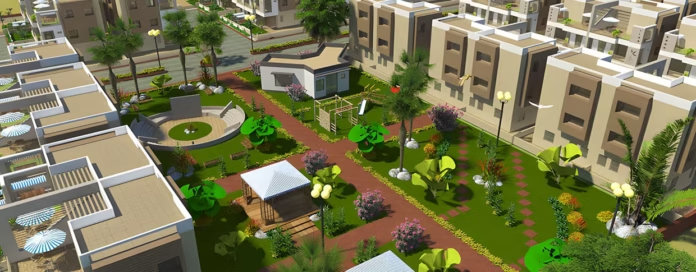
A 42,000 square metre land parcel in Dholera Special Investment Region (SIR) is set to transform into a high-end, sustainable township, marking a fresh chapter in Gujarat’s urban infrastructure growth.
Backed by one of western India’s infrastructure players, the project named Akhilam promises to integrate premium residential units with commercial, retail, and lifestyle amenities, aligning with the region’s rapid industrialisation. The township is set within Dholera’s Activation Area, the epicentre of upcoming infrastructure, green energy, and semiconductor manufacturing. With India’s largest semiconductor fabrication unit coming up in the vicinity spearheaded by a partnership between a leading domestic conglomerate and a global chipmaker—Dholera is swiftly pivoting from a concept city to an economic engine. The semiconductor facility alone is expected to create 20,000 skilled jobs over the next two years, while the entire 5,600-acre Activation Area is projected to employ over 1.5 lakh people by 2030. This surge has triggered an urgent need for premium housing, workplace integration, and sustainable community living all of which Akhilam aims to deliver.
The township plan includes 1,000 premium 1 BHK residences, a business park, retail zones, financial services, club amenities, and a food court. Designed with energy-efficient systems, smart urban design, and low-carbon construction techniques, the project seeks to meet the region’s demand for high-quality, climate-resilient housing solutions. The move also echoes a broader national vision of building net-zero, equitable cities with the infrastructure to support long-term growth. As India reimagines urbanisation through its smart city initiatives, Dholera has emerged as a flagship model of integrated planning and connectivity. Its development is being reinforced by multi-modal infrastructure projects, including the Rs 5,000 crore Ahmedabad-Dholera Expressway, a greenfield international airport, and access to the Dedicated Freight Corridor at Bhimnath. These catalytic linkages are expected to position Dholera as not only a manufacturing base but a livable, sustainable city where work-life balance and environmental priorities are embedded into the urban framework.
In a region long perceived as speculative ground for future development, projects like Akhilam offer tangible proof of progress. The fact that it is being developed on a plot secured through the first-ever land auction in Dholera SIR underscores a maturing real estate market backed by regulatory transparency and state-led facilitation. This shift from vision to execution indicates increasing confidence from private developers in the long-term viability of Dholera’s economic blueprint. As the government continues to prioritise decentralised development, Dholera’s transformation into a live-work hub sends a strong signal about Gujarat’s evolving urban landscape. Whether this translates into a replicable model for other emerging regions remains to be seen. But for now, Dholera is taking a firm step toward becoming a self-sustaining, future-ready city powered not only by technology but also by inclusive and sustainable living environments.
Also Read :Hyderabad Real Estate Faces RERA Crackdown
Akhilam township project in Dholera to offer green urban living spaces
MHADA Unlocks 110 Acres for Mumbai Redevelopment