Home Blog Page 303

Nagpur Metro Solar Expansion Delayed Due to MSEDCL Approval Hold-Up

    0
    Nagpur Metro Solar Expansion Delayed Due to MSEDCL Approval Hold-Up
    Nagpur Metro Solar Expansion Delayed Due to MSEDCL Approval Hold-Up

    Nagpur Metro Solar Expansion Delayed Due to MSEDCL Approval Hold-Up

    Nagpur Metro, one of India’s greenest metro systems, is facing a roadblock in its ambitious solar energy expansion project due to delays in obtaining approval from the Maharashtra State Electricity Distribution Company Ltd (MSEDCL). Despite significant investments in solar infrastructure and the ongoing expansion efforts, the metro network cannot proceed with its plan to power 50% of its energy needs through solar until it receives the necessary clearances from the state electricity body.

    Currently, around 20% of Nagpur Metro’s energy consumption is sourced from solar power. However, the metro aims to increase this to 50%, which would make it one of the most sustainable metro systems in the country. In pursuit of this goal, Maha Metro has been actively expanding its solar capacity, with recent installations such as a 1.5 MW solar setup at its Hingna and MIHAN depots. Yet, these newly installed solar plants remain uncommissioned as MSEDCL has yet to approve them. With daily energy consumption of approximately 90,000 units, Nagpur Metro relies on solar power for about 16,500 units. If the metro’s solar capacity expands to 10 MW, it could cover 50% of its energy requirements, resulting in significant savings of up to ₹45 lakh per month. This would also reduce the current monthly electricity expenditure of ₹2.38 crore, a substantial amount that would benefit the financial sustainability of the metro system.

    Nagpur Metro operates under the Renewable Energy Service Company (RESCO) model, sourcing solar energy at a favourable rate of ₹3.40 per unit. This is a major cost saving compared to the ₹9.68 per unit tariff charged by MSEDCL. In the fiscal year 2023-24, Nagpur Metro has already generated over 4.715 million units of solar electricity, exporting more than 770,000 units to the MSEDCL grid under a net-metering arrangement.

    Despite sending multiple requests to MSEDCL over the course of several months—on April 23, May 14, and September 2, 2023—seeking approval for a 5 MW net-metering arrangement as per the Maharashtra Electricity Regulatory Commission (MERC) guidelines, the approval process remains unresolved. This delay is holding up the completion of the solar expansion, which is vital for Nagpur Metro’s long-term sustainability and cost-saving objectives. A senior official from Maha Metro explained, “We have sent multiple letters to MSEDCL requesting approval for the newly installed solar systems. Once we receive the necessary approvals, we can complete the remaining solar installations within six months and achieve our 10 MW target.” This would mark a significant milestone in making Nagpur Metro a fully sustainable public transport system.

    While MSEDCL officials have assured that the approval process is underway, the delay has raised concerns about how long it will take to move forward with the crucial project. The timely approval of the solar installations is key to ensuring that Nagpur Metro meets its sustainability goals and contributes to reducing the overall carbon footprint of the city’s public transport system. Once the approval is granted, Nagpur Metro plans to complete its solar expansion within six months, helping to meet the goal of 50% solar energy consumption and making it a model for sustainable transport systems across India. With this delay now coming to a head, there is hope that the project will soon be able to move forward, significantly enhancing the sustainability of Nagpur’s public transport system for years to come.

    PURE EV Joins Forces with JioThings to Revolutionise Electric Two-Wheelers with Smart IoT Integration

      0
      PURE EV Joins Forces with JioThings to Revolutionise Electric Two-Wheelers with Smart IoT Integration
      PURE EV Joins Forces with JioThings to Revolutionise Electric Two-Wheelers with Smart IoT Integration

      PURE EV Joins Forces with JioThings to Revolutionise Electric Two-Wheelers with Smart IoT Integration

      The electric two-wheeler experience, Hyderabad-based electric vehicle manufacturer PURE EV has entered into a strategic collaboration with JioThings, a subsidiary of Jio Platforms. This partnership, formalised through a Memorandum of Understanding (MoU), will focus on integrating cutting-edge IoT technology, smart digital clusters, and telematics into PURE EV’s electric two-wheeler lineup, bringing a host of advanced features to its products.

      The collaboration comes at a time when the electric vehicle market is witnessing rapid growth, driven by increased demand for sustainable transportation solutions. With the integration of JioThings’ advanced digital capabilities, PURE EV aims to offer customers a more intuitive and connected experience, setting new standards in the electric two-wheeler industry. Speaking on the collaboration, Nishanth Dongari, the Founder and Managing Director of PURE EV, highlighted the significance of leveraging JioThings’ superior IoT technology. “Exploring JioThings’ superior IoT capabilities within our vehicles represents a significant opportunity to elevate PURE EV’s products to the highest industry standards. We are excited to integrate these smart solutions to offer our customers an enhanced experience that combines performance, connectivity, and real-time insights,” said Dongari.

      This partnership is expected to bring forth an array of innovative features that will not only enhance vehicle functionality but also provide a more engaging user experience. JioThings’ state-of-the-art 4G Smart Digital Cluster, which is powered by AvniOS—based on the Android Open Source Project (AOSP)—will play a central role in this initiative. This advanced system offers a full HD+ touchscreen display, enabling two-wheeler manufacturers like PURE EV to offer a range of features such as customisable interfaces and real-time data analytics. Additionally, the integration of telematics, enabled by seamless 4G connectivity, will allow PURE EV customers to monitor their vehicle’s performance in real-time. This functionality will provide riders with valuable insights, such as battery status, performance metrics, and route optimisation, all accessible through a user-friendly interface. The ability to optimise operations through this intelligent system marks a substantial leap forward in the electric two-wheeler segment, where connectivity and data-driven features are becoming essential.

      Ashish Lodha, the President of Jio Platforms, also emphasised the importance of this partnership, saying, “By integrating our advanced IoT solutions, we aim to support PURE EV in delivering the best electric two-wheeler experience to customers, setting new benchmarks for efficiency and connectivity. This collaboration demonstrates our commitment to enabling innovation across industries, including the rapidly growing electric vehicle sector.” The integration of JioThings’ IoT technology into PURE EV’s electric two-wheelers reflects a growing trend in the automotive industry, where manufacturers are increasingly adopting connected solutions to improve user experiences, streamline vehicle operations, and provide more value to consumers.

      With the rise in demand for electric vehicles and the growing importance of smart technology in automotive design, this partnership signals an exciting future for both companies. PURE EV’s vision of providing sustainable, high-performance electric two-wheelers, now enhanced with JioThings’ advanced connectivity solutions, offers a glimpse into the future of personal transportation—where sustainability, performance, and technology converge seamlessly. As electric two-wheeler manufacturers continue to innovate and integrate cutting-edge technologies, collaborations like this one are expected to drive the industry forward, making electric vehicles not only more efficient but also more engaging for consumers. Through this partnership, PURE EV and JioThings are paving the way for a new era in electric mobility, where smart technology enhances every aspect of the user experience.

      Reliance Infrastructure Expands into Renewable Manufacturing with Solar and Battery Units

        0
        Reliance Infrastructure Expands into Renewable Manufacturing with Solar and Battery Units
        Reliance Infrastructure Expands into Renewable Manufacturing with Solar and Battery Units

        Reliance Infrastructure Expands into Renewable Manufacturing with Solar and Battery Units

        Reliance Infrastructure Limited (RInfra), a prominent player in India’s infrastructure and energy sectors, is making a significant move into renewable energy manufacturing. The company has announced its plans to establish integrated solar panel and battery production facilities as part of its ambitious Integrated Solar Manufacturing initiative.

        The new facilities will focus on producing high-efficiency solar panels and advanced energy storage solutions, marking RInfra’s strategic foray into the green energy sector. As part of this initiative, the company aims to contribute to the growing demand for clean energy technologies, crucial for achieving India’s renewable energy targets and supporting the country’s transition to a more sustainable future. The solar panel production facility will focus on scaling up the manufacturing of panels and related components, which will support the renewable energy sector’s growing needs in India and internationally. At the same time, RInfra’s Integrated Battery Manufacturing unit will focus on producing energy storage systems that are essential for enhancing grid stability and supporting electric mobility. These energy storage solutions are key to integrating intermittent renewable energy sources like solar into the grid and providing a steady supply of power.

        Although RInfra has not disclosed the specifics of the investments or the locations of these new facilities, this move signals a strong commitment to renewable energy and sets the company on a path to diversify its portfolio. To spearhead these renewable energy manufacturing ventures, RInfra has appointed Ivan Saha as the Chief Executive Officer (CEO) for Renewable Manufacturing and Mushtaque Hussain as the CEO of Battery Manufacturing. Both leaders bring a wealth of experience to their new roles and will play a pivotal role in steering the company’s renewable push. This move into solar panel and battery manufacturing comes as Reliance Infrastructure expands its efforts in renewable energy generation and storage. The company’s subsidiary, Reliance Nu Suntech Pvt Ltd, has recently secured a 930 MW solar energy project with an integrated battery energy storage system (BESS) from the Solar Energy Corporation of India (SECI). This project includes a minimum storage capacity of 465 MW/1,860 MWh, which will be charged using solar power. This initiative forms a crucial part of India’s renewable energy strategy, aiming to provide clean, reliable energy and enhance energy security.

        Additionally, RInfra is also involved in developing renewable energy projects beyond India’s borders. The company is currently working on a 1,270 MW renewable energy project in Bhutan, further strengthening its position in the international renewable energy market. Reliance Infrastructure’s entry into renewable manufacturing is in line with the broader industry trend of large corporations diversifying into the green energy sector. By capitalising on the growing demand for renewable energy solutions, RInfra aims to play a critical role in shaping India’s future energy landscape. The country’s renewable energy sector is seeing a significant push as it works towards achieving its ambitious sustainability and decarbonisation goals. With RInfra’s new initiatives in solar panel and battery manufacturing, the company is well-positioned to meet the increasing demand for clean energy infrastructure, contributing to India’s energy transition and supporting global efforts to tackle climate change.

        With this strategic move into renewable manufacturing, Reliance Infrastructure is taking an important step towards reducing its carbon footprint and creating long-term value for its stakeholders, while simultaneously bolstering India’s capacity to meet its renewable energy ambitions. The new solar and battery facilities will play a key role in achieving energy security and sustainability, both domestically and globally, as India continues its green energy revolution.

        Dixon Technologies to Launch ₹1,000 Crore Sriperumbudur Plant by May, Expanding Production Capacity

          0
          Dixon Technologies to Launch ₹1,000 Crore Sriperumbudur Plant by May, Expanding Production Capacity
          Dixon Technologies to Launch ₹1,000 Crore Sriperumbudur Plant by May, Expanding Production Capacity

          Dixon Technologies to Launch ₹1,000 Crore Sriperumbudur Plant by May, Expanding Production Capacity

          Dixon Technologies (India) Ltd., one of the leading players in the electronics manufacturing services (EMS) sector, is gearing up to launch its highly anticipated new manufacturing facility in Sriperumbudur, Tamil Nadu, by April or early May 2025. The inauguration of the plant will mark a significant milestone for the company as it adds its 24th manufacturing unit to its growing network across India.

          According to Atul B. Lall, the Vice Chairman and Managing Director of Dixon Technologies, the plant’s first phase will involve an initial investment of ₹250-300 crore, with plans for a total investment of ₹1,000 crore over the next three years. This new venture reflects Dixon’s ambition to strengthen its presence in one of India’s most robust industrial ecosystems. Tamil Nadu’s strong industrial infrastructure and the support of the state government make it an ideal location for the company’s expansion. The Sriperumbudur facility will focus on high-tech manufacturing processes, including the production of laptops, with an estimated capacity to produce 3-4 million units annually. The plant will also engage in server manufacturing, along with several backward integration initiatives. One of the most exciting aspects of the plant’s future operations will be the establishment of an SSD (solid-state drive) production line, further cementing Dixon’s role in India’s growing technology sector.

          The plant’s diverse product offerings will not be limited to electronics but will also include mechanical and precision components, showcasing Dixon’s broadening scope of capabilities. This strategic expansion into such high-tech manufacturing aligns with the company’s growth trajectory and its increasing prominence within the Indian electronics landscape. Dixon Technologies, which already boasts manufacturing units across Uttar Pradesh, Uttarakhand, and Andhra Pradesh, has recognised Tamil Nadu as a key market for its future growth. The state’s conducive business environment, skilled workforce, and supportive government policies are among the reasons Dixon has chosen to expand its footprint in this region. As the company continues to scale, Sriperumbudur will play a pivotal role in helping Dixon maintain its competitive edge.

          This new facility is a reflection of Dixon Technologies’ increasing influence as India’s largest homegrown, design-focused electronics manufacturer.  The company has already established itself as a trusted partner for some of the biggest names in the industry, including Xiaomi, Samsung, Panasonic, Reliance, Wipro, Motorola, Nokia, and Airtel. Dixon’s ability to deliver high-quality manufacturing solutions for major global brands has played a significant role in its ongoing success. As part of its expansion, Dixon has also committed to increasing its research and development (R&D) capabilities. The company operates R&D centres in India and China, where it continues to innovate and develop cutting-edge solutions for the consumer electronics, lighting, home appliances, and mobile phone sectors.

          With a workforce of over 22,000 employees, Dixon Technologies is well-equipped to manage the increasing demand for its products and services. Looking ahead, Dixon Technologies anticipates a strong financial year, with plans to double its revenue from nearly ₹18,000 crore last year. This optimism is underpinned by the company’s ongoing investments in expanding its manufacturing capacities and diversifying its product portfolio. Dixon Technologies’ new plant in Sriperumbudur is a significant step towards solidifying its position as a leader in India’s electronics manufacturing sector. With a commitment to cutting-edge technology, extensive product offerings, and strong market demand, Dixon is well on track to achieve its ambitious growth targets, helping drive India’s vision of becoming a global manufacturing hub.

          Mahanagar Gas to Pursue More Contracts by 2025-End Amid Rising Consumption

            0
            Mahanagar Gas to Pursue More Contracts by 2025-End Amid Rising Consumption
            Mahanagar Gas to Pursue More Contracts by 2025-End Amid Rising Consumption

            Mahanagar Gas to Pursue More Contracts by 2025-End Amid Rising Consumption

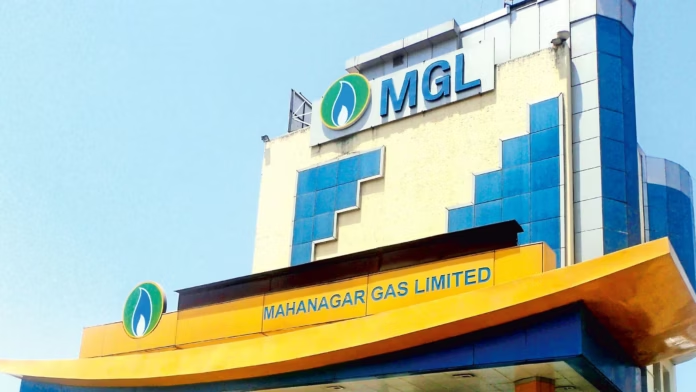
            Mahanagar Gas Ltd (MGL), the leading supplier of compressed natural gas (CNG) and piped natural gas (PNG) in Mumbai and its adjoining areas, is poised to expand its market footprint in the coming years. With a steady rise in natural gas consumption in the region, MGL plans to explore additional contracts by the end of 2025, marking a significant step in meeting the growing demand for clean energy alternatives.

            Ashu Singhal, the Managing Director of MGL, shared the company’s outlook on future expansions during the India Energy Week (IEW), stating, “Currently, we are comfortable with the existing arrangements. We have already added one contract. So, maybe by 2025-end or the next financial year (FY26), we will look for more contracts.” As demand for CNG and PNG continues to rise across Mumbai, Thane, Mira-Bhayander, Navi Mumbai, and surrounding areas, MGL’s strategic approach is focused on further solidifying its position as a key distributor.

            At present, MGL serves approximately 10.97 lakh vehicles through 366 CNG stations and provides PNG to around 26.82 lakh households. To meet the diverse needs of its expanding customer base, the company has established a robust supply network, which includes domestically produced administered price mechanism (APM) gas, high-pressure high-temperature (HPHT) gas, and term-regasified liquefied natural gas (LNG) contracts.

            MGL’s consumption levels are also on the rise. For the first nine months of FY25, the company reported an average consumption of approximately 4.05 million standard cubic metres per day (mscmd). Singhal noted that the company anticipates at least 10% annual growth in gas consumption, adding around 0.4 mscmd each year. While the APM reduction could impact the supply mix, MGL’s overall requirement is expected to reach 0.8 mscmd annually. Notably, MGL has increased its Henry Hub contracts to nearly 1.45 mscmd and expects significant HPHT bids from Reliance Industries in April 2025, potentially adding 5-6 mscmd. The company has seen impressive growth, reporting a 12% year-on-year increase in consumption during the first nine months of FY25, with full-year growth projections ranging from 13% to 14%. Industrial and commercial sectors have been significant drivers of this growth, while CNG demand is also growing steadily, driven by the transition of more vehicles to natural gas.

            In terms of infrastructure development, MGL is prioritising the expansion of its network. The company is increasing the number of CNG stations, with plans to add 80 stations this year, compared to the usual 25-30 stations annually. These include 15 stations within MGL’s existing geographies and 30 under its subsidiary, Unison Enviro. MGL is also expanding its reach by setting up LNG retail outlets for heavy commercial vehicles. The company recently launched a joint venture with Baidyanath LNG to operate LNG stations, with one already in operation and another in Aurangabad. The company expects to commission additional LNG stations in Maharashtra and Madhya Pradesh within the next 7-8 months, further extending its network.

            The growing natural gas demand reflects an increasing shift towards more sustainable energy sources in Mumbai and neighbouring regions. MGL is actively positioning itself to meet this demand, not only by expanding its distribution infrastructure but also by diversifying its offerings, such as the LNG network for heavy vehicles. By adopting a forward-looking strategy, MGL is well-placed to serve a broader customer base, contributing to the ongoing energy transition in India. As the company continues to invest in its infrastructure and technology, MGL’s future growth prospects remain strong. The company’s commitment to meeting rising demand, coupled with its focus on sustainability and expansion, ensures that MGL will remain at the forefront of the natural gas industry in India. MGL’s plans to secure more contracts and expand its infrastructure align with the steady rise in natural gas consumption in the region. The company is making substantial strides in positioning itself to be a key player in India’s clean energy future.

            Strategic Inland Waterways Terminal in Assam Connecting Bangladesh and Bhutan Becomes Operational

              0
              Strategic Inland Waterways Terminal in Assam Connecting Bangladesh and Bhutan Becomes Operational
              Strategic Inland Waterways Terminal in Assam Connecting Bangladesh and Bhutan Becomes Operational

              Strategic Inland Waterways Terminal in Assam Connecting Bangladesh and Bhutan Becomes Operational

              India has officially operationalised a strategic inland waterways terminal (IWT) at Jogighopa, located in Assam. The terminal, inaugurated on Tuesday by Union Minister of Ports, Shipping and Waterways, Sarbananda Sonowal, promises to strengthen economic ties with neighbouring Bhutan and Bangladesh. The event also saw the flagging off of two ships and barges carrying essential cargo – 110 metric tonnes of coal and stone chips – bound for Bangladesh.

              Strategically located 91 kilometres from Gelephu in Bhutan and 108 kilometres from Bangladesh, the Jogighopa terminal is poised to play a critical role in enhancing trade routes across the region. The terminal was built at a cost of over ₹82 crore, representing a significant investment in infrastructure aimed at boosting India’s connectivity with its neighbouring countries. The terminal itself boasts a cemented jetty and is equipped with electric-level cranes, ensuring smooth and efficient cargo handling. Additionally, the terminal houses a range of facilities designed to support seamless trade operations, including an administrative building, customs and immigration offices, a truck parking area, and a substantial 1,100-square-metre covered storage facility with power backup. There is also a vast open storage area of 11,000 square metres to accommodate various goods.

              Sarbananda Sonowal, during his address at the inauguration, highlighted the strategic importance of the terminal in the context of India’s regional trade and diplomatic goals. “The terminal will transform regional connectivity and bolster India’s trade with Bhutan and Bangladesh. Its strategic location positions it as an economic multiplier for the region, aligning with the Prime Minister’s ‘Neighbourhood First’ policy,” Sonowal stated. This policy aims to strengthen India’s relationships with its neighbouring countries and promote shared growth and prosperity. This new terminal is part of India’s broader strategy to solidify its position as a key waterway gateway in South Asia. It will facilitate more efficient transport of goods between India, Bangladesh, and Bhutan, contributing to the economic development of all three nations. With improved infrastructure and enhanced connectivity, the terminal will facilitate smoother trade flows and help to reduce transportation costs, benefiting businesses and consumers alike.

              The inauguration of the Jogighopa terminal is not only a landmark for trade between India and its neighbouring countries but also a testament to India’s commitment to regional cooperation. The terminal will provide a vital link for transporting goods such as coal, stone chips, agricultural produce, and other essential commodities across the region via water transport. Beyond its immediate benefits for trade, this development is a clear step toward promoting sustainable transport alternatives in South Asia. Inland waterways are considered a more eco-friendly mode of transport compared to road or rail, and this terminal will play a key role in shifting goods movement towards more sustainable, energy-efficient methods.

              This initiative is in line with India’s larger efforts to develop its inland water transport system and its regional partnerships. By expanding trade routes and improving infrastructure along river systems, India hopes to foster deeper economic integration within South Asia. The Jogighopa terminal will act as a key catalyst in driving forward India’s goal of becoming the primary transport hub in the region, while strengthening its ties with neighbouring countries such as Bangladesh and Bhutan. For local communities, the terminal offers more than just a trade route; it holds the promise of new employment opportunities and greater economic activity. For Bhutan and Bangladesh, this new route is likely to open doors to more accessible and cost-effective trade, contributing to the prosperity of these nations as well. The Jogighopa terminal is not just an infrastructure project; it’s a powerful symbol of India’s growing role in regional trade and its commitment to fostering better connectivity and relationships with its neighbours. This strategic initiative is set to create a ripple effect of growth across South Asia, enhancing both economic stability and prosperity for all involved nations.

              Patel Engineering Secures ₹1,090 Crore Irrigation Project in Maharashtra

                0
                Patel Engineering Secures ₹1,090 Crore Irrigation Project in Maharashtra
                Patel Engineering Secures ₹1,090 Crore Irrigation Project in Maharashtra

                Patel Engineering Secures ₹1,090 Crore Irrigation Project in Maharashtra

                Patel Engineering Limited (PEL) has emerged as the lowest bidder (L1) for a ₹1,090.45 crore irrigation project in Maharashtra. In a joint venture, PEL will execute the project with a 20% stake, valued at ₹218.09 crore. This latest contract, awarded by the Maharashtra Krishna Valley Development Corporation (MKVDC), represents a significant win for the 75-year-old infrastructure giant.

                The project will involve the construction of a pipeline distribution network for the Nira Deoghar Right Bank Main Canal, spanning from kilometre 87 to kilometre 135. Additionally, the network will include its distributaries and minors, which will cater to agricultural and irrigation needs across the region. The project will be carried out in Kalaj village, located in Phaltan taluka of Satara district, an area well known for its agricultural activity. With a scope of work that includes excavation, pipe trenching, supply, and installation of pipelines, Patel Engineering will also be responsible for placing various valves, chambers, and outlets as part of the project. Testing the pipeline system to ensure efficiency and reliability is another crucial task outlined in the contract. After the completion of the construction phase, Patel Engineering will provide operations, repairs, and maintenance for five years, ensuring the infrastructure remains functional and in optimal condition.

                One of the key elements of the contract is its 36-month timeline for completion, a challenging yet achievable target for the team at Patel Engineering. This ambitious project is a further testament to the company’s long-standing expertise in infrastructure development, particularly in irrigation systems. Having delivered over 85 dams, 40 hydroelectric projects, and more than 300 km of tunnelling works across India, Patel Engineering has built a solid reputation in the sector over the decades. For the local community and the state of Maharashtra, this irrigation project will significantly enhance the agricultural infrastructure, allowing for better water distribution to farmlands in the region. It is expected to improve irrigation capabilities, benefiting the agricultural economy of the area, which is heavily reliant on the timely and efficient distribution of water.

                This project is also a step towards addressing the broader water management challenges faced by the state. Maharashtra, with its significant agricultural base, has long struggled with irrigation inefficiencies due to inadequate infrastructure. The completion of this new pipeline system will improve access to water, reduce wastage, and enhance the overall productivity of the land, ultimately benefiting local farmers and the state economy as a whole. For Patel Engineering, securing this project adds another significant milestone to its impressive portfolio. The joint venture, with its decades of expertise in executing large-scale infrastructure projects, is well-equipped to meet the expectations of this contract. Moreover, the opportunity to extend operations and maintenance for five years post-construction will allow Patel Engineering to ensure that the irrigation system remains reliable and functional long after its completion. This development also highlights the growing importance of infrastructure in the agricultural and rural development sectors, reinforcing the need for such investments to support India’s food security and sustainable growth. Patel Engineering’s commitment to delivering high-quality projects will undoubtedly have a lasting impact on the state of Maharashtra and the wider Indian infrastructure landscape.

                NMDC Group Signs ₹21,000 Crore MoU to Transform Vadhvan Port into World-Class Maritime Hub

                  0
                  NMDC Group Signs ₹21,000 Crore MoU to Transform Vadhvan Port into World-Class Maritime Hub
                  NMDC Group Signs ₹21,000 Crore MoU to Transform Vadhvan Port into World-Class Maritime Hub

                  NMDC Group Signs ₹21,000 Crore MoU to Transform Vadhvan Port into World-Class Maritime Hub

                  India’s maritime infrastructure, UAE-based NMDC Group PJSC (formerly known as National Marine Dredging Company PJSC) has signed a ₹21,000 crore Memorandum of Understanding (MoU) with the Jawaharlal Nehru Port Authority (JNPA) for the development of offshore land at Vadhvan Port, located in Maharashtra. This ambitious project will involve extensive dredging, reclamation, and shore protection to transform Vadhvan into a world-class maritime hub, poised to meet the growing demands of global trade.

                  The project is expected to significantly enhance India’s port capabilities and is a key part of the government’s efforts to modernise port infrastructure. According to Unmesh Sharad Wagh, IRS, Chairman of JNPA, the agreement with NMDC Group is a crucial step towards realising the vision of a state-of-the-art Vadhvan Port. “This agreement is a major step in transforming Vadhvan Port into a world-class maritime hub,” he said. “By collaborating with NMDC Group, we are bringing global expertise to one of India’s most ambitious port projects, ensuring strategic and sustainable development.” The port development project is progressing ahead of schedule, with expectations to deliver high-quality infrastructure that will cater to future trade demands. The partnership with NMDC Group PJSC, known for its excellence in marine dredging and construction, will bring cutting-edge technology and expertise to the table. The project’s goal is not only to enhance port capacity but also to improve the efficiency and environmental sustainability of port operations.

                  This collaboration highlights the growing trend of foreign investment and expertise being integrated into India’s infrastructure projects. The Vadhvan Port project is expected to have far-reaching economic benefits, such as creating job opportunities, boosting trade, and driving regional growth in Maharashtra. By enhancing India’s port capabilities, the project will support the country’s aim of becoming a major global trade player. The MoU between JNPA and NMDC Group PJSC marks a critical milestone in advancing India’s port infrastructure. The agreement focuses on the long-term vision for Vadhvan Port as a vital maritime hub, capable of handling increased global trade flows while maintaining high standards of sustainability and operational efficiency. This development will also contribute to strengthening India’s position as a leader in global logistics and maritime trade.

                  The project will proceed in phases, with dredging and reclamation taking centre stage initially. Once complete, the port will serve as a key gateway for imports and exports, facilitating smoother trade operations for India’s industries. The project also aligns with the government’s broader plans to modernise the country’s maritime infrastructure as part of its “Sagarmala” initiative, which aims to boost port-led development and improve logistics across the nation. With global trade growing at a rapid pace, the development of Vadhvan Port represents a crucial opportunity for India to expand its maritime capacity and enhance its connectivity to international markets. As this transformative project moves forward, the collaboration between JNPA and NMDC Group PJSC signals the beginning of a new era for India’s port infrastructure, one that will lay the foundation for future growth and prosperity. For the people of Maharashtra, this project offers not just economic benefits, but also the promise of better infrastructure and job creation, making it a significant development for the region.

                  Tata Steel UK Receives Approval for Groundbreaking £1.25 Billion Electric Arc Furnace Project in Port Talbot

                    0
                    Tata Steel UK Receives Approval for Groundbreaking £1.25 Billion Electric Arc Furnace Project in Port Talbot
                    Tata Steel UK Receives Approval for Groundbreaking £1.25 Billion Electric Arc Furnace Project in Port Talbot

                    Tata Steel UK Receives Approval for Groundbreaking £1.25 Billion Electric Arc Furnace Project in Port Talbot

                    Tata Steel UK has taken a significant step towards transforming the future of steel production in the UK with the approval of its Electric Arc Furnace (EAF) project in Port Talbot. The Neath Port Talbot Council’s Planning Committee granted the go-ahead for the ambitious £1.25 billion investment, marking a turning point for the UK’s steel industry.

                    Rajesh Nair, CEO of Tata Steel UK, hailed the approval as a milestone for the company and the steel sector, especially amidst the challenges posed by a volatile global market. “This £1.25 billion investment is the most substantial in the UK steel industry in decades,” Nair said, underscoring the importance of the project in securing the long-term future of steelmaking in the region. Work on-site is scheduled to begin this summer, with the EAF facility expected to be operational by the end of 2027. The transition to Electric Arc Furnace technology is a key element in Tata Steel’s plan to modernise its operations and significantly reduce its carbon footprint. Once complete, the new facility will reduce CO2 emissions by an impressive 90% compared to the previous blast furnace-based operations, making it one of the most environmentally-friendly steel production processes in the country. In fact, this shift will cut CO2 emissions by approximately 1.5% of the UK’s total direct emissions, a major contribution to the country’s environmental targets.

                    The £500 million in UK Government funding for the project further demonstrates the strategic importance of the steel industry to the country’s economy. Jonathan Reynolds, the Secretary of Business and Trade, celebrated the approval, highlighting the project as a vital part of the UK’s Plan for Steel, which aims to create a sustainable, resilient steel sector. “This decision ensures security for Port Talbot’s green steel transition, offering certainty for the region’s steelmaking industry,” Reynolds said, noting that the plan will also help drive growth and attract investment. The Port Talbot EAF project is set to secure around 5,000 jobs within Tata Steel UK, providing vital employment in the region for generations to come. It is also a significant boon for South Wales, ensuring that the area continues to play a central role in the UK’s industrial landscape. The local community, which has relied on the steel industry for decades, will see the benefits of the green transition, as it brings both environmental and economic stability.

                    Tata Steel UK has been actively preparing for this transition over the past few months. In December, the company signed a deal with JCB to supply green steel, marking its commitment to sourcing sustainable materials. Furthermore, last month, it appointed Sir Robert McAlpine as the main works contractor for the project. Tata Steel has also selected Tenova, a global leader in metals technology, to supply the new electric arc furnace, ensuring that the project benefits from cutting-edge technological expertise. The development in Port Talbot represents not just a leap forward for Tata Steel but also for the UK’s steel industry as a whole. The project promises to bring substantial environmental benefits, while safeguarding the future of steel production in the region. With the backing of both Tata Steel and the UK Government, the Port Talbot EAF project is a model for how the steel industry can evolve to meet the challenges of the modern world.

                    IL&FS Group Commences ₹5,000 Crore Payout to Creditors, Including InvIT Units

                      0
                      IL&FS Group Commences ₹5,000 Crore Payout to Creditors, Including InvIT Units
                      IL&FS Group Commences ₹5,000 Crore Payout to Creditors, Including InvIT Units

                      IL&FS Group Commences ₹5,000 Crore Payout to Creditors, Including InvIT Units

                      The IL&FS Group, one of India’s leading infrastructure conglomerates, has begun an interim distribution of ₹5,000 crore as part of its ongoing debt resolution efforts. This payout consists of ₹3,500 crore in Infrastructure Investment Trust (InvIT) units and ₹1,500 crore in cash, and is being distributed to eligible creditors. This marks a crucial step in the resolution of the group’s massive debt, and is a result of the ongoing efforts to reduce liabilities and recover funds for creditors.

                      The payout is being carried out primarily by three of IL&FS Group’s key holding companies—Infrastructure Leasing and Financial Services (IL&FS), IL&FS Financial Services (IFIN), and IL&FS Transportation Networks (ITNL). These entities collectively manage a significant portion of the group’s debt, and are responsible for the distribution to major creditors, including those holding public funds. A key feature of this payout is the issuance of InvIT units by Roadstar Infra Investment Trust, a body which holds six key road assets valued at ₹8,576 crore. The InvIT units are being distributed through a private placement, in compliance with Securities and Exchange Board of India (SEBI) regulations. These units will eventually be listed on the stock exchange, further facilitating the recovery process for the creditors.

                      The InvIT route, which allows for the pooling and monetisation of assets, is expected to provide liquidity to creditors sooner than the final resolution of all assets. This move resolves six Special Purpose Vehicles (SPVs), including IL&FS, IFIN, ITNL, and Sabarmati Capital One, which had previously extended loans to these entities. Following this payout, the total debt resolved across the IL&FS Group companies will amount to approximately ₹43,000 crore, surpassing 70% of the group’s overall debt resolution target of ₹61,000 crore. This payout adds to the ₹12,000 crore already disbursed to creditors across 12 IL&FS Group entities over the past two years under the approved interim distribution framework. The group has now distributed a total of over ₹17,000 crore across its entities.

                      Nand Kishore, Chairman and Managing Director of IL&FS Group, commented on the significance of this milestone. “This payout marks a crucial turning point for the group. It facilitates the timely release of funds to creditors, including several public funds at the holding company level, without waiting for the final resolution of the remaining assets. The public interest board is working tirelessly to expedite the resolution process and is confident of meeting the total debt resolution target of ₹61,000 crore,” he said. The payout also brings relief to a variety of creditors, including banks, financial institutions, and public funds, many of which had been waiting for funds from the distressed group. The resolution plan, with its focus on assets like road infrastructure, will significantly impact the creditors’ recoveries and aid in the group’s long-term financial rehabilitation.

                      For the creditors, especially those with public funds invested in the company, this payout is an encouraging sign that the group is making real progress. While many steps remain to fully resolve the group’s debt, the distribution of both cash and InvIT units signifies that the recovery process is moving forward, with greater transparency and a focus on timely releases of funds. IL&FS’s debt resolution journey is a critical one for the Indian economy, given the size and complexity of the group. This latest development brings a sense of optimism that the group’s liabilities will be addressed, benefiting both creditors and stakeholders in the coming months.