Strategic Inland Waterways Terminal in Assam Connecting Bangladesh and Bhutan Becomes Operational
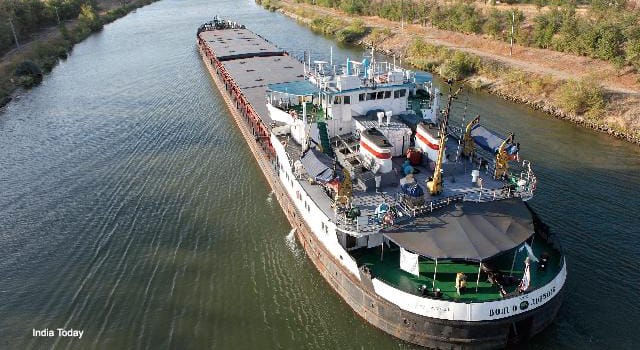
India has officially operationalised a strategic inland waterways terminal (IWT) at Jogighopa, located in Assam. The terminal, inaugurated on Tuesday by Union Minister of Ports, Shipping and Waterways, Sarbananda Sonowal, promises to strengthen economic ties with neighbouring Bhutan and Bangladesh. The event also saw the flagging off of two ships and barges carrying essential cargo – 110 metric tonnes of coal and stone chips – bound for Bangladesh.
Strategically located 91 kilometres from Gelephu in Bhutan and 108 kilometres from Bangladesh, the Jogighopa terminal is poised to play a critical role in enhancing trade routes across the region. The terminal was built at a cost of over ₹82 crore, representing a significant investment in infrastructure aimed at boosting India’s connectivity with its neighbouring countries. The terminal itself boasts a cemented jetty and is equipped with electric-level cranes, ensuring smooth and efficient cargo handling. Additionally, the terminal houses a range of facilities designed to support seamless trade operations, including an administrative building, customs and immigration offices, a truck parking area, and a substantial 1,100-square-metre covered storage facility with power backup. There is also a vast open storage area of 11,000 square metres to accommodate various goods.
Sarbananda Sonowal, during his address at the inauguration, highlighted the strategic importance of the terminal in the context of India’s regional trade and diplomatic goals. “The terminal will transform regional connectivity and bolster India’s trade with Bhutan and Bangladesh. Its strategic location positions it as an economic multiplier for the region, aligning with the Prime Minister’s ‘Neighbourhood First’ policy,” Sonowal stated. This policy aims to strengthen India’s relationships with its neighbouring countries and promote shared growth and prosperity. This new terminal is part of India’s broader strategy to solidify its position as a key waterway gateway in South Asia. It will facilitate more efficient transport of goods between India, Bangladesh, and Bhutan, contributing to the economic development of all three nations. With improved infrastructure and enhanced connectivity, the terminal will facilitate smoother trade flows and help to reduce transportation costs, benefiting businesses and consumers alike.
The inauguration of the Jogighopa terminal is not only a landmark for trade between India and its neighbouring countries but also a testament to India’s commitment to regional cooperation. The terminal will provide a vital link for transporting goods such as coal, stone chips, agricultural produce, and other essential commodities across the region via water transport. Beyond its immediate benefits for trade, this development is a clear step toward promoting sustainable transport alternatives in South Asia. Inland waterways are considered a more eco-friendly mode of transport compared to road or rail, and this terminal will play a key role in shifting goods movement towards more sustainable, energy-efficient methods.
This initiative is in line with India’s larger efforts to develop its inland water transport system and its regional partnerships. By expanding trade routes and improving infrastructure along river systems, India hopes to foster deeper economic integration within South Asia. The Jogighopa terminal will act as a key catalyst in driving forward India’s goal of becoming the primary transport hub in the region, while strengthening its ties with neighbouring countries such as Bangladesh and Bhutan. For local communities, the terminal offers more than just a trade route; it holds the promise of new employment opportunities and greater economic activity. For Bhutan and Bangladesh, this new route is likely to open doors to more accessible and cost-effective trade, contributing to the prosperity of these nations as well. The Jogighopa terminal is not just an infrastructure project; it’s a powerful symbol of India’s growing role in regional trade and its commitment to fostering better connectivity and relationships with its neighbours. This strategic initiative is set to create a ripple effect of growth across South Asia, enhancing both economic stability and prosperity for all involved nations.