Home Blog Page 332

JKRERA mandates registration for Kashmir builders

    0
    JKRERA mandates registration for Kashmir builders
    JKRERA mandates registration for Kashmir builders

    JKRERA mandates registration for Kashmir builders

    The Jammu and Kashmir real estate sector is set for a transformative shift as the Jammu and Kashmir Real Estate Regulatory Authority (JKRERA) implements mandatory registration for builders and developers. The move, effective from December 16, 2024, aims to safeguard buyers from fraudulent practices and bring transparency to the Union Territory’s burgeoning real estate market. Led by Satish Chandra, a former IAS officer, JKRERA is poised to play a pivotal role in regulating the region’s housing sector. The authority has already begun inspecting projects, signalling a new era of accountability for builders.

    Until now, real estate projects in Jammu and Kashmir operated under various municipal and revenue authorities, often resulting in inconsistencies and disputes. Buyers frequently reported fraudulent land titles and unfulfilled promises regarding infrastructure. In a recent inspection, JKRERA scrutinised over 30 projects and found 20 in violation of the mandatory registration requirement. Developers were granted a 15-day window to comply, marking the authority’s commitment to creating a fair playing field. The penalties for non-compliance are stringent, including fines up to 10 per cent of the project cost and imprisonment for up to three years, a clear message to errant builders.

    Sustainability and planned development are central to JKRERA’s mandate. Projects spanning over 500 square metres or comprising more than eight apartments must now provide comprehensive details, from land titles to project layouts, ensuring buyers have access to verifiable information. By enforcing these measures, the authority aims to eliminate unplanned housing colonies that lack basic amenities such as roads, electricity, and water supply. This is a significant step towards creating sustainable urban spaces in Jammu and Kashmir, aligning the region’s real estate practices with national standards.

    The move also addresses broader civic concerns, including the lack of regulatory oversight that previously allowed substandard developments to proliferate. By requiring real estate agents to register with JKRERA and sell only approved properties, the authority is introducing a much-needed layer of accountability. The inclusion of officials from housing, urban development, and municipal departments further strengthens its regulatory framework. As Jammu and Kashmir transitions into a more structured real estate market, the emphasis on protecting buyer interests while promoting sustainable urban development underscores JKRERA’s holistic approach.

    Through these reforms, JKRERA is not only reshaping the real estate landscape but also instilling confidence among homebuyers. The initiative sets a precedent for transparency and sustainability, ensuring that development in the Union Territory aligns with both civic needs and environmental considerations. This pivotal step promises a brighter and more accountable future for the region’s real estate sector.

    Pune real estate faces challenges from activism

    0
    Pune real estate faces challenges from activism
    Pune real estate faces challenges from activism

    Pune real estate faces challenges from activism

    Pune’s real estate sector, once a beacon of growth, now faces significant challenges due to rising activism and stringent regulatory norms. Industry leaders at a recent real estate expo, hosted by the Confederation of Real Estate Developers’ Associations of India (CREDAI), raised concerns about the mounting influence of activism and the intricate nature of environmental regulations. The interplay between these factors has created roadblocks for large-scale housing projects, potentially affecting the city’s supply of new homes.

    Manish Kaneria, head of CREDAI’s environment committee, emphasised that the increasing number of show cause notices from the Maharashtra Pollution Control Board (MPCB) has created a climate of uncertainty for developers. While the board’s actions aim to ensure environmental compliance, Kaneria highlighted the complexity of Maharashtra’s green norms, which developers often find challenging to navigate. Regulatory hurdles, compounded by activist-driven complaints, have delayed several projects, forcing developers to engage with the MPCB for redressal. However, the persistent grievances underscore the need for a more collaborative approach between stakeholders.

    Ranjit Naiknavare, president of CREDAI Pune, pointed out that developers are actively adopting measures to curb dust pollution and minimise their environmental footprint. Initiatives such as using green nets at construction sites and regularly watering structures reflect the sector’s commitment to sustainability. Yet, he noted that a significant share of dust originates from infrastructure projects like Metro construction and roadworks, not housing developments. These external factors further complicate the narrative, with developers bearing the brunt of activism that often overlooks broader contributors to pollution.

    The delayed supply of housing is a pressing issue for Pune’s rapidly urbanising landscape. Bharat Agarwal, president of NAREDCO Pune, warned that regulatory bottlenecks are likely to hinder the timely completion of large-scale projects, impacting affordability and availability. The industry is calling for the simplification of green norms and regular engagement between developers, environmental authorities, and activists to address grievances constructively. This collaborative dialogue is essential for striking a balance between urban growth and environmental preservation.

    Sustainability remains a central theme in these discussions. While regulations are critical for ensuring eco-friendly urbanisation, the industry emphasises the need for targeted enforcement that prioritises genuine violations over broad-based actions. Collaborative solutions are vital to align environmental goals with the city’s burgeoning housing demand. As Pune continues to grow, fostering a sustainable real estate sector that accommodates both development and ecological stewardship will be key to its success.

    Haryana Minister Urges Traffic Plan to Prevent Snarls During Metro Expansion

      0
      Haryana Minister Urges Traffic Plan to Prevent Snarls During Metro Expansion
      Haryana Minister Urges Traffic Plan to Prevent Snarls During Metro Expansion

      Haryana Minister Urges Traffic Plan to Prevent Snarls During Metro Expansion

      Haryana’s Minister of State (MoS) for Industry and Commerce, Rao Narbir Singh, has called on officials to create a detailed traffic diversion plan to ensure smooth traffic flow and reduce inconvenience to commuters during the ongoing metro expansion between Millennium City Centre and Cyber City in Gurugram. The minister’s instruction came after an inspection of the proposed metro expansion route, where he emphasised the importance of thorough planning to avoid traffic snarls and ensure public comfort during the construction phase. This project is seen as crucial to the state’s broader efforts to modernise transport infrastructure and address the growing urban mobility needs in the region.

      The expansion of the metro is expected to significantly enhance connectivity between key urban areas of Gurugram, ultimately reducing congestion at other busy stations. Minister Singh stressed the need for the traffic management plan to manage the growing volume of traffic and ensure that daily commuters are not heavily affected by the construction. Officials were also instructed to finalise the metro route alignment within a month to ensure that the construction can progress smoothly. The project, which is set to connect Millennium City Centre to Cyber City, is a part of Haryana’s larger push to modernise public transport. Once completed, it will provide a more efficient and cleaner mode of transport for residents, easing the pressure on congested roads and offering a more sustainable alternative to road travel.

      To prepare for the construction, the Gurugram Metro Rail Limited (GMRL) is conducting final local surveys to assess the existing conditions along the proposed route. A ground-penetrating radar (GPR) survey will also be carried out to identify any underground utilities, such as water pipes, sewage lines, and electricity cables, which might be affected during construction. This proactive approach is designed to prevent accidental damage to critical infrastructure and ensure minimal disruption to public services during the construction phase. Rao Narbir Singh further highlighted the importance of keeping essential public utilities, such as drainage, water supply, electricity, and sewage systems, operational throughout the construction process. Any disruptions to these services must be addressed with timely mitigation measures. The final metro route alignment will take these considerations into account to ensure the seamless progression of the project.

      The metro expansion comes at a crucial time as Gurugram and the surrounding areas continue to grow rapidly, increasing the demand for efficient public transport. The 26.6 km main metro line from Millennium City Centre to Cyber City, along with a 1.8 km spur from Basai Village to Dwarka Expressway, will ease traffic congestion and provide better access to key areas. Estimated to cost Rs 5,452 crore, the project is an integral part of Haryana’s long-term vision to improve urban mobility and contribute to the city’s development. Prime Minister Narendra Modi is expected to lay the foundation stone for the project in February 2024, with officials committed to ensuring the timely completion of the metro system. The project will use advanced technologies such as communication-based train control (CBTC) signalling and standard gauge tracks, with initial three-coach trains set to be introduced, which can later be expanded to six coaches as needed. While the metro expansion promises numerous benefits, successful execution of the traffic management plan during the construction phase will be critical in minimising disruptions and ensuring a smooth transition to improved infrastructure. With careful planning and coordination, officials are optimistic that the metro expansion will provide long-term benefits for commuters, enhancing connectivity, reducing congestion, and supporting the region’s continued growth.

      Bengaluru to Get New Devanahalli Railway Terminal to Ease Station Congestion

        0
        Bengaluru to Get New Devanahalli Railway Terminal to Ease Station Congestion
        Bengaluru to Get New Devanahalli Railway Terminal to Ease Station Congestion

        Bengaluru to Get New Devanahalli Railway Terminal to Ease Station Congestion

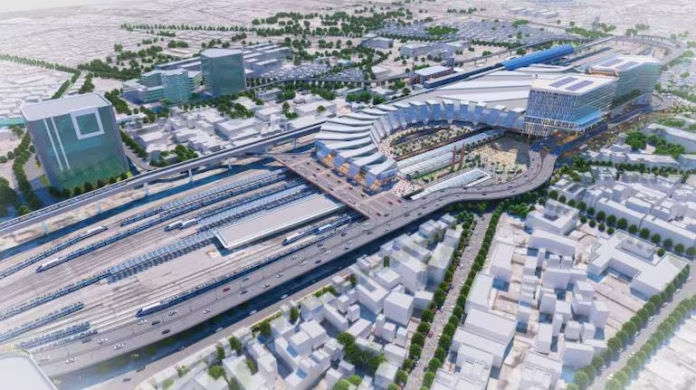
        Bengaluru is set to benefit from a major infrastructure upgrade as the Minister of State (MoS) for Railways, V Somanna, announced plans to construct a new terminal at Devanahalli Railway Station. This new terminal is part of a broader strategy to modernise the city’s transport infrastructure, which includes significant developments at other stations such as Hoodi Halt, Whitefield, and Carmelaram. The initiative is a response to Bengaluru’s growing railway traffic, which has led to overcrowding and delays at key stations.

        The new Devanahalli terminal aims to alleviate pressure on Bengaluru’s already strained railway system. Bengaluru’s rail network has been grappling with increased passenger numbers, leading to congestion at major hubs. Somanna’s announcement signals the government’s commitment to improving the city’s transport facilities and catering to the growing urban mobility needs. As part of this initiative, Rs 1,200 crore worth of development work is currently underway at the KSR Bengaluru Railway Station. The redevelopment project, which is being executed under the Public-Private Partnership (PPP) model, will bring in both government funding and private sector expertise to upgrade the station’s infrastructure. In addition to the new Devanahalli terminal, the project includes the addition of two new platforms at KSR Bengaluru, with an estimated budget of Rs 180 crore for their construction. The expansion of KSR Bengaluru station will help accommodate the city’s increasing rail traffic, thus reducing delays and improving the passenger experience.

        The city’s railway network is undergoing several other major transformations as well. A 280 km circular railway network, designed to ease congestion and enhance connectivity, is making significant progress. Once completed, the circular railway will provide a faster, more convenient travel option for commuters, offering an alternative to road travel. Two major suburban rail corridors, Benniganahalli to Chikkabanavara (25 km) and Heelalige to Rajanukunte (46.8 km), are expected to be completed by March 2027. These corridors will cater to the growing demand for suburban transport, making it easier for commuters to travel between vital areas of the city. Another important development is the quadrupling of the railway line between Bengaluru Cantonment and Whitefield, which is part of a wider initiative to improve connectivity between these two key areas. As Bengaluru continues to experience rapid urbanisation, enhancing transport links between critical locations will be essential to ensuring smooth travel for both residents and businesses.

        Minister Somanna also highlighted the importance of addressing Bengaluru’s drainage challenges, as the city’s unpredictable weather patterns often lead to flooding, disrupting transport. To mitigate the effects of heavy rainfall, officials are focusing on improving drainage systems and ensuring that new infrastructure is built with resilience to flooding in mind. Further developments include the construction of several Road Over Bridges (ROBs), Road Under Bridges (RUBs), underpasses, and water vents. These measures will help alleviate traffic congestion, improve water flow, and reduce the impact of flooding in the region. The ongoing infrastructure upgrades are not just designed to solve immediate challenges but are also aimed at preparing Bengaluru for future growth. With these efforts, the city is on its way to becoming a more connected, efficient, and commuter-friendly metropolis. As these projects unfold, local residents are optimistic that they will lead to reduced travel times and smoother daily commutes.

        RERA reforms set to boost Delhi housing

        0
        RERA reforms set to boost Delhi housing
        RERA reforms set to boost Delhi housing

        RERA reforms set to boost Delhi housing

        Delhi’s real estate sector is on the cusp of a transformative journey, as key stakeholders convened to chart a new course for the capital’s urban and housing landscape. The Naredco Delhi Chapter recently hosted a landmark developers’ meet, bringing together developers, policymakers, and regulatory authorities to address pressing challenges. Anand Kumar, chairman of Delhi RERA, joined Hari Babu, Naredco national president, and Harsh Vardhan Bansal, Delhi Chapter president, in spearheading discussions aimed at reviving the city’s real estate market.

        Collaboration emerged as a central theme of the event, with Anand Kumar emphasising the importance of synergy between developers and regulatory bodies. New RERA guidelines were unveiled to strengthen trust and transparency in the real estate sector, ensuring compliance with building norms and fostering accountability. Kumar lauded Naredco’s proactive measures, including the formation of a dedicated task force that has already identified 19 critical bottlenecks affecting the sector. From delays in green building approvals to plot amalgamation issues, these challenges require swift resolution to facilitate seamless urban development.

        A recurring focus during the meet was Delhi’s need to compete with neighbouring cities like Gurgaon, which have overshadowed the capital in real estate vibrancy. Harsh Vardhan Bansal highlighted how infrastructure delays and urban planning shortfalls have pushed investment and activity to suburban areas, intensifying traffic congestion and decentralising economic growth. To combat this, the newly formed task force aims to expedite solutions through regular meetings involving representatives from DDA, MCD, DMRC, and private developers. Projects that prioritise connectivity, affordability, and luxury could position Delhi as a global real estate hub.

        Sustainability took centre stage as the discussions extended to green approvals and energy-efficient development. By resolving these bottlenecks, the city can align itself with eco-conscious urbanisation trends while addressing climate challenges. Developers advocated for a greater focus on sustainable housing that balances luxury with affordability. Beyond addressing civic issues, these initiatives reflect a larger vision of creating a livable and inclusive urban environment, where Delhiites can thrive without relying on suburban regions for quality living and job opportunities.

        As Hari Babu stated, “Delhi has the potential to be a global capital for real estate and business. Tackling infrastructure gaps and aligning with RERA reforms are key steps towards achieving this vision.” The Naredco meet underscored the urgency of transforming Delhi’s real estate sector through collaborative efforts, sustainable planning, and innovative solutions, paving the way for a dynamic and resilient future.

        Gujarat Approves Rs 220 Crore for Four-Laning of Kalupur and Sarangpur Railway Overbridges

          0
          Gujarat Approves Rs 220 Crore for Four-Laning of Kalupur and Sarangpur Railway Overbridges
          Gujarat Approves Rs 220 Crore for Four-Laning of Kalupur and Sarangpur Railway Overbridges

          Gujarat Approves Rs 220 Crore for Four-Laning of Kalupur and Sarangpur Railway Overbridges

          Gujarat Chief Minister Bhupendra Patel has approved a significant investment of Rs 220 crore to four-lane and renovate the Kalupur and Sarangpur railway overbridges in Ahmedabad. This move is part of the larger Rs 440 crore Kalupur Railway Station Redevelopment Project, which seeks to balance the preservation of heritage with modern infrastructure development, in line with Prime Minister Narendra Modi’s vision of ‘Virasat Bhi, Vikas Bhi’ (both heritage and development).

          These overbridges, crucial for Ahmedabad’s transport network, have become outdated and are no longer sufficient to handle the city’s increasing traffic volume. The Kalupur Railway Overbridge, known as Manu Bhai Parmar Bridge, was built in 1915, while the Sarangpur Overbridge, constructed in 1940, shows significant signs of wear. The Kalupur Overbridge currently has just three lanes with footpaths, while the Sarangpur bridge is even more limited with only two lanes. These old structures, which once served the city well, are now struggling to cope with the demands of modern traffic. This has led to rising safety concerns and frequent traffic jams, prompting the need for a major upgrade.

          Under the new plan, both the Kalupur and Sarangpur overbridges will be demolished and replaced with four-lane structures, which will help ease the traffic congestion in the area and improve commuter safety. The Railway Land Development Authority (RLDA) will oversee the project, ensuring that the work progresses smoothly and on schedule. With the new four-lane overbridges, traffic flow in one of Ahmedabad’s busiest areas is expected to improve significantly, making commuting faster and more efficient, especially during peak hours. In addition to the Kalupur and Sarangpur projects, an allocation of Rs 52.83 crore has been made for the construction of a new overbridge at railway crossing LC-100-2E, located between Radhanpur city and Bhilot road. This new overbridge will further enhance connectivity between Radhanpur, Bhilot, and Suigam, benefiting both passengers and the movement of goods.

          The total financial outlay for these infrastructure projects amounts to Rs 272.75 crore, with Rs 106.67 crore earmarked for the Kalupur overbridge, Rs 113.25 crore for the Sarangpur overbridge, and Rs 52.83 crore for the Radhanpur bridge. Once completed, these modernised overbridges will reduce traffic congestion, improve road safety, and contribute to smoother urban mobility in Ahmedabad. Local officials have expressed optimism about the positive impact these projects will have on the city’s transport system. By investing in these crucial infrastructure upgrades, the Gujarat government aims to foster economic growth, reduce daily commuting frustrations, and meet the future transportation needs of the region. With the expected completion of these projects, Ahmedabad is poised to benefit from improved infrastructure that will contribute to its growth as a thriving metropolitan hub. As work progresses on the new overbridges, officials will continue to monitor the projects closely, ensuring minimal disruption to traffic and a timely completion of the works. This modernisation is expected to bring long-term benefits to both the residents of Ahmedabad and the surrounding areas, easing travel and enhancing the quality of life for thousands of commuters.

          Century Real Estate LIVA sparks demand in Bengaluru

          0
          Century Real Estate LIVA sparks demand in Bengaluru
          Century Real Estate LIVA sparks demand in Bengaluru

          Century Real Estate LIVA sparks demand in Bengaluru

          Century Real Estate has made a significant mark with its latest residential project, Century LIVA, strategically located along Yelahanka-Doddaballapur Road (SH-9). With over 80 per cent of its inventory sold during the pre-launch phase, the project has already achieved sales exceeding ₹200 crore, demonstrating robust demand for high-quality, modern housing in Bengaluru. Targeting a total revenue of ₹270 crore, Century LIVA is poised to capitalise on the city’s burgeoning real estate market, driven by aspirational buyers seeking a blend of convenience, lifestyle, and investment potential.

          Spanning 4.6 lakh square feet, the project comprises 247 meticulously designed 3BHK and 4BHK units. Starting at ₹1.54 crore for 3BHK apartments and reaching ₹4 crore for luxury penthouses, LIVA caters to a diverse clientele seeking spacious and premium living options. The development boasts a remarkable 70 per cent allocation to open spaces and over 40 amenities tailored to varied lifestyles. From active zones like jogging tracks and basketball courts to tranquil spaces like hammock gardens, the project emphasises creating a vibrant community. Its family-oriented amenities, including a modern pool, kids’ play zones, and barbecue corners, further enhance its appeal.

          Situated in Yelahanka, a rapidly transforming region in Bengaluru, Century LIVA benefits from exceptional connectivity and proximity to key landmarks, including Kempegowda International Airport, which is just 30 minutes away. The area is witnessing dynamic growth, with major infrastructure projects such as the Satellite Town Ring Road (STRR), the Bengaluru Business Corridor (BBC), and a planned 150-acre central park boosting its value. These developments, coupled with investments from global giants like Foxconn, are fuelling a surge in demand for quality housing in northern Bengaluru.

          From a sustainability perspective, Century LIVA aligns with the growing demand for eco-conscious development. By dedicating a substantial portion of its area to open spaces and integrating energy-efficient designs, the project contributes to Bengaluru’s green urbanisation goals. Sustainable planning and community-driven layouts ensure that the project resonates with the evolving priorities of modern homebuyers who value environmental responsibility alongside premium living.

          Maninder Chhabra, Director of Sales, Marketing, and CRM at Century Real Estate, highlighted the shifting dynamics in Bengaluru’s real estate market. “Post-pandemic, there’s a clear preference for larger, well-designed spaces that cater to holistic lifestyles. Century LIVA embodies this demand with its focus on premium amenities, expansive layouts, and quality construction,” he noted. The project’s success reflects not just the city’s appetite for luxury housing but also the evolving aspirations of a diverse buyer base.

          As Bengaluru continues to be a magnet for migrants drawn by its thriving IT and start-up ecosystem, the demand for innovative and sustainable housing solutions is on the rise. Century LIVA, with its modern design, strategic location, and focus on community living, exemplifies the city’s transformative journey towards urban excellence.

          Thane Metro 4A Route Delayed by a Year, Costs Surge by Rs 63 Crore

            0
            Thane Metro 4A Route Delayed by a Year, Costs Surge by Rs 63 Crore
            Thane Metro 4A Route Delayed by a Year, Costs Surge by Rs 63 Crore

            Thane Metro 4A Route Delayed by a Year, Costs Surge by Rs 63 Crore

            The much-anticipated Kasarwadavli-Gaimukh Metro 4A route in Thane has encountered significant delays, pushing its completion date to April 2025, over a year later than initially planned for March 2024. The delay has resulted in an increase of Rs 63 crore in the overall project costs, according to the Mumbai Metropolitan Region Development Authority (MMRDA). This revelation came after an RTI (Right to Information) query filed by Mumbai-based activist Anil Galgali, who raised concerns about the impact on commuters, particularly due to the ongoing traffic disruptions in the area.

            The Metro 4A route is a key component of Mumbai’s expanding metro network, connecting South Mumbai with its northern suburbs. The project was initially approved in 2019, and work orders were issued for the 2.7 km stretch in September 2019, with the completion date set for March 2024. However, multiple challenges have caused delays, pushing the timeline back to April 2025. Though MMRDA has confirmed that various factors contributed to the delay, they have not disclosed specifics. In response to the missed deadlines, the contractor involved has been fined Rs 22 lakh. The delay in the project is not the only concern. As construction progresses along Ghodbunder Road, one of Thane’s busiest thoroughfares, commuters have been experiencing significant traffic jams. These congestion issues are exacerbated by the lack of a quick resolution, leaving daily travellers frustrated. Activist Anil Galgali has voiced his concerns, urging authorities to expedite the process to alleviate the burden on commuters.

            The original budget for the Kasarwadavli-Gaimukh Metro 4A route was Rs 440 crore. However, with the delay and additional project management expenses, the total cost has increased by Rs 63 crore, raising concerns about cost overruns. As Mumbai’s infrastructure projects continue to face budget challenges, the cost hike has added to the public’s anxieties, particularly as taxpayers bear the brunt of these additional expenses. Once completed, the Metro 4A route is expected to ease traffic congestion and improve connectivity between Thane and South Mumbai. The project is a part of a larger vision that aims to improve the city’s overall transportation infrastructure. The metro corridor, which spans 56 km, will include Line 4 (Wadala-Kasarwadavli) and the Gaimukh extension of Line 4A, and will eventually link to Mira Road’s Shivaji Chowk via Line 10. The new metro lines will help reduce the growing traffic bottlenecks, especially along Ghodbunder Road, and serve millions of commuters, improving daily travel experiences for residents.

            In an effort to manage the delay, MMRDA officials are exploring ways to expedite construction, including reviewing work processes and addressing contractor-related issues. Adjustments to the construction schedule are being considered to minimise further disruptions. Although the extended timeline has caused frustration, the MMRDA assures that the final outcome will be worth the wait, providing better infrastructure and easing the city’s traffic problems. For now, commuters must continue to navigate the construction-related challenges, but officials remain focused on ensuring that the completed metro line delivers long-term benefits by enhancing connectivity and reducing traffic congestion. As the city eagerly awaits the completion of the project, it remains essential that the authorities maintain efficient execution to meet the revised deadline.

            Women could reshape Indian realty landscape

              0
              Women could reshape Indian realty landscape
              Women could reshape Indian realty landscape

              Women could reshape Indian realty landscape

              The Indian real estate sector, despite its stature as a significant employment generator, grapples with glaring gender disparities. A recent report revealed that out of 7.1 crore workers employed in the sector, only 70 lakh are women, representing a Female Labour Force Participation Rate (LFPR) of just 25.1 per cent. This striking imbalance highlights the deep-rooted challenges women face in securing equal opportunities in a traditionally male-dominated industry.

              The study, jointly conducted by Max Estates and In Tandem Global Consulting, titled Concrete Change: A Study of the Economic Impact of Better Pay Parity & Inclusion of Women in Real Estate, emphasised the transformative potential of addressing these disparities. Women comprise 48.5 per cent of India’s population, yet only 1.2 per cent of this demographic is employed in real estate. The sector’s underrepresentation of women, coupled with unequal pay structures across roles, poses a significant barrier to achieving its full economic potential.

              Leadership voices from the industry have called for proactive measures to bridge this gap. Sahil Vachani, Vice Chairman and Managing Director of Max Estates, underscored the importance of shifting mindsets at the leadership level to champion inclusivity. Shormishtha Ghosh, Founder and Managing Director of In Tandem Global Consulting, highlighted the economic and societal benefits of greater gender parity. She believes empowering women through targeted upskilling and leadership opportunities could redefine the workforce composition, driving innovation and profitability.

              From a sustainability perspective, inclusive workforce practices in real estate align with long-term goals of equitable growth and societal well-being. Enhancing female participation ensures diverse perspectives, which are critical in developing urban spaces that are sustainable and attuned to community needs. By integrating technology and fostering leadership roles for women, the sector can address its pressing challenges while contributing to a more balanced and resilient urban development narrative.

              As India’s real estate sector stands on the cusp of unprecedented growth, the journey towards inclusivity demands strategic focus. Addressing gender disparity is not only a social imperative but also a pathway to unlocking untapped economic potential and fostering innovation that reflects the aspirations of a progressive society.

              Hyderabad Real Estate Records 7% Growth in 2024

              0
              Hyderabad Real Estate Records 7% Growth in 2024
              Hyderabad Real Estate Records 7% Growth in 2024

              Hyderabad Real Estate Records 7% Growth in 2024 

              Hyderabad’s residential real estate market has shown resilience in 2024, registering a 7% year-on-year (YoY) increase in home sales and a significant 23% YoY surge in transaction value. A total of 76,613 residential units were sold during the year, up from 71,912 in 2023 and 68,519 in 2022, indicating sustained demand despite economic challenges. The growth underscores Hyderabad’s reputation as a burgeoning hub for real estate activity, driven by affordability, connectivity, and robust infrastructure.

              The December 2024 performance offered a mixed picture, with 5,805 properties registered, representing a 5% month-on-month (MoM) increase but a 20% YoY decline. The total value of homes registered in December stood at ₹3,590 crore, reflecting a modest 2% MoM growth but a 14% YoY drop. Geographically, Medchal-Malkajgiri emerged as the most active district, accounting for 42% of registrations, followed by Rangareddy at 41% and Hyderabad at 17%. This distribution highlights the growing preference for suburban districts offering larger homes and competitive pricing.

              Price segmentation revealed that properties under ₹50 lakh dominated, accounting for 45,605 registrations. The mid-segment homes priced between ₹50 lakh and ₹1 crore contributed 19,964 registrations, while high-end properties exceeding ₹1 crore recorded 11,044 sales. Notably, a majority of transactions were for homes sized between 1,000 and 2,000 square feet, reflecting a preference for family-oriented living spaces among buyers. These figures underline Hyderabad’s appeal to a broad spectrum of buyers, from budget-conscious individuals to affluent investors.

              From a sustainability perspective, Hyderabad’s planned urban expansion and focus on developing suburban areas reduce congestion in the city’s core while promoting eco-friendly living. By dispersing housing demand, districts like Medchal-Malkajgiri and Rangareddy help alleviate urban pressure, paving the way for sustainable growth. Encouraging such decentralisation can lead to better resource utilisation, lower commute times, and improved quality of life for residents.

              Hyderabad’s robust performance in 2024 cements its position as a key real estate destination in India. As affordability and infrastructure remain focal points, the market’s ability to cater to diverse buyer needs while driving sustainable urbanisation sets a benchmark for other cities.