Home Blog Page 401

Star Cement’s Target Price Maintained at INR 227 by ICICI Securities

Star Cement's Target Price Maintained at Rs 227 by ICICI Securities

Star Cement’s Target Price Maintained at INR 227 by ICICI Securities

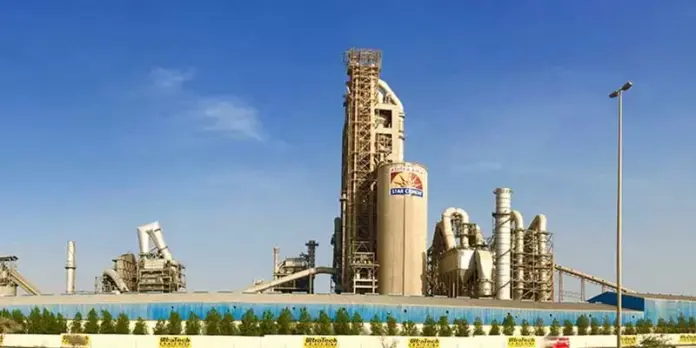
ICICI Securities has downgraded its recommendation on Star Cement to “Hold” with a target price of INR 227, slightly below its current market price of INR 231.55. This downgrade follows a series of developments, including the announcement of UltraTech Cement’s acquisition of a non-controlling 8.69 percent stake in Star Cement at a price of INR 235 per share.

For the quarter ending 30 September 2024, Star Cement reported consolidated total income of INR 643.18 crore, a decrease of 14.51 percent from the previous quarter, but a growth of 8.82 percent compared to the same quarter in the previous year. The company posted a net profit of INR 5.67 crore for the quarter. Star Cement, a mid-cap company founded in 2001, has a market capitalization of INR 9,441.25 crore. The company’s products primarily include cement, clinker, and scrap, with its total outstanding shares standing at 40 crore as of September 30, 2024.

ICICI Securities noted that while Star Cement’s promoter group holds a substantial 66.47% stake in the company, the upcoming acquisition by UltraTech Cement, valued at INR 235 per share, is likely to lead to expectations of a potential merger or acquisition. The stake purchase comes as part of UltraTech’s strategy to expand its footprint in the cement sector. The deal prices Star Cement at an enterprise value of approximately USD 150 per tonne based on its current capacity of 7.7 million tonnes per annum (MTPA), which aligns closely with ICICI Securities’ target price of INR 227 per share. Given the uncertainty surrounding the merger and acquisition (M&A) activity and the recent increase in Star Cement’s stock price, ICICI Securities has downgraded its previous “Buy” rating to a “Hold” with a target price of INR 227.

Cement Prices to Fall Further, Profitability Decline Forecasted for FY25

Cement Prices to Fall Further, Profitability Decline Forecasted for FY25

Cement Prices to Fall Further, Profitability Decline Forecasted for FY25

The Indian cement industry is set to face significant financial pressure in the upcoming fiscal year, with operating margins projected to shrink by 170-220 basis points, settling between 15-16 percent for FY25, according to a report by CRISIL. The decline in profitability is attributed to weakened pricing power and subdued demand, even as input costs remain under control.

Demand for cement, which had previously enjoyed a robust compound annual growth rate (CAGR) of 11 percent between FY2022 and FY2024, is expected to slow down significantly to just 4.5-5.5 percent in FY25. A variety of factors are contributing to this deceleration, including base effects, a prolonged heatwave, labour shortages during the general elections, and a reduction in construction activity in the first half of the fiscal year. Despite these challenges, the latter half of FY25 is expected to see some recovery. This is expected to be driven by an uptick in rural demand and an increase in government spending on infrastructure projects. These factors could help ease the negative impact of the first half’s slow growth.

Cement prices, which had reached an all-time high of INR 391 per 50 kg bag in FY2023, fell by 2 percent in FY2024 to INR 384 per bag. This trend is expected to continue in FY25, with prices likely to decrease by 5-6 percent as demand growth moderates and competition intensifies. Notably, the eastern region is forecasted to experience the sharpest decline in prices, with reductions of 11-12 percent due to sluggish demand and substantial capacity additions. Similarly, the southern region is expected to see a price drop of 5-6 percent, while the northern region is projected to experience a 4-5 percent decrease. The western and central regions will likely see more moderate price declines of 3.5-4.5 percent and 2-3 percent, respectively.

The cement industry has undergone significant capacity expansion over the past two years, with an additional 101 million tonnes (MT) added. An even larger expansion, ranging from 210-220 MT, is expected by FY2029, reflecting a 5.5-6.5 percent CAGR. While the capacity additions are expected to boost supply, they also intensify competition, further exerting downward pressure on prices. Although input costs such as power, fuel, raw materials, and freight surged in FY2022 and FY2023, a correction in energy prices in FY2024 has provided some relief. These cost reductions, expected to continue in FY25, offer a buffer against the negative impact of declining realisations. However, the ongoing challenges of weak pricing power and low demand growth are expected to pressure profit margins. While the second half of FY25 holds promise with anticipated government infrastructure spending and a potential recovery in rural construction, the cement sector faces a difficult start to the fiscal year. Manufacturers will need to carefully navigate these challenging market conditions to protect their profitability.

JK Lakshmi Cement Faces Stock Downgrade After 21% Drop in Sales

JK Lakshmi Cement Faces Stock Downgrade After 21% Drop in Sales

JK Lakshmi Cement Faces Stock Downgrade After 21% Drop in Sales

JK Lakshmi Cement, a mid-cap cement player, has recently faced significant operational and financial challenges, culminating in a stock downgrade by MarketsMOJO to a “Sell” rating on December 30, 2024. The company reported a sharp decline in net sales, which fell by 21.08% year-on-year. Further compounding its troubles, JK Lakshmi Cement posted a staggering loss of Rs 13.99 crore in Profit After Tax (PAT), marking a drastic 112.2% decrease compared to the previous period.

This downturn is part of a broader trend, as the company has struggled to deliver positive results for two consecutive quarters. The negative financial performance has severely impacted the company’s stock, which has underperformed the broader market over the past year. While the BSE 500 index has posted a return of 14.51%, JK Lakshmi Cement’s stock has recorded a negative return of 7.06%, raising concerns among investors. Despite these setbacks, the company maintains certain financial strengths. JK Lakshmi Cement holds a relatively high Return on Capital Employed (ROCE) of 13.22%, a key indicator of its management efficiency and profitability in relation to its invested capital. Additionally, the company’s low Debt to EBITDA ratio of 1.41 times highlights its ability to manage debt effectively, indicating a lower financial risk in servicing its obligations.

Moreover, the company has demonstrated a healthy long-term operating profit growth, with an annual increase of 25.95%, suggesting that, if the current challenges are addressed, there is potential for recovery in the future. However, the stock’s technical trend has remained stagnant, showing a sideways movement and a lack of clear price momentum. Institutional holdings in JK Lakshmi Cement stand at 36.48%, reflecting a degree of confidence from larger investors, though the broader market outlook appears cautious given the recent decline in sales and profitability. Given the company’s recent financial performance and the downgraded stock call, investors may need to exercise caution until there is a clear path to recovery and improved market conditions.

Cement Industry Faces Shutdown Crisis in Koshi State

Cement Industry Faces Shutdown Crisis in Koshi State

Cement Industry Faces Shutdown Crisis in Koshi State

The cement industry in Koshi State is grappling with an acute operational crisis, primarily due to a severe shortage of locally-produced clinker, a crucial raw material for cement manufacturing. Of the 15 cement factories in the region, 13 are unable to produce their own clinker, which has led to a shutdown or near-shutdown situation for many plants.

The situation is dire, with cement production now relying on imported clinker, a costly alternative that has made it increasingly difficult for companies to stay competitive. Notably, only a few cement factories, such as Nigale Cement Private Limited in Sindhuwa, Dhankuta, and Udayapur Cement Industries Ltd in Jaljale, Udayapur, manage to produce their own clinker. The rest of the plants face substantial challenges in sourcing clinker economically, further compounding their operational difficulties. Among the affected factories, Nepal Ultratech Cements Pvt Ltd in Morang and Annapurna Cement in Morang have already ceased operations, and three out of eight cement factories in Jhapa have completely shut down. The remaining factories in Jhapa are operating at just 25% of their capacity, adding further strain to the region’s cement production capabilities. Other factories in the region, including those in Morang, Sunsari, and Udayapur, have also reached the brink of closure.

According to Rajendra Raut, President of the Koshi Chapter of the Federation of Nepal Industry and Commerce, and the owner of Annapurna Cement, the high costs of importing clinker have made it increasingly unfeasible for industries to operate, especially those with large investments. The president highlighted that many factories are on the verge of permanent shutdown due to the unsustainable operational costs and inability to compete with cement manufacturers that have access to their own clinker production. Adding to the challenges, the Nepali cement industry is also facing financial distress due to the government’s failure to release capital, along with unpaid loans, and the cessation of exports for industries that have failed to meet quality standards in India. These factors have collectively dealt a heavy blow to the local cement industry.

While 21 cement factories in Nepal manage to meet demand through their own clinker production, the appeal from operators of grinding plants to the government has largely gone unanswered. Industry players argue that the lack of support and the inability to access affordable clinker supplies are jeopardising the long-term sustainability of the sector. Manish Maru, the owner of Ultratech Cement in the Sunsari-Morang Industrial Corridor, stated that their plant has been shut down for over a year and a half due to the unavailability of clinker. He pointed out that when domestic cement demand is adequately fulfilled by factories with their own clinker production, the government’s focus has largely shifted away from addressing the pressing concerns of grinding plants struggling to source raw materials. As the cement industry continues to battle these operational and financial hurdles, the future of many plants in Koshi State remains uncertain. The ongoing clinker shortage, coupled with the industry’s inability to remain competitive in the face of escalating costs, may result in further closures if prompt solutions are not found.

Cement Industry Eyes Growth in 2025 Despite Challenges

Cement Industry Eyes Growth in 2025 Despite Challenges

Cement Industry Eyes Growth in 2025 Despite Challenges

The Indian cement industry is gearing up for improved growth in 2025, as major players look to capitalise on the expected acceleration in demand and higher margins. With hopes pinned on government spending on large-scale infrastructure projects, the industry is targeting an 8% sales growth, bolstered by increased demand for housing and public infrastructure. The consolidation within the industry, driven by acquisitions by prominent corporate houses, is also expected to support this growth trajectory.

In a notable shift, two key players in the sector, UltraTech Cement, part of the Aditya Birla Group, and Ambuja Cements, led by billionaire Gautam Adani, have made significant strides in acquiring smaller cement companies, along with expanding their existing units. These acquisitions amount to more than 50 million tonnes per annum (MTPA) of cement capacity, valued at approximately USD 4.5 billion. With both firms fortifying their positions, their combined efforts are likely to further consolidate the sector’s competitive dynamics. The year 2024 saw challenges for the cement industry, marked by moderate capacity utilisation and lower sales realisations, which negatively impacted topline growth, narrowed margins, and slowed volume growth. Despite these hurdles, the year will be remembered for major acquisitions that have positioned UltraTech and Adani Cement for long-term growth.

Adani Cement, a relatively new entrant, acquired several cement firms, including Saurashtra-based Sanghi Industries, Penna Industries, and Orient Cement. These acquisitions enabled Adani Cement to surpass 100 MTPA of capacity within just two years of entering the sector. This rapid expansion is part of the group’s strategy to increase its cement capacity to 140 MTPA by FY28, nearly reaching the scale of market leader UltraTech Cement, which currently holds 156.66 MTPA of grey cement capacity. UltraTech Cement is also on a robust growth path, with plans to scale up its capacity to 200 MTPA by FY27. In 2024, it completed the acquisition of India Cements Ltd and is in the process of acquiring Kesoram Industries’ Cement Business.

According to Rakesh Surana, Partner at Deloitte India, 2024 has been a year of significant consolidation for the cement industry, resulting in the top five producers commanding nearly 60-65% of the industry’s total capacity. This trend highlights the structural shift towards larger, more powerful cement conglomerates. However, the industry faced muted volume growth in FY25, expected to be just 4-5%, down from the over 10% growth seen in the past three years. Factors such as the extended monsoon season and the election period contributed to the slowdown, causing a decline in price realisations by up to 10% year-on-year. The outlook for FY2025, however, appears promising, with expectations of a 7-8% growth in demand for cement, driven by rural consumption, healthy urban housing demand, and increased government spending on infrastructure projects. The cement sector is also poised to add an estimated 35 MTPA of capacity in the near future.

Industry analysts predict a 4-5% YoY growth in cement volumes, expecting the total volume to reach 445-450 million metric tonnes in FY2025. As demand picks up in the second half of FY2025, particularly in rural areas, the cement industry is expected to show resilience, supported by government infrastructure plans and stronger private sector capital expenditure. Despite the challenges faced in 2024, the cement industry remains optimistic about its future, anticipating a gradual recovery in 2025 as demand picks up and capacity utilisation improves.

Cement Sector Faces Profitability Hurdle for Future Growth

Cement Sector Faces Profitability Hurdle for Future Growth

Cement Sector Faces Profitability Hurdle for Future Growth

The future of investments in the Indian cement industry largely hinges on boosting profitability, with a crucial target of achieving an EBITDA exceeding INR 1,000 per tonne, according to a recent report by IKIGAI Asset Manager. Despite strong demand and industry consolidation, the report points out that achieving this level of profitability requires significant support from pricing strategies.

Currently, the cement industry’s EBITDA stands at INR 800 per tonne, with a post-tax return on capital employed (ROCE) of only 3 percent. After factoring in depreciation and capacity utilization, these figures underscore the need for substantial improvements to justify further investments. To attract incremental investments, the report suggests that profitability must double, which would help the sector meet its growth potential. The report highlights several challenges that could impede growth, particularly the expiration of over 25 percent of limestone mines by 2035. This is a key issue as limestone is a fundamental raw material for cement production. To address these challenges, the report recommends a greater emphasis on operational efficiencies, improved pricing strategies, and innovative ways to control costs.

One potential avenue for improving profitability is through renewable energy. With cheaper alternatives to grid power, the use of renewable energy sources could help reduce operational costs and improve margins for cement manufacturers. Despite this, the report points to weak pricing power in the sector. Over the past decade, cement prices have risen by just 50 percent, far behind inflation in other sectors, highlighting the difficulty in passing on cost increases to consumers. Looking ahead, the next phase of growth for the cement industry will depend on optimizing pricing strategies, increasing the adoption of green energy, and improving overall operational efficiencies. By tackling these areas, the sector can improve its profitability, positioning itself for sustainable growth and attracting future investments.

SEBI to Auction Properties of Nine Companies in February 2025 to Recover Investor Funds

    0
    SEBI to Auction Properties of Nine Companies in February 2025 to Recover Investor Funds
    SEBI to Auction Properties of Nine Companies in February 2025 to Recover Investor Funds

    SEBI to Auction Properties of Nine Companies in February 2025 to Recover Investor Funds

    the Securities and Exchange Board of India (SEBI) has scheduled an auction of 23 properties belonging to nine companies in February 2025. This auction is part of SEBI’s ongoing effort to liquidate the assets of firms that had raised funds without adhering to regulatory norms. Among the companies whose properties will be auctioned are Tower Infotech, Vibgyor Group, GBC Industrial Corporation, Waris Group, Pincon Group, Kolkata Weir Industries Ltd (KWIL), Annex Infrastructure India, I-core Group, and MPS Group.

    The auction process, which has been initiated following the orders of the Calcutta High Court, aims to recoup funds that were collected from investors through non-compliant means. The properties up for auction include a variety of assets such as plots, apartments, and buildings, primarily located in West Bengal. The total reserve price for these properties has been set at Rs 55 crore, as per SEBI’s official notice. The properties belong to various firms, with seven properties each from Tower Infotech and Vibgyor Group, two properties each from Waris Group and GBC Industrial Corporation, and the remaining properties owned by MPS Group, I-Core Group, Annex Infrastructure India, KWIL, and Pincon Group. SEBI has appointed Justice Sailendra Prasad Talukdar as the one-man committee to oversee the liquidation of these assets and ensure that the funds are used to repay the affected investors.

    The auction is set to take place online on February 6, 2025, from 11 AM to 1 PM. SEBI has called for bidders to make their own independent enquiries regarding any encumbrances, litigations, or claims on the properties before submitting their bids. The properties being auctioned have legal complexities attached to them, as they were part of schemes that bypassed regulatory frameworks, leading to investor losses. One notable case is Vibgyor Allied Infrastructure, which in 2009 raised Rs 61.76 crore by issuing optionally fully convertible debentures. Similarly, Tower Infotech raised nearly Rs 46 crore through non-convertible debentures and redeemable preference shares between 2005 and 2010. These funds were collected without meeting the regulatory requirements set by SEBI, which prompted the regulator’s intervention.

    As part of its strategy to safeguard investor interests, SEBI is working to ensure that these liquidated assets are sold efficiently, and the proceeds are channelled back to compensate investors. Adroit Technical Services has been appointed by SEBI to assist in the sale of the properties. This auction is expected to be an important step in SEBI’s broader agenda of ensuring accountability and transparency in the securities market. It also serves as a reminder to businesses and investors alike about the importance of adhering to legal frameworks when raising capital and conducting financial transactions. With the online auction set for February 6, 2025, investors and bidders are encouraged to prepare for the sale and take the necessary steps to ensure they understand the legal status of the properties they may be interested in purchasing.

    UltraTech Takes 8.69% Stake in Star Cement

    UltraTech Takes 8.69% Stake in Star Cement
    UltraTech Takes 8.69% Stake in Star Cement

    UltraTech Takes 8.69% Stake in Star Cement

    UltraTech Cement Ltd has strategically acquired an 8.69% stake in Star Cement Ltd, purchasing shares worth Rs 8.51 billion from the company’s promoter group. The acquisition was completed via a block deal window, with UltraTech securing shares at Rs 235 per share, as disclosed in an exchange filing on December 27. This acquisition, however, remains a non-controlling minority stake for UltraTech.

    Headquartered in Meghalaya, Star Cement has emerged as a key player in the northeastern cement market, commanding a 26.5% market share in the region. The company, which recorded a turnover of Rs 29.1 billion for the financial year 2024, boasts a grinding capacity of 7.7 million tonnes per annum (MTPA) and a clinker capacity of 6.1 MTPA. With an extensive distribution network comprising nearly 2,000 dealers and over 12,500 retailers, Star Cement is poised for further expansion. Notably, premium sales contribute to 10.6% of the company’s total sales. This acquisition forms part of UltraTech’s broader strategy to solidify its position within the Indian cement sector. Recently, UltraTech also increased its footprint by acquiring a controlling 32.72% stake in India Cements, which led to the company triggering an open offer at Rs 390 per share. With this move, India Cements is now a subsidiary of UltraTech, adding an additional 14.5 million tonnes to UltraTech’s overall production capacity.

    Star Cement has been progressively expanding its resources and operations, notably emerging as the preferred bidder for six limestone blocks in Rajasthan’s Beawar district. The estimated geological reserves of these blocks stand at 63.9 million tonnes, spanning an area of 95.68 hectares. Furthermore, the company is in the process of establishing new plants in Assam’s Silchar and Jorhat districts, with a capital expenditure of Rs 3.80 billion planned for the second half of the financial year.  Through this strategic investment, UltraTech not only strengthens its market position but also gains valuable exposure to Star Cement’s dominant presence in India’s northeastern region. The acquisition further bolsters UltraTech’s competitive edge, positioning the company for sustained growth in the years to come.

    Adani Group Stocks Surge; Adani Total Gas Soars Over 11%

      0
      Adani Group Stocks Surge; Adani Total Gas Soars Over 11%
      Adani Group Stocks Surge; Adani Total Gas Soars Over 11%

      Adani Group Stocks Surge; Adani Total Gas Soars Over 11%

      Adani Group Firms See Positive Momentum; Adani Total Gas Soars Over 11%, Adani Enterprises Rises Nearly 8%

      On December 30, 2024, despite the weak overall trend in the equity market, seven companies from the Adani Group ended the day on a high note. The biggest mover was Adani Total Gas, whose shares surged by 11.20%, followed by Adani Enterprises, which saw a jump of 7.65%. Other companies that performed well include Adani Power, which rose by 6.46%, and Adani Energy Solutions, which gained 2.46%. Adani Green Energy also saw an uptick, with shares rising by 2.31%.

      The broader market, however, faced volatility. The benchmark BSE Sensex fell by 0.57%, losing 450.94 points, and closed at 78,248.13. The NSE Nifty also ended lower, dropping 168.50 points or 0.71% to 23,644.90. This decline was attributed to a range of factors, including market corrections and global trends. Notably, there was also some movement in other Adani stocks. NDTV and Sanghi Industries rose marginally, by 0.28% and 0.05%, respectively. However, some Adani companies saw a decline: Adani Ports fell by 0.93%, Ambuja Cements declined by 0.55%, and Adani Wilmar slipped 0.17%. ACC saw a minor dip of 0.05%. Amid the day’s volatility, the Adani Group made significant corporate moves. Adani Enterprises announced its exit from the FMCG joint venture Adani Wilmar by selling its entire stake to Singapore’s Wilmar International and through open market sales. This deal, valued at over USD 2 billion, marked the group’s first major deal since the US bribery indictment, which had clouded investor sentiment earlier.

      As per the statement, Adani Enterprises will sell 31.06% of its 43.94% stake in Adani Wilmar to Wilmar International for Rs 12,314 crore, which translates to a share price of no more than Rs 305 apiece. The remaining 13% stake will be sold on the open market to meet public shareholding norms. This deal is expected to conclude by March 31, 2025. The proceeds from the sale will be redirected to fuel the growth of Adani Enterprises in its core infrastructure businesses, which have been the mainstay of the group’s strategy. This exit marks a notable shift for the Adani Group, which has increasingly focused on its infrastructure-related ventures while stepping back from some non-core areas. The sale of Adani Wilmar represents a strategic move to sharpen the group’s focus and strengthen its financial position. As these developments unfold, the market will be keenly watching the long-term effects of this exit and how the proceeds are reinvested into the group’s core operations. Despite the mixed market trends, Adani Group stocks have managed to maintain positive momentum, with Adani Total Gas leading the way as one of the strongest performers of the day.

      Vande Bharat Trains Revolutionising Indian Rail Travel as a Symbol of Modernisation and Growth

        0
        Vande Bharat Trains Revolutionising Indian Rail Travel as a Symbol of Modernisation and Growth
        Vande Bharat Trains Revolutionising Indian Rail Travel as a Symbol of Modernisation and Growth

        Vande Bharat Trains Revolutionising Indian Rail Travel as a Symbol of Modernisation and Growth

        In the face of rapid urbanisation and a growing demand for efficient transport, Indian Railways has taken significant strides to modernise and modernise its operations. A key milestone in this transformation is the deployment of 136 flagship Vande Bharat trains across the country, designed to provide a world-class travel experience for the Indian public.

        By December 2024, India had launched a remarkable 62 Vande Bharat services, making the semi-high-speed train a symbol of the nation’s aspirations. This progress reflects a broader focus on modernising the railway infrastructure, addressing both passenger comfort and safety. The Vande Bharat trains come equipped with state-of-the-art features, including Kavach technology for enhanced safety, 360-degree rotating seats, accessible toilets for Divyangjan (persons with disabilities), and integrated Braille signages. These innovations aim to improve the travel experience, not just for comfort but also for accessibility.

        The Vande Bharat trains are just one facet of Indian Railways’ ongoing efforts to improve its service offerings. The electrification of railway lines, which now covers an impressive 97% of the broad gauge network, further supports the move towards a greener, more sustainable railway system. In the calendar year 2024 alone, Indian Railways electrified over 3,210 km of tracks, and with plans to become a Net Zero Carbon emitter by 2030, the Railways has already commissioned 487 MW of solar power plants and 103 MW of wind power plants. As part of its commitment to improving rail infrastructure, the Ministry of Railways is also modernising stations under the ‘Amrit Bharat Station Scheme’. This initiative has seen 1,337 stations identified for redevelopment, with 1,198 of these already undergoing work. This is part of a larger, nationwide push to boost infrastructure in ways that support both local communities and India’s growing economy.

        For the real estate industry, the development of railways, particularly with the introduction of Vande Bharat trains and the modernisation of stations, is a major positive. These initiatives enhance connectivity, enabling better access to key commercial and residential hubs across the country. The launch of Vande Bharat services will likely increase demand for property in regions connected by the high-speed rail network, especially as commuter times become shorter, safer, and more comfortable. Furthermore, the development of multimodal logistics terminals under the ‘Gati Shakti’ initiative promises to strengthen the country’s logistics and freight sector, creating more opportunities for real estate developers. With 354 Gati Shakti Multi-Modal Cargo Terminals identified across India, many located on both railway and non-railway land, the infrastructure projects are expected to drive economic growth and boost demand for real estate in industrial hubs.

        In addition, economic corridors such as the Energy, Mineral, and Cement Corridors, High Traffic Density Routes, and Rail Sagar corridors, which are in progress, will enhance trade, boost connectivity, and stimulate regional economic growth. For real estate developers and investors, this is an opportunity to capitalise on the expanding infrastructure and associated growth in population and demand for residential and commercial spaces. The Indian Railways’ initiatives to modernise its services and infrastructure are reshaping both the travel experience and the country’s broader economy. For the real estate sector, these developments present both challenges and opportunities, particularly as improved connectivity drives demand for new developments and opens up regions previously underserved by transportation links.