Home Blog Page 404

Airlines to Share International Passenger Data with Customs from April 1, 2025

    0
    Airlines to Share International Passenger Data with Customs from April 1, 2025
    Airlines to Share International Passenger Data with Customs from April 1, 2025

    Airlines to Share International Passenger Data with Customs from April 1, 2025

    the Indian government has mandated that all airlines operating international flights to and from India must share detailed passenger data with Indian Customs authorities starting from April 1, 2025. The new requirement, outlined by the Central Board of Indirect Taxes and Customs (CBIC), aims to improve risk analysis and strengthen the interdiction capabilities of authorities.

    Under the new regulation, airlines will need to provide comprehensive information about international passengers at least 24 hours before the flight’s departure. This includes essential details such as the passenger’s name, travel itinerary, mobile number, payment methods (including credit card information), and baggage details. The Passenger Name Record (PNR) system will be used to share this data, which is expected to be a crucial part of India’s enhanced security framework. The Passenger Name Record Information Regulations, 2022, which came into effect in August 2022, introduced the requirement for airlines to share PNR data with Customs. The government’s intention behind this move is to bolster security by enabling better tracking of passengers and improving the efficiency of customs operations. It will also allow Customs authorities to perform advanced risk assessments, thereby identifying potential security risks before passengers arrive at Indian airports.

    To comply with the new regulations, all air transport service providers will need to register with the National Customs Targeting Centre-Passenger (NCTC-Pax) by January 10, 2025. Failure to register could result in penalties, with airlines facing fines ranging from Rs 25,000 to Rs 50,000 for each instance of non-compliance. The CBIC has stressed that this data-sharing requirement is not only essential for compliance but also a necessary step in streamlining India’s airport security and passenger screening systems. The implementation of the new system will begin with a pilot phase starting on February 10, 2025. During this phase, selected airlines will participate to ensure the system works effectively. After the successful completion of the pilot phase, the full-scale operation will commence on April 1, 2025, for individual airlines. Additionally, airlines operating through a global distribution system (GDS) will begin submitting passenger data starting from June 1, 2025.

    The required data will include details such as the name of the passenger, ticket information (including the date of issue), names of other travellers under the same PNR, travel agency information, and details of the flight’s codeshare arrangements. The data collected will also involve mobile phone numbers and email addresses to enable quicker communication in case of emergencies or compliance-related matters. In the long term, the data-sharing initiative aims to improve passenger experience by ensuring smoother and faster clearance at customs checkpoints while enhancing the effectiveness of border control. With growing concerns over security, the move aligns with global standards for passenger screening and customs data collection. The new system represents a shift towards more data-driven approaches to aviation security and could pave the way for similar initiatives in other countries as well.


    Bengaluru Set to Launch 13,000 km Digital Infrastructure Corridor to Streamline Utilities

      0
      Bengaluru Set to Launch 13,000 km Digital Infrastructure Corridor to Streamline Utilities
      Bengaluru Set to Launch 13,000 km Digital Infrastructure Corridor to Streamline Utilities

      Bengaluru Set to Launch 13,000 km Digital Infrastructure Corridor to Streamline Utilities

      The Bruhat Bengaluru Mahanagara Palike (BBMP) has initiated the creation of a 12,800km-long digital infrastructure utility corridor. This project, worth Rs 200 crore, is a significant step towards modernising Bengaluru’s urban infrastructure as part of the ongoing ‘Brand Bengaluru’ campaign.

      Bengaluru’s skyline is often cluttered with hanging optical fibre cables (OFCs) and power transmission lines, which not only create an eyesore but also pose serious safety risks to pedestrians and motorists. With overhead cables snaking across streets, footpaths, and trees, residents have long voiced concerns about the hazards they pose. The BBMP’s solution to these issues is a project that will shift these services underground, integrating telecommunications and electrical infrastructure into a single streamlined system. The digital infrastructure corridor, which will span the entire city, aims to replace the current overhead OFCs with a robust underground optical fibre network. This will integrate telecommunications with power infrastructure, enhancing both the aesthetics and safety of Bengaluru. The project will also feature ducts dedicated to electricity utilities, including Bescom (Bangalore Electricity Supply Company), and Smart City initiatives, with approximately 3,400km of ducts allocated for these purposes, as detailed by BBMP Chief Engineer, BS Prahalad.

      While Bengaluru already has around 15,000km of ducts in place, this new corridor will make use of these existing facilities, reducing the need for additional excavation and construction work. The project will not only eliminate the hazards caused by hanging cables but also improve the city’s pedestrian safety and traffic flow. In an effort to streamline the utility management process, BBMP will charge optical fibre cable providers a fee for using the new underground ducts. This initiative is expected to generate substantial revenue for the city, which will be reinvested into its further development and infrastructure projects.

      BBMP engineers have indicated that the work on this transformative project will begin soon, with the Mahadevapura zone expected to be one of the first areas to see progress. The places where the project will kick off are yet to be officially announced, but local sources confirm that this will be a priority area for implementation. This project is part of a larger national initiative to expand optical fibre infrastructure across India. The National Highways Authority of India (NHAI) is working on developing a 10,000km OFC network to improve internet connectivity in remote regions and accelerate the rollout of advanced 5G and 6G networks. As part of this initiative, 1,367km of optical fibre cable will be developed along the Delhi-Mumbai Expressway, and 512km will be laid along the Hyderabad-Bengaluru corridor. The digital infrastructure corridor will make Bengaluru a pioneer in integrating smart city technologies with efficient urban utilities. It is expected to offer a “plug-and-play” model for telecom services, where telecom providers can lease space in the underground ducts through a user-friendly web portal. This will significantly improve the rollout of broadband and mobile services, ensuring faster internet access for residents and businesses across the city. In the long term, the success of this project could serve as a model for other cities across India, transforming urban landscapes by making them safer, cleaner, and more connected in an increasingly digital world.

      Construction Work Halted in Byculla and Borivali East to Combat Poor Air Quality

      0
      Construction Work Halted in Byculla and Borivali East to Combat Poor Air Quality
      Construction Work Halted in Byculla and Borivali East to Combat Poor Air Quality

      Construction Work Halted in Byculla and Borivali East to Combat Poor Air Quality

      Mumbai, often known for its bustling urban life, has recently been battling a significant rise in air pollution. In response to the deteriorating air quality in key areas of the city, the Brihanmumbai Municipal Corporation (BMC) has taken the drastic step of halting construction work in Byculla and Borivali East. This decision comes after the Air Quality Index (AQI) in these locations consistently exceeded safe limits, prompting concerns for public health and safety.

      On Monday, Bhushan Gagrani, the Commissioner of the BMC, announced that construction activities, both private and government-led, including those managed by the civic body itself, would be suspended in these areas. The measure will remain in effect until the AQI improves to a safer level. Gagrani, who also serves as the chairperson of the Bombay High Court-appointed air quality monitoring committee, stated that non-compliance with this directive would result in legal action under Section 52 of the Maharashtra Regional Town Planning Act. Additionally, police complaints would be filed against offenders. The decision to stop construction work in Byculla and Borivali East is part of a broader initiative by the BMC to combat the worsening air quality in Mumbai, which has been a growing concern for residents and authorities alike. The AQI in Byculla, a prominent residential area, recently peaked at 170, placing it in the “moderately polluted” category. For reference, the AQI system has six categories: good (0-50), satisfactory (51-100), moderately polluted (101-200), poor (201-300), very poor (301-400), and severe (401-500). An AQI above 200, which is consistently seen in Byculla and Borivali East, falls into the “poor” category, which can have adverse effects on the health of sensitive individuals, especially those with respiratory conditions.

      To tackle the root causes of air pollution, the Maharashtra Pollution Control Board (MPCB) has issued notices to all ready-mix concrete (RMC) plants operating in Mumbai and its adjoining metropolitan regions. With over 500 RMC plants supplying concrete for ongoing construction projects, these plants are significant contributors to pollution. The MPCB has directed that all RMC plants must install sheds to cover 100 per cent of their operational areas in a bid to reduce dust emissions, a major pollutant at construction sites. These proactive measures reflect a growing recognition of the need to balance Mumbai’s rapid urbanisation with environmental responsibility. With thousands of construction projects underway, the city faces the challenge of curbing pollution without stalling its progress. The BMC’s action, while disruptive, aims to prioritise the health and well-being of Mumbai’s residents by addressing the dangerous levels of airborne particles in these two key areas.

      The suspension of construction is not the only step being taken. The BMC has also called on residents to take precautionary measures to protect themselves from the harmful effects of poor air quality. This includes limiting outdoor activities, especially for vulnerable groups such as children, the elderly, and individuals with pre-existing respiratory conditions. As the situation unfolds, the BMC continues to monitor the air quality and plans to lift the construction ban once the AQI returns to a safer level. This move underscores the city’s commitment to protecting its residents from the impacts of air pollution, even as it strives to accommodate its ever-expanding urban landscape.

      Enforcement Directorate Attaches Rs 7.03 Crore Worth of Properties Linked to Sri Anuanand Construction

      0
      Enforcement Directorate Attaches Rs 7.03 Crore Worth of Properties Linked to Sri Anuanand Construction
      Enforcement Directorate Attaches Rs 7.03 Crore Worth of Properties Linked to Sri Anuanand Construction

      Enforcement Directorate Attaches Rs 7.03 Crore Worth of Properties Linked to Sri Anuanand Construction

      The Enforcement Directorate (ED) has provisionally attached immovable properties worth approximately ₹7.03 crore in connection with a fraud case involving Sri Anuanand Construction Pvt Ltd, a company based in Patna. These properties, registered in the name of the company and its director, Bimal Kumar, are located in Patna and Noida.

      The case dates back to a series of allegations surrounding the company’s “Sai Enclave” project in Danapur, Patna. According to the ED’s investigation, the company had promised various buyers flats in the project but failed to complete the construction. Instead of delivering the properties as promised, Sri Anuanand Construction allegedly diverted the funds raised from prospective buyers to acquire personal assets. The amount allegedly misused totals approximately ₹7.82 crore.

      The ED initiated its investigation based on FIRs filed by Bihar Police under Section 420 of the Indian Penal Code (IPC) against the company and its directors. The FIRs outlined how the company had collected significant amounts from buyers who were eager to invest in the Sai Enclave project. However, the project was never completed, and the buyers were left without the flats they had paid for.

      The investigation revealed that the diverted funds were used to acquire residential land, shops, and even to construct a lavish house in Patna. As part of the efforts to avoid legal repercussions, the directors of Sri Anuanand Construction reportedly transferred ownership of two properties to third parties after the ED investigation had begun, allegedly to thwart the investigation.

      As part of the ongoing investigation, the ED had conducted searches across eight premises linked to the company and its directors in Patna, Noida, and Bangalore. During these searches, the ED seized significant amounts of money, including ₹72 lakh paid in advance for a residential flat by the company’s director and ₹7 lakh in cash. These seizures were made under the provisions of the Prevention of Money Laundering Act (PMLA), which targets money laundering and related financial crimes. The case sheds light on the growing concern over fraudulent activities within the real estate sector, particularly in cities like Patna, where the demand for residential properties has been steadily rising. This case highlights the risks faced by homebuyers who invest large sums in projects that are either delayed or never completed.

      The ED’s action to attach the properties is part of its ongoing efforts to ensure that the proceeds of crime are not misused for personal gain, and to bring accountability to the real estate sector. As investigations continue, the fate of the buyers who invested in the now-defunct Sai Enclave project remains uncertain, with many likely to seek compensation for their losses. This case serves as a stark reminder of the importance of due diligence for homebuyers and investors, particularly in an environment where fraud and financial mismanagement continue to plague the real estate market. It also underscores the role of regulatory bodies like the Enforcement Directorate in holding companies and individuals accountable for their actions, and protecting the interests of consumers in the Indian property market. As the ED continues its investigation into Sri Anuanand Construction Pvt Ltd, more details are expected to emerge, which may shed further light on the scale of the alleged fraud and the future of the properties involved.

      Sun Pharma Promoter Vibha Shanghvi Acquires Two Luxury Apartments in Mumbai for ₹130 Crore

        0
        Sun Pharma Promoter Vibha Shanghvi Acquires Two Luxury Apartments in Mumbai for ₹130 Crore
        Sun Pharma Promoter Vibha Shanghvi Acquires Two Luxury Apartments in Mumbai for ₹130 Crore

        Sun Pharma Promoter Vibha Shanghvi Acquires Two Luxury Apartments in Mumbai for ₹130 Crore

        Vibha Shanghvi, a prominent figure in the promoter group of Sun Pharmaceutical Industries, has acquired two luxurious sea-facing apartments in Mumbai for a staggering ₹130 crore. Both properties are situated in the highly sought-after Naman Xana tower, located in the exclusive Worli locality, which is renowned for its breathtaking views of the Arabian Sea and its high-end amenities. This purchase highlights the growing demand for luxury living spaces in Mumbai, one of India’s most expensive real estate markets.

        The first apartment, located on the 21st floor of the tower, offers a vast living space of 6,458 square feet. Acquired for ₹65 crore, the price per square foot comes to over ₹1 lakh, which is a premium rate even by Mumbai’s standards. Along with the luxurious apartment, Shanghvi secured three car parking spaces, adding to the exclusivity of the property. The second apartment, located on the 29th floor, spans 5,813 square feet and was also purchased for ₹65 crore, which works out to nearly ₹1.12 lakh per square foot. This property comes with four car parking spaces, further enhancing its appeal. The total stamp duty paid for both transactions amounted to ₹6.5 crore, demonstrating the high value of these luxury properties. The Naman Xana tower is under construction and promises to be one of the most prestigious addresses in Mumbai upon completion. Situated on Dr. Abdul Gaffar Khan Road in Worli, the tower offers panoramic sea views, making it a highly coveted property for affluent buyers. The locality itself is known for its proximity to major landmarks, such as the luxurious bungalows of some of India’s wealthiest families, including Mukesh Ambani’s daughter’s residence. This has further increased the tower’s desirability among high-net-worth individuals (HNIs).

        Vibha Shanghvi’s acquisition underscores the strong and sustained demand for luxury real estate in Mumbai, particularly in the South and Central Mumbai areas. These locations are home to some of the most expensive properties in India, and recent years have seen a surge in large-ticket transactions involving industrialists, corporate moguls, celebrities, and sports figures. The demand for such high-end properties has continued to rise despite global economic challenges, with buyers eager to invest in prime, sea-facing homes in the city’s prestigious locales. The Shanghvi family’s latest investment is part of a broader trend in Mumbai’s luxury real estate market, which has seen record transactions in 2024. As one of the country’s wealthiest families, the Shanghvis’ purchase adds to the growing list of high-profile investors who are securing exclusive homes in Mumbai’s poshest neighbourhoods. Other high-net-worth individuals, such as Neerav Parekh of Pidilite Industries, have also made significant real estate investments in the same Naman Xana tower, further underscoring its popularity.

        Mumbai’s luxury real estate market has remained robust in 2024, with strong growth across the premium and luxury segments. The city’s status as a financial and cultural hub continues to make it a prime destination for both domestic and international investors seeking prestigious properties. The Shanghvi family’s purchase reflects Mumbai’s enduring appeal and further solidifies its position as the country’s most sought-after and expensive property market. As India’s real estate market continues to evolve, luxury properties like those in Naman Xana will likely remain at the forefront of demand, catering to the needs of affluent buyers who seek the best in comfort, convenience, and location. With its prime sea-facing view and opulent design, these apartments represent the epitome of luxury living in Mumbai.

        India’s Real Estate Sector Set for Transformation in 2025

        India's Real Estate Sector Set for Transformation in 2025
        India's Real Estate Sector Set for Transformation in 2025

        India’s Real Estate Sector Set for Transformation in 2025

        India’s real estate sector, a critical pillar of the country’s economic progress, is gearing up for a remarkable transformation in 2025. With a favourable regulatory environment, rapid technological advancements, and growing demand across residential and commercial markets, the sector is poised for a period of sustained growth and innovation. As the industry evolves, it offers abundant opportunities for investors, homebuyers, and businesses alike.

        The real estate market in India has already begun its recovery from past challenges, largely driven by policy reforms and infrastructure developments. The government’s focus on creating a stable, investor-friendly environment has restored confidence in the sector. The introduction of laws such as the Real Estate (Regulation and Development) Act (RERA) has instilled transparency and accountability, offering investors greater security and fostering a healthier, more structured market. Additionally, initiatives like the Pradhan Mantri Awas Yojana (PMAY) and affordable housing schemes have made homeownership more accessible to millions of Indians, further boosting the sector’s growth. Technological advancements are playing a crucial role in shaping the future of real estate. Innovations such as PropTech, which involves the use of technology to improve the way real estate is bought, sold, and managed, are making processes faster, more efficient, and more transparent. The rise of smart homes and sustainable buildings is not only enhancing the living experience but also aligning with growing environmental concerns. Green building certifications, energy-efficient designs, and eco-friendly construction practices are becoming increasingly popular, reflecting the shift towards sustainability in the real estate sector.

        The commercial real estate market is also experiencing significant growth, with businesses increasingly seeking high-quality office spaces that integrate cutting-edge technologies. The demand for flexible workspaces, driven by the hybrid work model, has prompted a new wave of innovation in commercial properties. Developers are focusing on creating versatile, tech-enabled environments that cater to the evolving needs of businesses in a post-pandemic world. This shift towards modern, adaptable office spaces is expected to accelerate as companies continue to adapt to changing work cultures. In addition to technological and policy-driven factors, innovation in financing is making real estate more accessible to a wider pool of investors. Alternative investment models, such as Real Estate Investment Trusts (REITs) and crowdfunding platforms, are opening up opportunities for retail investors to participate in the market. With interest rates remaining relatively stable and financial institutions offering attractive loan schemes, both homebuyers and developers are finding it easier to navigate the market.

        Moreover, the growing trend of urbanisation, coupled with the increasing disposable income of middle-class families, is further fuelling demand for both residential and commercial properties. With the urban population expanding, cities are seeing a surge in demand for housing, retail spaces, and commercial developments. As a result, tier-2 and tier-3 cities are also witnessing a rise in real estate activity, offering new opportunities for developers and investors.

        Looking ahead to 2025, India’s real estate sector is not just about growth but about transformation. With the convergence of technological, financial, and regulatory advancements, the sector is expected to undergo significant changes. The market is expected to remain attractive for both domestic and international investors, creating a wealth of opportunities for all stakeholders involved. For homebuyers, businesses, and investors, 2025 promises to be a year of exciting possibilities as India’s real estate sector continues to evolve, embracing modernisation, sustainability, and innovation.

        WeWork India has leased 1.26 lakh sq ft of commercial space in Powai, Mumbai

        WeWork India has leased 1.26 lakh sq ft of commercial space in Powai, Mumbai
        WeWork India has leased 1.26 lakh sq ft of commercial space in Powai, Mumbai

        WeWork India has leased 1.26 lakh sq ft of commercial space in Powai, Mumbai

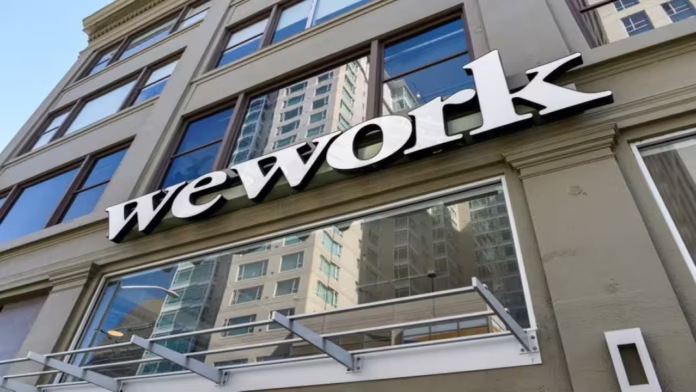
        In a significant development in Mumbai’s commercial real estate sector, coworking giant WeWork India has secured a lease for 1.26 lakh square feet of office space in Powai. This deal, valued at ₹1.38 crore per month (equating to over ₹16 crore annually), underscores the growing demand for flexible office spaces in India’s commercial real estate market. Registered on November 29, 2024, the lease marks a noteworthy shift in the leasing dynamics of Mumbai, particularly in the central suburbs of Powai, a growing commercial hub.

        The property, situated in the Lightbridge building in the Saki Vihar area of Powai, is spread across three floors: the 6th, 7th, and 8th. At a monthly rental rate of ₹109 per square foot, the lease also includes 84 parking spaces. WeWork India’s decision to move to this prime location comes after its exit from a nearby building, the Chromium building in Powai, further reinforcing the area’s attractiveness to businesses in need of large-scale office solutions. The lease, which begins in August 2025, spans a period of five years and includes a three-year lock-in period, ensuring stability for both WeWork and the landlord, Gamma Construction Pvt Ltd, part of the Hiranandani Group.

        The Hiranandani Group has been instrumental in transforming Powai into a thriving commercial and residential area, contributing significantly to its real estate boom. Niranjan Hiranandani, Chairman of the Hiranandani Group, expressed optimism about the overall performance of India’s commercial real estate market in FY 24, with robust leasing activity being driven by evolving market dynamics and investor confidence. Hiranandani also noted the increasing role of flexible office operators like WeWork, which now represent 20% of the new commercial spaces being leased in India. This shift reflects the broader change in workplace culture, particularly with more companies embracing hybrid and flexible work models post-pandemic.

        The growth in leasing activity in Powai, however, is not isolated. Across major Indian cities, the demand for commercial real estate continues to surge. A recent report by Cushman and Wakefield predicts that office space leasing across the top eight cities will rise by 13% in 2024, with a total of 83-85 million square feet likely to be leased. Bengaluru, Hyderabad, Mumbai, and Delhi NCR lead the way in leasing activity, driven by strong demand from sectors like IT-BPM, BFSI, and engineering, as well as the expanding market for flexible office spaces. Mumbai, particularly, has witnessed a shift in commercial leasing, with companies prioritising prime locations in areas like Powai, which offer accessibility, infrastructure, and proximity to talent hubs.

        While this surge in commercial leasing signals a positive outlook for Mumbai’s real estate market, it also raises important questions about sustainability. With the rise of flexible office spaces and coworking hubs, the need for environmentally conscious building practices is more urgent than ever. The commercial real estate sector, which contributes significantly to India’s carbon footprint, must increasingly look towards green buildings and energy-efficient designs to reduce its environmental impact. In this context, the increasing adoption of green certifications like LEED and GRIHA becomes crucial. As demand for commercial office space grows, it is vital that developers and corporations alike prioritise sustainable building practices to mitigate the negative effects of urban expansion on the environment.

        In conclusion, the lease deal between WeWork India and the Hiranandani Group is a testament to the thriving commercial real estate market in Mumbai, especially in areas like Powai that have seen significant infrastructure development. However, it also highlights the importance of incorporating sustainability into India’s real estate growth story. As the demand for flexible office spaces continues to rise, the need for green and energy-efficient buildings will become even more crucial in shaping the future of Mumbai’s urban landscape. By embracing eco-friendly solutions, India’s commercial real estate sector can not only contribute to economic growth but also ensure a more sustainable future for its cities.

        India’s Green Building Movement in Real Estate

          0
          India’s Green Building Movement in Real Estate
          India’s Green Building Movement in Real Estate

          India’s Green Building Movement in Real Estate

          India’s real estate sector is at a crossroads, as the push for sustainability gains momentum across the nation. The Indian government has long recognised the importance of integrating environmental sustainability within the real estate sector, introducing key policies and regulations to foster green building practices. From financial incentives to certification programs like the Green Rating for Integrated Habitat Assessment (GRIHA) and Leadership in Energy and Environmental Design (LEED), India is steadily creating a framework that encourages developers to embrace sustainable construction. Yet, despite these efforts, challenges remain in scaling up these practices across diverse urban landscapes.

          The Energy Conservation Building Code (ECBC), launched by the Bureau of Energy Efficiency (BEE), has set new benchmarks for energy efficiency in buildings, ensuring that all newly constructed structures adhere to stringent energy-saving standards. While the ECBC has certainly driven change, the impact remains limited, with the adoption of these guidelines being relatively slow in non-metro cities. In India’s major urban centres, the pace of compliance has been faster, but developers still face significant hurdles in terms of implementation costs and awareness, particularly in smaller cities. However, with the green building market projected to grow at a compound annual rate of 20% between 2021 and 2026, the real estate sector is moving in the right direction, albeit at a gradual pace.

          Government initiatives such as the Smart Cities Mission and the Atal Mission for Rejuvenation and Urban Transformation (AMRUT) provide crucial support to urban infrastructure development, emphasising sustainable, inclusive urban planning. These initiatives aim to overhaul 100 cities under the Smart Cities Mission and improve basic infrastructure in 500 cities under AMRUT. As of December 2023, over 6,400 projects worth INR 1,25,105 crore have been completed under these schemes, indicating a growing commitment to sustainable urbanisation. Yet, the challenge remains in bridging the resource and awareness gap between major cities and their smaller counterparts. Many small and medium-sized cities still struggle to adopt eco-friendly practices due to limited budgets and a lack of technical expertise.

          Financial incentives also play a pivotal role in promoting sustainability within real estate. For instance, green-certified affordable housing projects are exempt from the Goods and Services Tax (GST), incentivising developers to integrate energy-efficient and water-conserving technologies. However, experts argue that more robust policy measures are needed to accelerate this transition. Proposals include subsidised loans for green construction, tax incentives for renewable energy adoption, and grants under schemes like the Pradhan Mantri Awas Yojana (PMAY) Urban. Such measures would reduce the financial barriers developers face, making sustainable construction more financially viable.

          Sustainability in real estate is not just about cost savings or compliance; it is a moral imperative in the face of global climate change. Urban areas, responsible for a significant portion of the world’s energy consumption and greenhouse gas emissions, are at the heart of the battle against environmental degradation. India, as one of the world’s fastest-growing economies, has a crucial role to play. The choices made today in urban development will determine the livability of cities for future generations. As developers adopt innovations such as Building Information Modeling (BIM) and the Internet of Things (IoT), the potential to optimise resource usage and improve energy efficiency is immense. These technologies will revolutionise the way we design, build, and live in cities, ensuring that growth does not come at the expense of the planet.

          Ultimately, India’s journey towards sustainable real estate offers a unique opportunity to redefine urban living. By aligning environmental stewardship with economic viability and social inclusivity, the country can create resilient cities that can withstand the challenges of climate change. As awareness grows, and technological innovations continue to emerge, India has the potential to become a global leader in sustainable real estate. The road ahead may be complex, but the rewards are significant: reduced environmental impact, enhanced quality of life for urban residents, and a more prosperous, sustainable future for all. The momentum is building, and with continued policy support and collaboration between stakeholders, India is taking decisive steps toward a greener, more sustainable urban future.

          How India’s Real Estate Market Is Thriving Post-Pandemic in 2024

            0
            How India’s Real Estate Market Is Thriving Post-Pandemic in 2024
            How India’s Real Estate Market Is Thriving Post-Pandemic in 2024

            How India’s Real Estate Market Is Thriving Post-Pandemic in 2024

            The COVID-19 pandemic has left a permanent mark on India’s real estate market, with the urban landscape seeing significant shifts in the years that followed. As the country adapts to a new post-pandemic reality, sectors such as residential, commercial, and retail have experienced profound changes. According to Saurabh Runwal, Director of Runwal Realty, urban centers like Mumbai and Pune have witnessed a remarkable surge in demand, which is now driving strong price growth and reshaping the property dynamics in 2024.

            Focusing first on the residential sector, Runwal points out that the pandemic has driven a transformation in buyer preferences, with a noticeable shift towards quality living spaces and lifestyle upgrades. Post-COVID, genuine end-user demand, not speculative investments, is fuelling this growth. Runwal predicts robust double-digit growth in volumes, especially as more people look for homes that align with their upgraded lifestyles. Key cities like Mumbai have seen a steady demand for larger apartments and premium locations, with homebuyers willing to invest in properties that offer not just a roof over their heads but also enhanced amenities, better ventilation, and access to green spaces.

            While Mumbai continues to see a luxury-driven property market, Pune is emerging as a rising star, particularly in the IT and Global Capability Center (GCC) sectors. Runwal notes that the affordability factor in Pune, combined with rapid infrastructure development, including new metro lines and an upcoming airport, is attracting a wave of new residents and investors. This shift in demand is being supported by an increasing number of IT professionals seeking residential options closer to their workplaces. The affordability of Pune’s housing market, compared to Mumbai’s more expensive real estate, makes it an appealing alternative for buyers looking for value without compromising on lifestyle.

            On the commercial front, the office space market is also experiencing a resurgence. Runwal points out that significant transactions and an uptick in foreign investments in office spaces signal a return of confidence in the sector. This growth in commercial real estate is having a direct impact on the residential market, as commercial development leads to increased demand for housing, particularly in the vicinity of office hubs. The integration of work-from-home models during the pandemic has led to changes in office space design, with more demand for flexible workspaces and a blend of retail and commercial properties. These evolving dynamics are providing opportunities for developers to explore mixed-use projects that cater to both residential and commercial needs.

            Sustainability and Urban Development: A Changing Landscape

            Sustainability has become an integral part of urban development in the post-pandemic era. The pandemic has prompted many buyers and developers to focus more on sustainability, with increased demand for green buildings and eco-friendly developments. As cities like Mumbai and Pune continue to grow, developers are prioritising sustainable practices, from energy-efficient designs to waste management solutions. This shift aligns with broader government initiatives aimed at reducing carbon footprints and enhancing urban livability.

            Urban areas are increasingly seeing the rise of developments that integrate sustainable infrastructure, from solar-powered buildings to the promotion of electric vehicle charging stations. These changes are reshaping the real estate market and driving demand for properties that reflect eco-conscious values. The incorporation of parks, green spaces, and efficient water usage systems is not only responding to environmental needs but also enhancing the quality of life for residents. As India’s real estate market grows, ensuring that these developments are built with sustainability in mind will play a pivotal role in creating resilient urban spaces for the future.

            The Future of India’s Real Estate Market: Key Insights

            As the Indian real estate market recovers and thrives post-pandemic, several key trends are emerging that will continue to shape the industry in 2024. The growing importance of infrastructure developments, particularly in tier-2 cities like Pune, is evident in the sharp rise of demand for housing driven by professional migrations. With increased connectivity, new business hubs, and affordability, these cities are becoming prime locations for both buyers and developers.

            However, as the urban landscape grows, the challenges of urbanisation must also be addressed. Issues such as overcrowding, inadequate infrastructure, and sustainability need to be tackled to ensure that the growth is sustainable and equitable. As cities like Mumbai and Pune continue to grow, it’s crucial that planning and policy focus on long-term sustainability rather than short-term gains. Developers, too, will need to adjust to these challenges by incorporating environmental, social, and governance (ESG) principles into their projects to meet both consumer demands and regulatory requirements.

            In conclusion, the pandemic has not only reshaped how people view their living spaces but also accelerated shifts towards more sustainable, integrated urban environments. With increasing demand for residential properties, an optimistic outlook for commercial real estate, and a growing focus on sustainability, India’s real estate market in 2024 is well-positioned for continued growth. As infrastructure, affordability, and lifestyle considerations play an increasingly critical role, the future of Indian real estate looks poised for an exciting transformation.

            Real Estate Ads Face Growing Scrutiny in India

              0
              Real Estate Ads Face Growing Scrutiny in India
              Real Estate Ads Face Growing Scrutiny in India

              Real Estate Ads Face Growing Scrutiny in India

              In a bid to protect consumer interests and curb the rising trend of misleading advertisements in the real estate sector, a pan-India homebuyers’ association has urged the Consumer Affairs Department to introduce specific guidelines. The Forum for People’s Collective Efforts (FPCE) recently highlighted that over one-third of the real estate advertisements examined by the Advertising Standards Council of India (ASCI) were found to be in violation of the law. This alarming finding underscores the need for more robust regulatory oversight in an industry that impacts millions of potential homeowners.

              A report from ASCI revealed that 34% of the real estate advertisements from Maharashtra—one of India’s largest property markets—were misleading. The body’s report, which examined advertisements from April to September of this year, demonstrated a troubling trend of false claims and incomplete information. These violations primarily revolved around non-compliance with mandatory disclosure norms such as registration numbers, QR codes, and other essential information that protect consumer rights. Despite these findings, the average penalty levied on violators by Maharashtra RERA (Real Estate Regulatory Authority) remained relatively modest, hovering around ₹14,000-₹15,000 per developer. This raises concerns about the efficacy of penalties in deterring repeated violations.

              The FPCE has voiced its concern that the ASCI’s screening process, while valuable, only focused on a limited set of parameters as prescribed by MahaRERA. The homebuyers’ association believes that if advertisements had been scrutinised with a consumer-centric lens, the percentage of misleading ads would likely have been much higher, possibly approaching 100%. In its communication with the Consumer Affairs Department, FPCE emphasized the urgent need for stricter, more targeted guidelines that would address the pervasive issue of misleading real estate advertisements. The current approach, they argue, lacks the necessary teeth to create substantial deterrence.

              The FPCE also drew attention to the troubling gap in compliance, pointing out that although ASCI flagged 1,027 misleading advertisements out of the 2,115 screened, only a fraction—59%—saw prompt modifications or withdrawal. This highlights not just the extent of non-compliance in the sector, but also the insufficient penalties that fail to incentivise developers to adhere to advertising standards. As a result, the real estate advertising landscape remains ripe for misinformation, which ultimately harms potential homebuyers who are often making life-altering decisions based on inaccurate or incomplete information.

              The Need for Stricter Penalties and Consumer Protection

              One of the central points raised by the FPCE is the need for stronger penalties and more effective enforcement mechanisms. A fine of ₹14,000 per advertisement is not a substantial deterrent for real estate developers, many of whom generate revenues in the crores. The association has called for a more comprehensive approach to penalising violators, including the possibility of higher fines, repeat offence penalties, and more transparent processes for consumer redressal. These measures would not only protect consumers from misleading claims but also foster greater transparency and accountability within the real estate sector.

              Another crucial aspect of this issue is the sustainability angle. As India’s real estate sector grows, ensuring that developers follow ethical advertising practices is integral to fostering sustainable urban development. Misleading advertisements can lead to disillusionment among homebuyers, often resulting in delays and dissatisfaction with the final product. If developers continue to downplay issues such as environmental impact, infrastructure readiness, and legal compliance, it could undermine long-term urban sustainability. By enforcing stricter advertising regulations, the government can encourage developers to focus on ethical marketing practices, which in turn, will enhance consumer trust and promote sustainable growth in the sector.

              Real Estate Advertising and Urban Development: A Civic Issue

              Misleading advertising in real estate also has wider implications for urban development and civic infrastructure. When advertisements present exaggerated claims, such as overstated amenities or non-existent features, it distorts consumer expectations and impacts the planning process for urban areas. Homebuyers may be lured into purchasing properties based on unrealistic promises, only to find that the reality does not match the advertisement. This not only causes financial loss to consumers but can also strain civic resources when developments fall short of what is promised in the marketing campaigns.

              Urban planners and local governments must recognise the importance of consumer protection in fostering responsible development. As cities like Mumbai, Delhi, and Bengaluru continue to experience rapid growth, ensuring that real estate advertisements align with actual offerings is critical to sustainable urban expansion. Moreover, it ensures that the development process remains transparent, with developers held accountable for the promises they make to potential buyers.

              The FPCE’s call for targeted guidelines and stricter penalties for misleading real estate advertisements is a critical step towards creating a more transparent, responsible, and consumer-friendly real estate market in India. With the sector poised for further growth, especially in metropolitan areas, it is essential that consumers are not misled by false claims. By implementing stronger regulatory measures, authorities can foster trust in the real estate market, ensuring that buyers make informed decisions. Additionally, enforcing stricter penalties will incentivise developers to adhere to advertising standards, ultimately contributing to a more sustainable, ethical, and consumer-centric real estate industry in India.