Home Blog Page 470

NBCC’s ₹9,500 crore rescue for homebuyers

    0
    NBCC’s ₹9,500 crore rescue for homebuyers
    NBCC’s ₹9,500 crore rescue for homebuyers

    In a landmark decision, the National Company Law Appellate Tribunal (NCLAT) has appointed NBCC (India) Ltd. as the project management consultant to complete 16 stalled projects of Supertech Ltd., bringing hope to over 50,000 affected homebuyers across Uttar Pradesh, Uttarakhand, Haryana, and Karnataka. The ₹9,445 crore project will see NBCC complete the construction within 36 months, aiming to restore trust in the real estate sector.

    The NCLAT has set March 31, 2025, as the deadline for preliminary approvals, with construction expected to commence by May 1, 2025. NBCC will manage 49,748 pending units and intends to finance the construction through ₹1,800 crore from sold units and ₹14,000 crore from unsold inventory. This transparent process, including e-tendering for contractors, seeks to rejuvenate buyer confidence. However, homebuyers demanding compensation were denied by the tribunal, which emphasised maintaining affordable costs for existing allottees as per their agreements.

    From a civic perspective, the resolution underscores the pressing need for stronger accountability in India’s real estate sector. Supertech’s stalled projects reflect a broader issue of trust deficit and regulatory gaps that have left countless buyers stranded. The establishment of Apex and Project-specific Court Committees ensures transparency in fund allocation and project execution, aiming to safeguard homebuyers’ interests. These committees will oversee project-specific accounts and financing to avoid mismanagement.

    Sustainability remains integral to this initiative. NBCC’s commitment to high-quality construction will adhere to regulatory requirements, including green building standards under RERA. By completing all 16 projects simultaneously, the move represents a shift towards sustainable urban development, prioritising social impact alongside economic recovery. This intervention not only sets a precedent for addressing housing crises but also highlights the critical role of government agencies in fostering equitable urban growth.


    Building a sustainable future through real estate

      0
      Building a sustainable future through real estate
      Building a sustainable future through real estate

      The real estate sector has become a pivotal player in advancing global sustainable development, bridging the gap between urbanisation and environmental responsibility. As urban centres expand, the industry’s alignment with Sustainable Development Goals (SDGs) has gained momentum, reflecting a shift from traditional practices to more innovative and eco-conscious strategies. From energy-efficient buildings to green construction materials, the sector is making significant strides in reducing its environmental footprint.

      According to a recent report by the Global Real Estate Sustainability Initiative, real estate contributes to 40% of global energy consumption and 30% of greenhouse gas emissions. These figures underline the urgent need for sustainable practices. Industry leaders are responding by adopting technologies like smart metering, renewable energy integration, and waste reduction strategies. For instance, green-certified buildings worldwide have increased by over 20% in the last five years, showcasing the growing emphasis on environmental sustainability.

      In urban areas, real estate projects are reshaping how cities function, integrating sustainability with social impact. Mixed-use developments, affordable housing, and eco-friendly neighbourhoods address challenges like overcrowding, pollution, and housing inequality. The emphasis on net-zero energy buildings and transit-oriented development also aligns with global climate goals. These innovations are transforming not only urban skylines but also the quality of life for residents.

      From a civic perspective, the integration of sustainable real estate into urban planning promotes long-term benefits for communities. By reducing reliance on non-renewable resources and lowering operational costs, these projects enhance liveability and economic growth. With governments incentivising green infrastructure, the industry is well-positioned to lead global efforts in creating a sustainable future. Real estate’s commitment to sustainability is not just a necessity but a moral imperative to safeguard the planet for future generations.

      Mumbai real estate’s sustainable transformation

      0
      Mumbai real estate’s sustainable transformation
      Mumbai real estate’s sustainable transformation

      Mumbai’s real estate market is synonymous with innovation, quality, and resilience, with Chandak Group emerging as a noteworthy contributor. Recently named among the top 10 real estate developers by an industry report, the group stands alongside stalwarts like Shapoorji Pallonji and Godrej Properties. This recognition is a testament to Chandak Group’s unwavering commitment to excellence, catering to diverse homebuyer needs with a blend of luxury and affordability.

      Spanning a legacy of over 35 years, Chandak Group has carved a niche in delivering innovative and sustainable real estate solutions. With projects covering over 12 million square feet and an upcoming pipeline exceeding 10 million square feet, the company’s impact on Mumbai’s urban growth is undeniable. Timely delivery, adherence to high construction standards, and customer trust have solidified its position in the competitive Mumbai real estate landscape.

      Sustainability remains a cornerstone of the group’s ethos. Developments like Highscape City are prime examples of their eco-conscious approach, integrating green building techniques and energy-efficient designs. This alignment with global ESG standards is not only an environmental imperative but also resonates with a growing demographic of environmentally aware homebuyers. As Mumbai grapples with challenges like overcrowding and environmental degradation, such initiatives are vital in ensuring a balanced urban ecosystem.

      From a civic and urban development perspective, Chandak Group’s projects aim to address pressing issues such as housing affordability and infrastructure bottlenecks. Their strategic developments in key city locations focus on optimising space while enhancing liveability, thus contributing to Mumbai’s broader urban renewal agenda. As the group continues to innovate and expand, it promises to reshape the city’s skyline while fostering sustainable urban growth.

      Bright future for global commercial real estate

      0
      Bright future for global commercial real estate
      Bright future for global commercial real estate

      The commercial real estate market is poised for a transformative year in 2025, driven by evolving market dynamics and renewed investor confidence. Despite divergent performances across geographies and asset classes, the overarching trend signals a positive turn in the real estate cycle. This optimistic outlook is underscored by findings from the latest Global Real Estate Sentiment survey conducted in November 2024, which recorded its most encouraging results in three years. The survey highlighted that a majority of respondents expect conditions to improve within the next six months, reflecting growing optimism among stakeholders.

      Across markets, the recovery is marked by distinct patterns. While developed economies are experiencing stabilisation in prime office spaces and industrial assets, emerging markets are witnessing accelerated demand for mixed-use developments and affordable retail spaces. The focus has shifted towards sustainable and technology-driven real estate solutions, driven by regulatory pressures and shifting consumer preferences. For instance, the adoption of green certifications and energy-efficient designs is becoming a critical factor for asset valuation and investor appeal.

      Sustainability continues to take centre stage, with ESG (Environmental, Social, and Governance) considerations influencing both new developments and retrofitting older properties. Developers are increasingly integrating renewable energy sources, smart technologies, and circular economy principles to meet regulatory requirements and cater to environmentally conscious tenants. These trends underscore the critical role of sustainable practices in reshaping urban landscapes and contributing to the global net-zero goals.

      From a civic perspective, commercial real estate is addressing urban challenges such as overcrowding and accessibility by fostering inclusive development. Mixed-use projects incorporating affordable housing, co-working spaces, and recreational areas are redefining urban growth patterns, particularly in developing nations. As 2025 unfolds, the industry’s ability to align growth strategies with urban sustainability goals will be pivotal in shaping its long-term trajectory.

      Cement Price Increases May Face Hurdles Amid Market Uncertainty

      Cement Price Increases May Face Hurdles Amid Market Uncertainty
      Cement Price Increases May Face Hurdles Amid Market Uncertainty

      The Indian cement industry is witnessing an active attempt by cement dealers across the country to raise prices in the second half of the fiscal year. However, whether these price hikes will be sustainable remains uncertain, as multiple factors, including demand recovery and industry consolidation, could significantly influence their longevity.

      Recent reports from brokerages like Jefferies and JPMorgan indicate average price hikes of 3–4%, amounting to Rs 8–12 per bag. Some regions, particularly the South and East, have experienced more substantial hikes, with prices increasing by Rs 5–50 per bag. In December, CLSA observed price hikes ranging from Rs 20–30 per bag in East and Central India, while other regions saw a more modest increase of Rs 10 per bag. However, experts are divided on whether these price hikes will be sustainable in the long term. A key issue is the lack of consistent demand growth. Cement demand in early 2024 was disrupted due to heavy monsoons, elections, and labor shortages, while November saw subdued demand owing to festivals and extreme weather conditions. Though a recovery in demand is expected by December, analysts like JPMorgan have cautioned that if demand does not pick up as anticipated, cement companies might be forced to roll back their price hikes.

      Industry observers, including Jefferies, highlight that several players in the market are still prioritising volume targets over price hikes, attempting to capture market share with lower prices. This aggressive strategy could undermine the overall pricing discipline and dampen meaningful price recovery in the short term. Consolidation within the industry also poses a challenge. Increased competitive intensity, coupled with aggressive capacity additions, could limit the scope for substantial price hikes in the near future. Nuvama, Morgan Stanley, and Jefferies all suggest that the cement market may experience sideways price movements for the rest of the fiscal year.

      Despite these challenges, analysts remain optimistic about the long-term growth prospects of the cement industry. A key factor in this optimism is the importance of price recovery. As Jefferies noted, a 1% change in prices can lead to a 4–5% change in the EBITDA of cement companies, which is more impactful than volume growth alone. Looking ahead, analysts believe that companies with pan-India franchises and cost-improving capabilities will be better positioned to weather market fluctuations. Companies like Ambuja Cement and UltraTech Cement are expected to outperform domestic peers in 2025, thanks to their strong growth visibility and cost-saving initiatives. Moreover, JPMorgan has highlighted UltraTech’s focus on consolidation as a key strength, while also favoring ACC Ltd. for its better valuations and momentum in the South.

      Star Cement Stock Jumps 5% on December 13, Outperforms Market

      Star Cement Stock Jumps 5% on December 13, Outperforms Market
      Star Cement Stock Jumps 5% on December 13, Outperforms Market

      Star Cement, a prominent midcap player in the Indian cement sector, has demonstrated strong stock performance on December 13, 2024. The company’s stock surged by 5.03%, closing at Rs 230.95 per share, marking a notable outperformance compared to both the broader cement industry and the market.

      The recent upward momentum has positioned Star Cement’s stock as a market leader, outperforming the cement sector by 4.95% on December 13 alone. The stock has also shown impressive consistency, with a consecutive three-day gain of 18.07%, indicating a robust trend. On the same day, the stock reached an intraday high of Rs 230.95, reflecting a 5.1% increase from the previous session’s closing price. Further analysis reveals that Star Cement’s stock is currently trading above key moving averages, including its 5-day, 20-day, 50-day, 100-day, and 200-day averages. This bullish indicator suggests continued positive sentiment among investors, further reinforcing the stock’s strong market performance.

      In comparison to the overall market, Star Cement has outperformed the Sensex by 4.87% in a single day and a remarkable 24.43% over the past month. This substantial outperformance highlights the company’s ability to deliver exceptional returns despite broader market trends. While analysts from platforms such as MarketsMOJO have placed a ‘Strong Sell’ recommendation on the stock, its recent performance speaks to the company’s resilience and potential for continued growth. Given its strong upward trajectory, investors might consider monitoring Star Cement closely for future opportunities in the cement sector. Overall, Star Cement has clearly emerged as a strong performer in the market, making it a stock to watch for investors seeking exposure to the growing Indian cement industry.

      Pimpri Chinchwad Civic Body Introduces GRAP Against Pollution

        0
        Pimpri Chinchwad Civic Body Introduces GRAP Against Pollution
        Pimpri Chinchwad Civic Body Introduces GRAP Against Pollution

        The Pimpri Chinchwad Municipal Corporation (PCMC) launched the Graded Response Action Plan (GRAP) on Wednesday, marking a significant step in addressing the city’s growing air pollution. Pimpri Chinchwad is now the first city in Maharashtra and one of the few across India to implement such a comprehensive anti-pollution strategy, combining real-time monitoring, advanced forecasting, and stringent enforcement measures.

        GRAP focuses on pollution control based on the Air Quality Index (AQI). Currently, the city is under GRAP I, with an AQI in the range of 101-300 (moderate to poor). Key actions under this phase include regular road cleaning to reduce dust, restricting illegal waste dumping, and improving traffic management to reduce vehicular emissions. The Centre for Development of Advanced Computing (CDAC) is assisting in the initiative, including providing air quality forecasts up to three days in advance. As the AQI worsens, GRAP introduces further measures under subsequent phases. For AQI levels of 301-400 (Very Poor), Phase II includes restrictions on diesel generators, enhanced road cleaning, and promoting public transport. In Phase III, for AQI levels of 401-500 (Severe), measures such as shutting down highly polluting industries and creating non-motorized zones are implemented, alongside stricter penalties for environmental violations. These measures are enforced for at least 15 days or until air quality improves.

        PCMC has already begun actions under GRAP I, such as increased road washing and waste burning prevention. Municipal Commissioner Shekhar Singh emphasized that the plan is a short-term response to prevent the city from reaching the severe AQI category. Public participation played a role in shaping the plan, with the draft put up for public feedback. However, environmental experts, including Prashant Raul of Green Army, raised concerns that pollution levels in areas like Chikhali and Moshi were higher than official readings. Experts have called for better tracking of pollution control efforts, such as fog cannons and road washers, urging stronger enforcement to tackle pollution effectively. Through GRAP, Pimpri Chinchwad is taking a proactive approach to combat air pollution, with real-time data, public involvement, and systematic enforcement to protect residents’ health and improve air quality.

        Mizoram Launches Scheme to Install Rooftop Solar Systems under PM-Surya Ghar

          0
          Mizoram Launches Scheme to Install Rooftop Solar Systems under PM-Surya Ghar
          Mizoram Launches Scheme to Install Rooftop Solar Systems under PM-Surya Ghar

          Mizoram has launched a new scheme under the PM-Surya Ghar Muft Bijli Yojana (PM-SGMBY), aiming to install rooftop solar systems for households across the state. This initiative is designed to reduce electricity expenses for consumers while fostering energy self-sufficiency and sustainable practices.

          On Wednesday, Mizoram Power and Electricity Minister Rodingliana unveiled the PM-Surya Ghar rooftop solar initiative during a press conference in Aizawl. The scheme is part of a nationwide effort by the Central Government to enable domestic power generation using solar energy, with a target to reach one crore households across India. The scheme provides subsidies to eligible households, significantly reducing the cost of installing solar systems. By generating power at home, consumers can reduce their dependency on external power sources, thus minimizing their electricity bills. The scheme is open to Indian citizens who are current electricity consumers and have a good payment record. It is exclusively available for private residential properties, excluding government or institutional buildings. To apply, interested households must ensure that their personal details match the information provided on their electricity bill.

          Applications can be made through the state portal at pmsuryaghar.mizoram.gov.in, followed by registration on the central portal, pmsuryaghar.gov.in. Once approved, applicants can select from a list of authorized vendors who will handle the installation and provide maintenance services for up to five years. The installation costs under the scheme are differentiated based on the location of the residence. In Aizawl Municipal Corporation (AMC) areas, the installation cost is set at Rs 12,000, while it will be Rs 18,000 for households located up to 200 km beyond AMC limits. This cost includes the solar system installation, and financing options are available through local banks such as SBI and MRB. As of now, 2,990 households have registered for the program, with 557 applications already receiving approval. The aim is to cover as many households as possible, helping them transition to solar energy.

          The PM-Surya Ghar initiative is expected to make a significant impact by reducing the state’s reliance on external power sources and encouraging sustainability. The government’s efforts to offer financial support through subsidies and partnerships with authorized vendors are poised to make rooftop solar systems more accessible to the residents of Mizoram. By making solar power more affordable, the program aligns with the state’s broader goals of energy independence and environmental consciousness, providing long-term benefits for the community and the state as a whole.

          India’s Housing Market Poised for Growth

            0
            India’s Housing Market Poised for Growth
            India’s Housing Market Poised for Growth

            As India’s real estate market prepares for a surge in home launches, HSBC has singled out a particular stock poised for substantial gains. The anticipated mega home launches in the first quarter of 2025 are set to inject significant momentum into the sector, and analysts are keenly watching the potential growth trajectory of several key players. According to HSBC’s latest forecast, the sector stands on the cusp of a major transformation, driven by favourable market conditions and the pent-up demand for residential properties.

            HSBC’s optimism is rooted in the continuing shift in demand dynamics, as India’s housing sector bounces back from pandemic-induced slowdowns. A mix of favourable government policies, such as the Pradhan Mantri Awas Yojana (PMAY) and increased infrastructure development, has created an ideal environment for developers to launch large-scale projects. The Q1 2025 home launches, with a focus on affordable and mid-range housing, are expected to drive a significant uptick in sales. The predicted surge in demand, coupled with attractive financing options, has made this an exciting time for investors.

            In a competitive market, however, HSBC has singled out one particular real estate stock that is set to outperform its peers. The company in question is poised to benefit from a combination of strong market fundamentals, a robust pipeline of upcoming projects, and improved consumer sentiment. With a recent upswing in property sales, the stock is seen as undervalued, making it an attractive pick for investors looking to capitalise on the anticipated market rebound.

            From a sustainability standpoint, the upcoming home launches are aligned with India’s growing focus on green building practices and energy-efficient homes. With a rising number of developers incorporating sustainable features in their projects, this new wave of launches could contribute significantly to the country’s sustainable urban growth. Additionally, the increase in housing stock is expected to support the government’s long-term goals of reducing the housing shortage, a key civic issue in many urban areas.

            CREDAI Advocates Phased Rollout of E-Khata in Bengaluru

            0
            CREDAI Advocates Phased Rollout of E-Khata in Bengaluru
            CREDAI Advocates Phased Rollout of E-Khata in Bengaluru

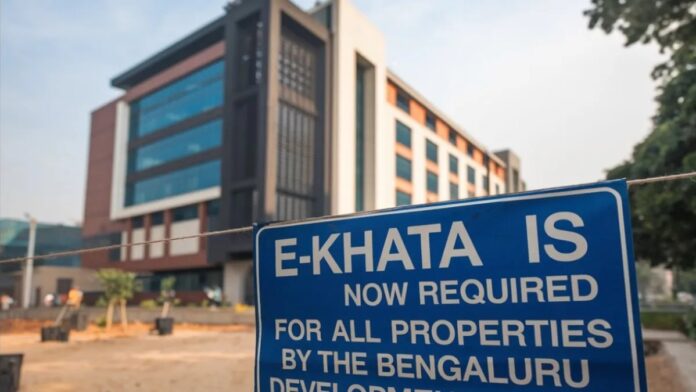
            The Confederation of Real Estate Developers’ Association of India (CREDAI) has urged the Bruhat Bengaluru Mahanagara Palike (BBMP) to implement a phased rollout of the e-khata system to address operational inefficiencies affecting the real estate sector. The mandatory e-khata process, introduced on 1 October for over 22 lakh properties, has caused significant disruptions, with a reported 60% drop in property registrations and an estimated revenue loss of ₹8,000 crore for developers in Bengaluru.

            Amar Mysore, President of CREDAI Bengaluru, highlighted the disparity between BBMP and panchayat areas, where e-khata has been functional with fewer issues. Mysore, also an executive director at Brigade Group, stressed the need for a scalable approach to avoid delays. “The system lacks urgency-based processing, leaving NRIs and mortgage applicants in limbo, while some sellers face capital gains tax due to registration delays,” he said. Despite these challenges, he commended the initiative’s potential to curb fraudulent transactions but criticised the absence of stakeholder engagement and workforce preparedness before the public launch.

            Urban connectivity improvements have amplified real estate activity in Bengaluru, making operational hiccups in e-khata a pressing civic issue. According to Mysore, document uploads and verifications remain slow, with revenue officers taking undue time despite the completion of necessary formalities. CREDAI is collaborating with BBMP and software developers to streamline processes, but new challenges continue to emerge, reflecting the need for sustained dialogue and technological refinement.

            From a sustainability perspective, a digitised e-khata system is an eco-friendly alternative to manual paperwork, reducing physical resource use. However, the initiative’s success hinges on resolving bottlenecks to ensure equitable access and seamless integration, fostering transparency in property transactions while supporting Bengaluru’s broader urban development goals. BBMP’s upcoming parallel system for sub-registrar office delays could offer much-needed relief.