Home Blog Page 483

Heritage Homes: A Unique Investment Opportunity

0
Heritage Homes: A Unique Investment Opportunity

As the festive season approaches, investors are seeking unique and lucrative opportunities in the real estate market. While traditional properties remain a popular choice, heritage properties are gaining significant traction. These historic buildings, often steeped in cultural significance, offer a blend of historical charm and potential financial returns. However, investing in heritage properties is not without its challenges. Restoring and maintaining these old structures requires significant financial commitment and expertise.

The initial investment involves not only purchasing the property but also undertaking extensive renovation work to bring it up to modern standards while preserving its historical integrity. Despite the high initial costs, heritage properties can command premium rental rates and attract discerning travelers. Their unique character and cultural significance make them attractive to both domestic and international visitors. Moreover, government incentives and tax breaks can further incentivize investment in heritage conservation. However, it’s essential to approach such investments with a long-term perspective. Heritage properties require careful maintenance and upkeep to preserve their value.

Any neglect can lead to significant deterioration and potential loss of value. For those considering investing in heritage properties, it’s crucial to conduct thorough research and seek expert advice. Understanding local regulations, zoning laws, and heritage conservation guidelines is essential. Additionally, partnering with experienced architects, engineers, and contractors can help ensure that the restoration process is carried out effectively and efficiently. While heritage property investments offer a unique opportunity to combine passion with profit, they require careful planning and execution. By understanding the risks and rewards, investors can make informed decisions and reap the benefits of these timeless assets.
Rising Property Prices in India: Is Stability Certain?

    0
    Rising Property Prices in India: Is Stability Certain?
    Rising Property Prices in India: Is Stability Certain?

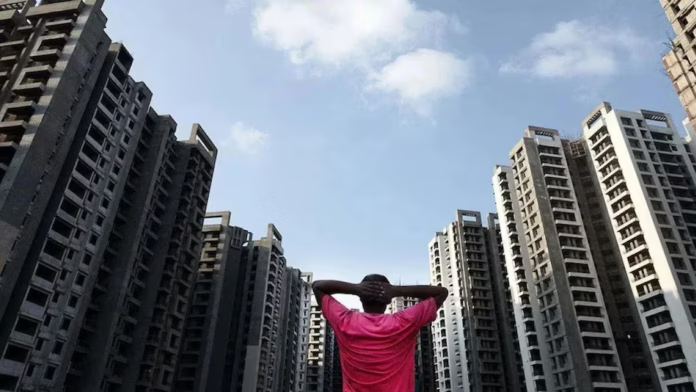
    India’s real estate sector, traditionally a stronghold for investment, is now under the spotlight with questions raised about its long-term sustainability. A recent podcast featuring the co-founder of Zerodha sparked lively debate as experts analysed the potential risks and growth factors in India’s housing market. While real estate remains the preferred investment for 59% of Indians, as per a recent FICCI-ANAROCK survey, the enduring question of a potential downturn looms. Zerodha’s co-founder questioned if surging property prices could eventually stabilise or even decline, especially in light of shifting work patterns and evolving population dynamics.

    Key industry figures, including the Chairman of Prestige Group and the Executive Director of Brigade Group, remain confident about real estate’s upward trajectory, citing robust urbanisation and population growth. The Brigade executive noted that India’s urban population is expected to increase to 40% by 2030, translating to nearly 120 million new city dwellers. With growing aspirations and a middle-class population, they believe demand will only rise, creating a lasting, solid market. The Prestige Chairman agreed, adding that India’s demand is sustained by factors unique to the region, including a strong workforce and rapid development, especially in metropolitan areas where job creation is constant.

    Others, however, caution that India’s real estate market may face challenges similar to those experienced by Japan, where a declining birth rate has slowed housing demand. India’s fertility rate has significantly decreased over the past few decades, which could affect housing demand in the long run. Additionally, the rise of remote work has created a shift in housing needs, with some urban professionals considering suburban or rural living for affordability and space. This shift may temper the demand for housing in urban centres, creating a need for flexible housing policies that adapt to changing preferences.

    The podcast also touched on the ongoing rent-vs-buy debate, with Zerodha’s co-founder reflecting on his recent decision to purchase his first home, citing the stability it offered despite the benefits of renting. Industry experts argue that the decision often hinges on individual lifestyle and financial circumstances. The Managing Director of Macrotech Developers emphasised the value of early property investment for wealth creation and long-term security, contrasting the short-term cost advantages of renting with the stability that home ownership provides. Financial advisors recommend that buyers aiming for property investment should have 30-40% of the home’s value for down payment, ensuring a robust financial foundation in volatile times.

    India’s real estate market appears resilient, yet the landscape is evolving with demographic changes, work-from-home trends, and economic factors. The challenge will be to maintain sustainable growth without compromising affordability for future generations. With the right balance between urban expansion and adaptability, experts anticipate that India’s property market will continue to be a valuable, albeit increasingly competitive, investment opportunity.

    Hyderabad Homebuyers Opt for Luxury: Sales Surge in 2024

      0
      Hyderabad Homebuyers Opt for Luxury: Sales Surge in 2024
      Hyderabad Homebuyers Opt for Luxury: Sales Surge in 2024

      Hyderabad’s real estate market has been on a remarkable trajectory in 2024, with a significant surge in home sales. The city’s burgeoning IT sector, coupled with a growing population, has fueled demand for both residential and commercial properties. According to a recent report by Knight Frank India, Hyderabad witnessed a 34% year-on-year increase in home sales during the first nine months of the year.

      This growth is particularly evident in the high-value segment, with properties priced above Rs 1 crore seeing a staggering 79% increase in registrations. The rising preference for larger, more luxurious homes is a key factor driving this trend. Homebuyers are increasingly seeking properties that offer ample space, modern amenities, and a high quality of life. This shift in consumer preferences has led to a surge in demand for high-end residential projects in prime locations across the city.

      Hyderabad’s strong economic fundamentals, including stable job markets and rising disposable incomes, have also contributed to the buoyant real estate market. As the city continues to attract talent and investment, the demand for housing is expected to remain robust. However, it’s important to note that the real estate market is cyclical, and factors such as interest rate hikes and economic slowdowns can impact demand. Nevertheless, Hyderabad’s strong fundamentals and positive outlook suggest that the city’s real estate sector is well-positioned for continued growth in the coming years.

      Pune Real Estate: India’s Next Investment Gem

      0
      Pune Real Estate: India’s Next Investment Gem
      Pune Real Estate: India’s Next Investment Gem

      Pune is rapidly becoming one of India’s foremost real estate investment hotspots, with its favourable mix of affordability, quality of life, and burgeoning development. Known for its thriving IT sector and promising growth indicators, Pune has captured the attention of both local and international investors. In comparison to high-cost cities like Mumbai and Bengaluru, Pune’s real estate market stands out for its comparatively lower property prices, making it an attractive destination for investors keen on long-term gains. Analysts note that the combination of increasing demand and manageable costs is contributing to a surge in property values, which provides investors with substantial opportunities for capital appreciation before the market reaches saturation.

      Recent data from NoBroker reveals that the average price of a 2 BHK in Pune is around ₹70 lakh, while similar properties in Bengaluru and Mumbai command prices of ₹85 lakh and ₹1 crore, respectively. The price per square foot in Pune, estimated at ₹7,175, remains significantly lower than in other metro regions, offering investors a competitive advantage. In addition to affordability, Pune’s consistently mild climate enhances its appeal, providing a high quality of life that stands in stark contrast to cities with extreme weather. This attractive climate not only makes Pune appealing to homebuyers but also draws talent to the city, especially in the IT sector, creating a virtuous cycle of demand for real estate.

      Pune’s booming IT industry is a key driver of its real estate market. The presence of major IT parks in areas like Hinjewadi, Magarpatta, and Kharadi has resulted in increased professional migration, fuelling demand for housing. This trend is particularly prominent in prime investment hubs such as Baner, Wakad, and Koregaon Park, where demand for residential and commercial properties has soared. In Hinjewadi Phase 1 alone, property prices have increased by approximately 23%, with the average price per square foot nearing ₹11,000. In Baner, property prices have surged by 20% in the last year. For investors, Pune’s tech-driven growth offers an opportunity to invest in a market driven by steady demand.

      The city’s infrastructure development further strengthens its appeal. The Pune Metro, the proposed ring roads, and the expanded Pune International Airport promise to enhance connectivity, making travel within the city and to surrounding regions significantly faster. These upgrades not only promise to raise property values but also underscore Pune’s potential for sustainable, planned urban development. The improved transportation facilities will serve to accommodate the city’s expanding population, especially as urban areas like Wagholi, Undri, and Talegaon emerge as affordable options with promising growth potential. This ongoing infrastructure development reflects Pune’s commitment to addressing urban challenges sustainably, balancing growth with ecological concerns.

      For investors seeking both immediate returns and long-term gains, Pune’s real estate market is becoming a compelling choice. Its balanced mix of affordability, appealing climate, and robust development trajectory sets Pune apart as a promising investment destination. As the city continues its upward momentum, the combination of competitive property prices and a thriving job market indicates a bright future, making Pune an ideal location for investors looking to capitalise on an evolving market with considerable potential for appreciation.

      JSW Steel Aims to Procure 580 MW of Renewable Power by March 2025

      JSW Steel Aims to Procure 580 MW of Renewable Power by March 2025
      JSW Steel Aims to Procure 580 MW of Renewable Power by March 2025

      JSW Steel is poised to make significant strides in its renewable energy procurement, with the Board of Directors approving a Power Purchase Agreement (PPA) aimed at acquiring a total of 1,637 MW of renewable power across its facilities in Vijayanagar, Dolvi, Salem, and Anjar. The strategic initiative aligns with the company’s commitment to sustainability and energy efficiency, reflecting a growing trend among Indian corporations to transition towards greener energy sources.

      As part of its ambitious energy plan, JSW Steel has already commissioned 375 MW of renewable capacity, with an additional 580 MW expected to come online by March 2025. This move not only reinforces the company’s operational efficiency but also positions it as a leader in the steel industry’s push towards sustainability. The total renewable energy generation capacity under procurement will reach 2,507 MW by the end of FY27, underscoring JSW’s commitment to reducing its carbon footprint. The newly approved projects include a hybrid renewable energy generation capacity of 600 MW, comprising 200 MW from solar and 400 MW from wind at Dolvi. Additionally, the company plans to establish 60 MW at Salem and 210 MW at JSW Steel Coated Products. These projects are set to be developed under the group captive norms outlined in the Electricity Act, ensuring compliance with regulatory standards while fostering sustainable practices.

      With energy demands expected to rise in the coming years, these initiatives are critical for enhancing JSW’s operational resilience. The shift to renewable energy not only addresses environmental concerns but also mitigates the volatility associated with fossil fuel dependency, thereby securing energy supply for future growth. Moreover, the company’s commitment to sustainability resonates well with the broader public sentiment towards environmental stewardship. As awareness around climate change and resource depletion grows, stakeholders—including investors and consumers—are increasingly favouring companies that adopt sustainable practices. As the steel industry grapples with the need for sustainable practices, JSW Steel’s proactive measures present an inspiring model for others to follow. The ongoing transition towards renewable energy not only reflects the company’s strategic vision but also highlights a collective responsibility towards ensuring a sustainable future.

      Pune Ring Road Project Set to Transform Real Estate Landscape and Drive Growth

      0
      Pune Ring Road Project Set to Transform Real Estate Landscape and Drive Growth
      Pune Ring Road Project Set to Transform Real Estate Landscape and Drive Growth

      Pune is rapidly advancing its infrastructure landscape, resulting in significant enhancements to its liveability quotient. In the first eight months of 2024, the residential sector witnessed a remarkable surge, with 127,108 properties registered—a 40% increase compared to the same period in 2023. This uptick is mirrored in stamp duty collections, which surpassed ₹4,736 crores, indicating an impressive 47% year-on-year growth, according to data from Maharashtra’s Inspector General of Registration (IGR), as reported by Knight Frank India.

      Pune is solidifying its position as a premier real estate destination, driven by significant infrastructural advancements and a steady influx of professionals. Renowned for its rich cultural heritage and thriving IT sector, Pune has rapidly emerged as one of India’s fastest-growing cities. However, this growth has also highlighted challenges such as traffic congestion and air pollution that require strategic development. At the forefront of this transformation is the Pune Ring Road, a 128-kilometre expressway designed to ease traffic by providing alternative routes and linking 29 nearby villages. Although initially announced in 2016, the project faced delays due to land acquisition issues. Recent state cabinet approvals, including an additional ₹20,375.21 crore, have revitalised progress, raising the total project cost to ₹42,711.03 crore.

      The Pune Metropolitan Region Development Authority (PMRDA) is prioritising land acquisition in its 2024-25 Budget to expedite construction. The Ring Road aims to enhance connectivity between major industrial hubs, stimulate economic growth, and improve safety by diverting heavy traffic from residential areas. Complementing this project are initiatives under Pune’s Smart City mission, further positioning Pune as a sustainable urban hub ready for the future.

      Festive Season Fuels Mumbai’s Real Estate Boom

      0
      Festive Season Fuels Mumbai's Real Estate Boom
      Festive Season Fuels Mumbai's Real Estate Boom

      Mumbai’s real estate market is experiencing a resurgence, with the festive season igniting a surge in home buying activity. The city’s traditionally auspicious period, coupled with favorable market conditions, has led to a significant uptick in demand for both residential and commercial properties.

      Developers across the city are capitalizing on this festive fervor by offering attractive deals and incentives. The combination of attractive home loan schemes, lower interest rates, and the cultural significance of investing during this time has created a perfect storm for the real estate sector. The demand for luxury homes, especially in prime locations like South Mumbai and the suburbs, has surged. High-net-worth individuals are increasingly seeking opulent residences that offer a luxurious lifestyle. Additionally, the trend of integrated townships, which offer a range of amenities and services, has gained significant traction. Moreover, the growing preference for larger homes and work-from-home setups has driven demand for spacious apartments and villas.

      As a result, developers are focusing on projects that cater to these evolving needs. The festive season has not only boosted demand but has also instilled a sense of optimism among buyers and sellers alike. With the Indian economy showing signs of recovery and the real estate sector stabilizing, the outlook for Mumbai’s property market remains positive. As the festive season unfolds, it is clear that Mumbai’s real estate market is poised for sustained growth. With a strong foundation of economic growth, favorable government policies, and increasing disposable incomes, the city’s real estate sector is well-positioned to capitalize on the current momentum and continue its upward trajectory.

      Mumbai’s BMC Introduces Digital Platform for Trading Development Rights Certificates

      0
      Mumbai's BMC Introduces Digital Platform for Trading Development Rights Certificates
      Mumbai's BMC Introduces Digital Platform for Trading Development Rights Certificates

      The Brihanmumbai Municipal Corporation (BMC) is poised to launch a groundbreaking online trading platform for Development Rights Certificates (DRCs), drawing parallels to a stock exchange model. This innovative initiative aims to dematerialise all DRCs, maintaining them in an electronic format that facilitates seamless trading. Citizens will soon have the opportunity to purchase Transferable Development Rights (TDR) as an investment, opening new avenues for individual participation in Mumbai’s real estate market.

      The introduction of this electronic marketplace promises enhanced transparency in TDR sales, empowering individual societies and flat owners to buy smaller quantities of DRCs for regularisation or extension purposes—eliminating reliance on brokers who have traditionally dominated this space. DRCs are granted as compensation when the government acquires land for public projects, allowing developers to build beyond the permissible Floor Space Index (FSI), subject to specific area restrictions. Historically, TDR transactions have occurred in an unorganised manner, often leading to confusion over pricing and difficulties for non-industry individuals seeking to buy or sell these rights. This lack of structure has given rise to a reliance on brokers, resulting in market hoarding and even fostering illicit cash transactions. The absence of an organised marketplace has also led to potential legal disputes and delays in implementing the city’s Development Plan. The forthcoming online platform is expected to address these challenges by establishing fair market pricing and enabling direct transactions between registered parties, fostering a transparent environment.

      As noted by Domnic Romell, President of CREDAI-MCHI, this initiative will not only provide more choices but also promote fairness in pricing, curbing hoarding practices. With sustainability in mind, the electronic marketplace could encourage efficient land use and development practices, ultimately contributing to a more responsible urban growth model. The BMC’s move reflects a broader trend towards digital transformation in municipal governance, enhancing accessibility for all stakeholders involved. As Mumbai prepares for this significant shift, stakeholders are optimistic about the impact of this marketplace on urban development, economic participation, and environmental sustainability, promising a brighter future for the city’s real estate landscape.

      Schneider Electric Teams Up with Noida International Airport for Sustainable Solutions

      0
      Schneider Electric Teams Up with Noida International Airport for Sustainable Solutions
      Schneider Electric Teams Up with Noida International Airport for Sustainable Solutions

      Schneider Electric has forged a strategic partnership with Noida International Airport to implement advanced building and energy management solutions that will transform airport operations, enhancing both sustainability and efficiency. This ambitious project will introduce a comprehensive suite of building management solutions, including Electrical SCADA and Advanced Distribution Management Systems (ADMS), designed to optimise energy usage, reduce operational costs, and lessen environmental impact—an increasingly critical focus for modern airports.

      As airports navigate the challenge of providing exceptional services while minimising their carbon footprints, Schneider Electric’s innovative solutions present a promising pathway forward. The integration of cutting-edge digital technologies will improve the monitoring and control of Mechanical, Electrical, and Plumbing (MEP) services, vital for the smooth operation of the airport. This encompasses not only heating, ventilation, and air conditioning (HVAC) systems but also the seamless integration of various subsystems, such as baggage handling and passenger boarding bridges. Zone President for Greater India and MD & CEO of Schneider Electric India, emphasised the importance of this collaboration, stating, “Today’s airports face the dual challenge of delivering exceptional service while minimising environmental impact.” CEO of Noida International Airport, echoed this sentiment, recognising Schneider Electric’s expertise as invaluable for achieving efficient operations.

      In line with sustainability objectives, Schneider Electric plans to deploy energy performance dashboards that will enable real-time monitoring of energy consumption, facilitating continuous improvement. With a projected 43% reduction in carbon emissions once fully implemented, this initiative reflects a growing recognition of the need for sustainable practices in airport infrastructure. As the Noida International Airport prepares for increased passenger traffic, this partnership marks a significant step towards a sustainable and efficient future in aviation, setting a benchmark for airports nationwide.

      Karnataka HC Petition Highlights 12-Year Delay in EWS Housing Project

        0
        Karnataka HC Petition Highlights 12-Year Delay in EWS Housing Project
        Karnataka HC Petition Highlights 12-Year Delay in EWS Housing Project

        A disheartening turn of events for economically weaker sections (EWS) in Bengaluru, a petition has been filed in the Karnataka High Court due to a staggering 12-year delay in the construction of residential quarters. The project, which was intended to provide 1,512 housing units across 26 nine-storeyed blocks, remains incomplete, leaving prospective residents in a state of uncertainty.

        The project, sprawling over 7.2 acres, has faced significant setbacks largely due to a contentious dispute between the builder, Garuda Maverick Infrastructure Projects Pvt Ltd, and the financial institution, Sammaan Capital Ltd (formerly India Bulls Housing Finance Ltd). The latter has issued a possession notice stating that the builder has failed to repay a loan amounting to Rs 560 crore. This notice not only raises questions about the financial health of the project but also casts a shadow over the future of the EWS housing initiative. The notice issued by Sammaan Capital indicates symbolic possession of the property due to the default on loan repayments, yet it fails to address the fate of the long-awaited residential quarters. This lack of communication leaves many former residents, who were evicted in 2012, anxious about their housing situation amidst the ongoing financial tussle.

        A social activist involved in advocating for the rights of EWS residents, expressed frustration over the prolonged delay. “It has been over a decade, and not a single residential quarter has been handed over to the allottees,” he lamented. His sentiments were echoed by Prabhakar Rajendran, another activist, who emphasised that each delay has been justified with new excuses, but no real progress has been made. The land in question, comprising over 15 acres, is owned by the Bruhat Bengaluru Mahanagara Palike (BBMP), which had entered into a contract with Garuda Maverick for the construction of both residential and commercial units. With the financial institution now asserting possession, the construction project faces further jeopardy. Local MLA acknowledged the complexity of the situation, stating that the case is currently pending in court. Meanwhile, Munish Moudgil, Special Commissioner (Estates and Revenue) of the BBMP, mentioned that he would review the records and ensure that appropriate actions are taken to expedite the process. The implications of this delay are profound. The project’s failure not only highlights systemic issues within urban planning and financing but also underscores the urgent need for accountability in addressing the housing crisis for vulnerable populations.

        As public frustration mounts, many residents are calling for immediate government intervention to ensure the completion of the housing project. The emotional toll on families waiting for years for stable housing cannot be understated, with many expressing a sense of betrayal by the system designed to protect them. In the larger context of urban development and sustainability, the EWS housing project serves as a critical reminder of the need for effective collaboration among stakeholders to create affordable housing solutions. The current impasse raises vital questions about the sustainability of such projects, particularly when financial disputes overshadow the urgent social need for adequate housing.