Home Blog Page 506

Virar: Mumbai’s Rising Real Estate Frontier

Virar: Mumbai's Rising Real Estate Frontier

Virar, once considered a distant suburb of Mumbai, is rapidly evolving into a sought-after real estate destination. This transformation is largely attributed to significant investments in infrastructure and enhanced connectivity, positioning Virar as a prime location for both residential and commercial ventures. As the dynamics of Mumbai’s real estate market shift, Virar offers a unique combination of affordability, improved quality of life, and considerable growth potential, appealing to a diverse range of investors.

Strategically situated as a gateway to Mumbai, Virar boasts impressive connectivity through the city’s extensive local train network, facilitating easy commutes to the urban centre. The burgeoning Central Business Districts (CBDs) in the western suburbs—such as Andheri, Goregaon, and Malad—further enhance Virar’s attractiveness. With rising property prices in established areas, Virar stands out as a cost-effective alternative that doesn’t compromise on accessibility. The blend of affordability and proximity to major employment hubs makes Virar increasingly appealing to homebuyers and businesses alike.

Looking ahead, several future infrastructural projects are poised to enhance Virar’s connectivity further. The proposed Virar-Alibaug Multimodal Corridor, spanning approximately 126 kilometres, is set to connect Virar with critical transportation routes, including the Mumbai-Pune Expressway and the Mumbai-Goa Highway. The corridor is anticipated to dramatically reduce travel times between Virar and Alibaug, alleviating traffic congestion and promoting industrial and commercial growth in the region. Such developments are expected to generate numerous employment opportunities, thereby stimulating local economic activity.

Bengaluru’s Real Estate Landscape Transformed by Major Projects

0
Bengaluru's Real Estate Landscape Transformed by Major Projects

Bengaluru’s real estate sector is undergoing a notable transformation with the completion of two landmark projects by Fortius Infra, a prominent developer in the region. In collaboration with Colliers India, these developments include Fortius Origin, a commercial office space, and Under the Sun, a residential villa community. Together, these projects encompass an impressive 780,000 square feet, significantly contributing to the city’s growing infrastructure.

Fortius Origin, strategically located in the bustling district of Koramangala, boasts a modern design across 180,000 square feet. This office complex is tailored to meet the demands of contemporary businesses, showcasing Fortius Infra’s commitment to high-quality commercial spaces. The Chairman and Founder of Fortius Infra commended Colliers India for their essential role in the project’s timely execution, remarking, “The expertise and dedication of Colliers have been instrumental in positioning us favourably within the market.” Despite challenges such as a high water table that complicated construction, innovative engineering solutions enabled the project team to overcome these obstacles, ensuring successful delivery.

On the residential front, the Under the Sun project offers a serene living experience amidst the lush mango groves of Devanahalli in North Bengaluru. Comprising 125 luxury villas across 600,000 square feet, each villa is designed to cater to a diverse range of tastes and preferences. The bespoke nature of this development reflects Fortius Infra’s commitment to unique design and execution, emphasising quality living spaces that resonate with modern lifestyles.

India Emerges as Investment Powerhouse in Real Estate

    0
    India Emerges as Investment Powerhouse in Real Estate
    India Emerges as Investment Powerhouse in Real Estate

    India has firmly established itself as a leading global destination for real estate investment, driven by robust economic growth, strategic government initiatives, and a dynamic property market encompassing both residential and commercial sectors. This unique combination positions India as an attractive option for international investors, including Non-Resident Indians (NRIs), who are increasingly tapping into the opportunities presented by the nation’s evolving real estate landscape.

    A key advantage that India holds over its South Asian peers is its resilient economy, which has exhibited remarkable stability amid global uncertainties. While many countries grapple with inflationary pressures and geopolitical tensions, India has managed to sustain a positive trajectory, underpinned by strong economic indicators and proactive management. The country’s Gross Domestic Product (GDP) growth has consistently outpaced that of several developed and emerging economies, reinforcing its status as a stable and lucrative investment destination. This solid economic foundation, coupled with a burgeoning middle class and rapid urbanisation, creates an environment ripe for sustained growth in the real estate sector. Projections suggest that by 2034, India’s population will reach approximately 1.55 billion, with 42.5% living in urban areas. This demographic transition is set to drive substantial demand for both residential and commercial properties, presenting significant opportunities for investors.

    “India’s real estate market is witnessing rapid expansion across various segments, propelled by shifting consumer preferences and new economic avenues,” stated the managing director of Migsun Group. “Key growth areas include co-working spaces, logistics, and residential developments in Tier 2 and Tier 3 cities, catering to emerging needs while enhancing returns on investment.” Cities like Vrindavan, Jaipur, Mohali, Lucknow, Chandigarh, and Dehradun are emerging as burgeoning hotspots for residential real estate development, with housing sales increasing by 30%. The allure of these cities is further bolstered by improved infrastructure, enhanced affordability, and a higher quality of life, attracting both investors and end-users.

    Moreover, the Indian government’s commitment to bolstering urban infrastructure and facilitating a business-friendly environment has further fortified investor confidence. Initiatives such as the Smart Cities Mission, the Real Estate (Regulation and Development) Act, and the introduction of Real Estate Investment Trusts (REITs) have fostered a transparent and investor-friendly climate. These reforms not only attract foreign direct investment but also stimulate domestic growth by making the real estate sector more competitive and accessible. The ongoing growth of India’s real estate market underscores its potential as a key global player in property investment. As investors seek to diversify their portfolios in the face of global economic volatility, India’s blend of strong economic performance, favourable demographics, and supportive policy measures offers a compelling case for sustained investment in the years to come.

    Hyderabad’s Office Space Dilemma: A Tale of Vacancy and Oversupply

    Hyderabad’s Office Space Dilemma: A Tale of Vacancy and Oversupply
    Hyderabad’s Office Space Dilemma: A Tale of Vacancy and Oversupply

    Hyderabad’s real estate landscape is grappling with a daunting challenge, as the city faces an unprecedented office space vacancy rate exceeding 18 million square feet. This pressing issue arises amidst the backdrop of the Chief Minister’s recent announcement of ambitious investment pledges totalling over ₹31,500 crore from the United States. However, there are growing concerns about whether these commitments will be sufficient to absorb the surplus office inventory that currently saturates the market.

    The office market, particularly in tech-centric hubs like Gachibowli and the Financial District, is witnessing a significant oversupply. Nearly a dozen premium-grade office buildings, characterised by their prime locations and high-end amenities, remain largely unoccupied. These buildings contribute to a total office stock of 37 million square feet within these key areas, with individual vacancies ranging from 1.5 million to 5 million square feet. The situation reflects a misalignment between supply and demand, exacerbated by the surge in development activity following the pandemic, which has led to an additional 22 million square feet of new office space currently under construction.

    Several factors are driving this oversupply, including soaring land costs, generous floor space index (FSI) allowances, and connectivity issues. The rapid escalation in land prices has incentivised developers to prioritise commercial projects, leading to overbuilt spaces that often do not meet the specifications required by the IT sector. Consequently, leasing rates have stagnated; previously commanding prices of ₹68 to ₹70 per square foot have settled around ₹55 to ₹60, with some developers reducing rates to ₹45 per square foot in an effort to attract tenants. This sluggish leasing market underscores broader challenges, including inadequate public transport connectivity, which detracts from the appeal of these commercial properties.

    SOUTH-CON 2024: A New Era for Urbanisation

      0
      SOUTH-CON 2024: A New Era for Urbanisation
      SOUTH-CON 2024: A New Era for Urbanisation

      The recent inauguration of SOUTH-CON 2024, organised by the Confederation of Real Estate Developers’ Associations of India (CREDAI) in Vijayawada, has emerged as a significant event for the real estate sector in southern India. Held on August 24, this two-day conference attracted key stakeholders from five southern states, emphasising the pressing need for sustainable urban development and collaborative innovation within the industry.

      The Minister for Municipal Administration and Urban Development (MAUD) articulated the government’s commitment to the swift development of Amaravati, Andhra Pradesh’s capital, while ensuring that growth benefits are evenly distributed across all districts. This holistic approach aims to prevent resource concentration in specific areas, allowing the advantages of progress to be felt statewide. “Our objective extends beyond Amaravati; we are committed to ensuring equitable growth strategies that benefit every district,” he affirmed during his address, reflecting a vision for balanced development. The conference provided a platform for industry leaders to discuss sustainable construction practices, innovative technologies, and efficient project management strategies. The national president of CREDAI highlighted the necessity of such gatherings in shaping urban development’s future in Andhra Pradesh. He asserted, “These discussions equip our members with essential insights to adopt best practices for sustainability and operational efficiency,” showcasing the industry’s dedication to responsible development.

      Amidst the positive discourse, challenges within the real estate sector were also highlighted, particularly regarding the current Goods and Services Tax (GST) framework. The CREDAI president raised concerns about the inability to claim input tax credits, which is disproportionately affecting smaller developers and escalating project costs. “The current GST structure significantly impacts smaller players who are already facing high operational costs,” he explained, urging a reconsideration of the definition of affordable housing. He advocated for raising the threshold from ₹45 lakh to ₹75 lakh to align with inflationary trends, making housing more accessible to a broader population segment. The Union Minister of State for Heavy Industries and Steel, present at the event, echoed these sentiments, reaffirming the government’s willingness to address stakeholder concerns. He stressed the importance of aligning real estate policies with sustainable development goals to secure a resilient future for urban centres across India.

      As discussions at SOUTH-CON 2024 evolved, the focus shifted to the integration of sustainable technologies in urban planning. Amaravati is positioned as a case study for sustainable urbanisation, exemplifying Andhra Pradesh’s ambition to create smart, inclusive cities that harmonise economic growth with environmental stewardship. The insights shared during this conference are poised to influence not only Amaravati’s development strategies but also set a benchmark for urban development throughout southern India.

      Begum Bazar: Hyderabad’s Unexpected Property Boom

      0
      Begum Bazar: Hyderabad's Unexpected Property Boom
      Begum Bazar: Hyderabad's Unexpected Property Boom

      Hyderabad’s real estate market is undergoing a remarkable transformation, with Begum Bazar emerging as a vibrant hotspot for property investments. Historically known as a bustling wholesale trading hub near Osmania Hospital, the area is now commanding land prices that rival those seen in Mumbai, India’s financial capital. This dramatic shift highlights a significant evolution in the city’s property dynamics, as investors increasingly recognise the potential of Begum Bazar.

      Once overshadowed by more upscale locales such as Banjara Hills, Jubilee Hills, and Kokapet, Begum Bazar has witnessed a surge in land values. Current rates in the area start at an impressive ₹10 lakh per square yard, with premium plots commanding between ₹18-20 lakh per square yard. This increase positions Begum Bazar as one of the most expensive real estate markets in Hyderabad, despite its outdated infrastructure. The area’s longstanding status as a major wholesale trading centre for the Telugu states has driven this valuation boom. The absence of new developments has not deterred investors; instead, the existing infrastructure’s potential has made the area even more appealing, resulting in competitive bidding wars that have further inflated land prices. Sellers are benefitting substantially from this intense market competition.

      The rise in Begum Bazar’s real estate fortunes can be traced back to the formation of Telangana in 2014. Prior to this, land prices in the area were stable, typically ranging from ₹1-2 lakh per square yard. However, a remarkable tenfold increase has been observed since then, coinciding with an influx of traders from various Indian states, including Rajasthan, Gujarat, Uttar Pradesh, and Maharashtra. In commercial real estate, shop space is now priced at approximately ₹70,000 per square foot, which is significantly higher than rates in traditionally valued areas such as Jubilee Hills and Banjara Hills, where maximum prices hover around ₹20,000 per square foot.

      Real Estate Lawsuits Raise Equity Concern

        0
        Real Estate Lawsuits Raise Equity Concern
        Real Estate Lawsuits Raise Equity Concern

        The residential real estate landscape in the United States is currently at a pivotal juncture, grappling with historical injustices and new legal challenges. In a notable turn of events, the National Association of Realtors (NAR), representing over 1.5 million real estate professionals, publicly acknowledged its troubling legacy of racial discrimination. This admission came in late 2020, when NAR issued a formal apology for its historical role in fostering racial segregation, particularly through discriminatory practices like redlining and its initial opposition to the Fair Housing Act of 1968.

        In its statement, NAR conceded, “We initially opposed passage of the Fair Housing Act in 1968, and at one time allowed the exclusion of members based on race or sex.” This candid recognition of past transgressions highlights the deep-rooted discriminatory practices within the industry, compounded by systemic issues in federal policies and banking. NAR’s then-president emphasised the organisation’s renewed commitment to addressing these injustices, underscoring the real estate sector’s unique responsibility to champion fair housing initiatives. However, the recent wave of landmark class-action lawsuits targeting NAR and major brokerages has raised significant concerns. These legal actions aim to reform commission structures, specifically separating commissions paid to buyer brokers from home sale proceeds. While the intention behind these lawsuits is to promote transparency and reduce costs for buyers, they may inadvertently create obstacles for Black homebuyers, who already face numerous challenges in an inequitable housing market. Historically, Black buyers experience systemic barriers, such as lower mortgage approval rates and higher interest costs.

        The proposed commission changes could exacerbate these existing disparities, potentially burdening Black homebuyers with additional out-of-pocket expenses for buyer representation. This might deter many from seeking necessary professional assistance during the complex home-buying process, ultimately undermining their chances of homeownership. The unintended consequences of these lawsuits highlight the critical need for a balanced approach to reform. While promoting fairness in real estate transactions is essential, it is equally vital to safeguard equitable access to homeownership for all individuals, irrespective of race or economic status. As the industry navigates these multifaceted challenges, the dialogue surrounding commission reform must prioritise the creation of equitable opportunities. Efforts to enhance transparency in financial transactions should not inadvertently diminish the broader goal of achieving fair housing for every American. The real estate sector’s pivotal role in shaping future homeownership experiences underscores the necessity for a thoughtful and inclusive approach, ensuring that all buyers are afforded equal opportunities in this crucial arena.

        Greater Noida becoming Real Estate’s New Powerhouse

        0
        Greater Noida becoming Real Estate's New Powerhouse
        Greater Noida becoming Real Estate's New Powerhouse

        Noida and Greater Noida have established themselves as formidable contenders in the Delhi NCR residential real estate market. Recent data reveals that these cities experienced an impressive surge in residential transactions during the June quarter of 2024, signalling a robust recovery and renewed investor confidence. The latest report indicates that a total of 8,212 residential deals were registered with the Inspector General of Registration (IGR), marking an astonishing 29% increase from the same quarter last year. Coupled with this rise in transaction volume, the total sales value of properties soared to Rs 6,013 crore, reflecting an extraordinary year-on-year growth of 59%.

        This remarkable performance not only solidifies the standing of Noida and Greater Noida as leading real estate markets within Uttar Pradesh but also positions them ahead of other notable regional hubs, such as Ghaziabad and Lucknow. Factors such as proximity to Delhi and significant improvements in infrastructure have been pivotal in driving this surge. Key infrastructure projects, particularly the development of the Jewar International Airport, are expected to significantly enhance connectivity and bolster future demand for real estate. Additionally, enhancements in metro connectivity are making commuting more accessible, further increasing the appeal of these cities for prospective homebuyers. Greater Noida is also witnessing substantial investment, with Rs 60 crore earmarked for infrastructural upgrades. This funding is focused on improving road networks, water supply systems, sewage infrastructure, and street lighting, all of which contribute to an enhanced quality of life for residents. The substantial uptick in both transaction volume and sales value underscores a growing confidence in the real estate markets of Noida and Greater Noida.

        From a sustainability perspective, the ongoing infrastructure developments align with urban planning trends that prioritise eco-friendly living and efficient resource management. The focus on upgrading essential services not only improves livability but also fosters a more sustainable urban environment. As these cities continue to develop, they are likely to attract further investment, making them attractive locales for environmentally conscious buyers.

        Three Sixty West: Mumbai’s Premier Luxury Residence for Elites

        0
        Three Sixty West: Mumbai’s Premier Luxury Residence for Elites
        Three Sixty West: Mumbai’s Premier Luxury Residence for Elites

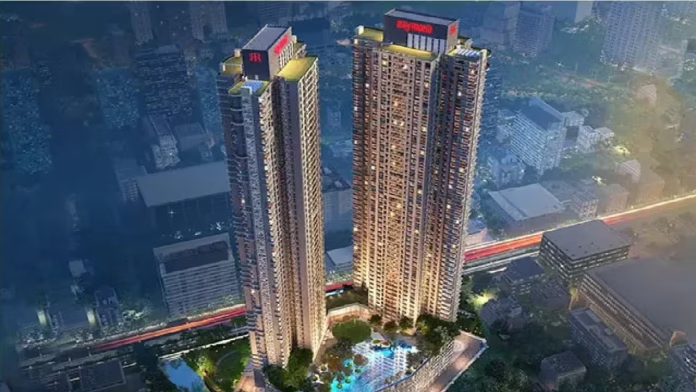
        Nestled in the heart of Mumbai’s luxurious real estate landscape, Three Sixty West has become a magnet for the city’s most affluent residents, including business tycoons and celebrities. This architectural marvel comprises two striking towers that represent the pinnacle of high-end living, frequently attracting attention from the crème de la crème of society. Recent high-profile transactions have further solidified Three Sixty West’s reputation as the go-to address for those seeking exclusivity and sophistication in the bustling metropolis.

        The recent acquisitions at Three Sixty West are remarkable not only for their scale but also for the illustrious individuals involved. Notably, Radhakishan Damani, a prominent industrialist and investor, has invested a staggering ₹1,238 crore in a collection of luxury flats within the complex. This move signals a strategic commitment to securing a foothold in one of Mumbai’s most prestigious locations. Similarly, BK Goenka, a notable figure in the business world, has added a lavish penthouse to his portfolio for ₹240 crore. These investments highlight the growing trend of high-net-worth individuals gravitating towards elite residential developments, further establishing Three Sixty West as a coveted destination.

        The allure of Three Sixty West extends beyond the business elite; it has also captured the attention of Bollywood’s brightest stars, including Shahid Kapoor. The convergence of such influential figures not only enhances the complex’s prestige but also reinforces its status as a cultural nucleus in Mumbai. As the demand for luxury residences continues to surge, developments like Three Sixty West are redefining the standards of opulence in the Indian real estate market, catering to a clientele that values exclusivity and bespoke living experiences.


        Raymond Realty Ventures into Pune and MMR Expansion

        Raymond Realty Ventures into Pune and MMR Expansion
        Raymond Realty Ventures into Pune and MMR Expansion

        Raymond Realty, the property development division of the iconic textile giant Raymond, is poised to make its mark in the Pune real estate market. This strategic move marks a significant step in the company’s expansion beyond its established presence in the Mumbai Metropolitan Region (MMR). Having launched its real estate journey with a project in Thane in 2019, and more recently the high-profile Address By GS in Bandra, the company’s CEO has unveiled ambitious plans to diversify its portfolio. By entering Pune, Raymond Realty aims to capitalise on the city’s flourishing real estate landscape, characterised by a robust IT sector and esteemed educational institutions.

        Pune’s appeal lies not only in its burgeoning job market but also in its evolving infrastructure, which has spurred residential demand. Raymond Realty’s expansion strategy encompasses a mix of residential projects and a notable push into plotted developments. This dual focus is designed to meet the diverse needs of buyers and investors, from affordable housing to upscale developments. The company’s commitment to addressing both metropolitan and suburban demands positions it well within a competitive real estate market that continues to evolve in response to demographic shifts and lifestyle changes.

        Moreover, Raymond Realty’s plans to target the plotted development sector near Mumbai highlight a growing trend in the Indian real estate landscape. This segment caters to a niche audience, providing flexible land parcels for individual and commercial developers who seek prime locations for custom development. By focusing on this area, Raymond Realty is not only diversifying its offerings but also enhancing its ability to adapt to the dynamic market. This approach aligns with broader trends in the industry, where developers are increasingly recognising the importance of flexibility and tailored solutions in a rapidly changing environment.