

CONCOR Launches Bulk Cement Rail Logistics Model
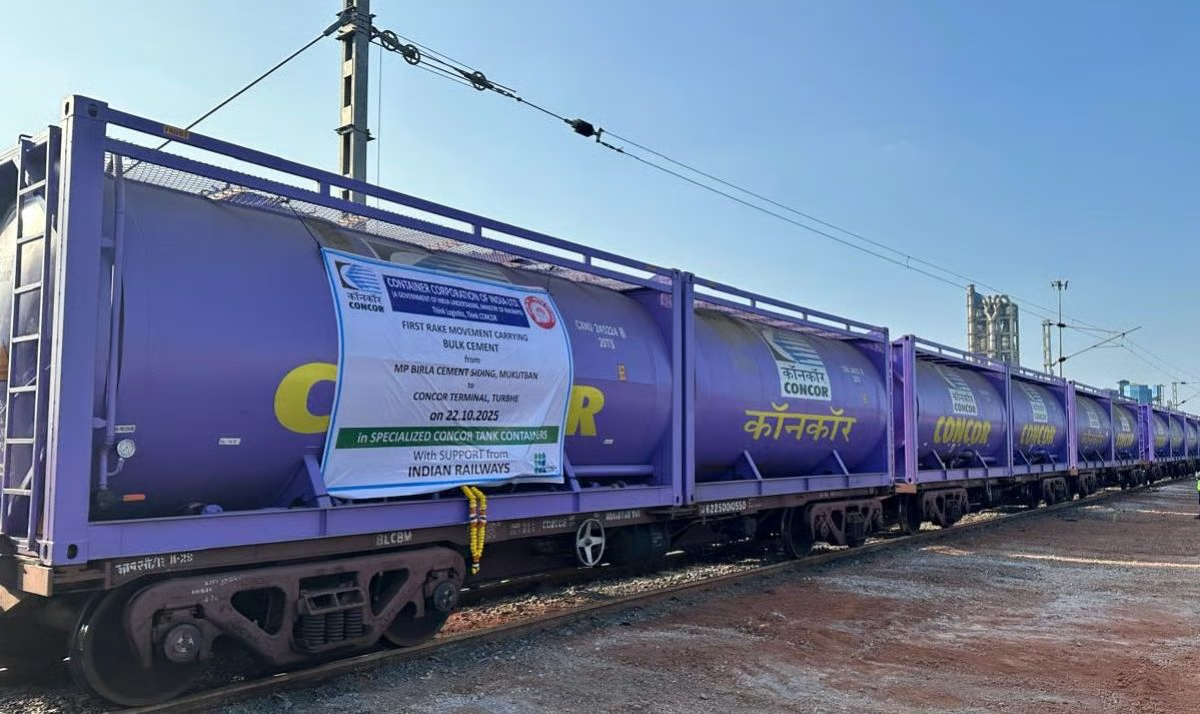
India’s rail logistics network is beginning to play a larger role in the movement of construction materials as the Container Corporation of India (CONCOR) rolls out specialised tank containers designed for transporting cement in bulk. The new system enables loose cement to be carried through rail-linked containers, a shift that could significantly improve supply chain efficiency while reducing the environmental footprint of cement distribution.
The initiative marks CONCOR’s entry into bulk cement logistics, a segment traditionally dominated by bagged cement transported by road. The first operational movement using the new containers transported cement from Mellacheruvu in Andhra Pradesh to the inland container depot at Whitefield in Bengaluru, demonstrating the viability of the rail-based model.Unlike conventional transport that relies on bagging and multiple handling stages, the new tank containers allow cement to be shipped in loose form directly from production sites to distribution hubs. The approach reduces packaging requirements, minimises material losses during transit, and improves overall handling safety.Logistics analysts say the shift could have broader implications for India’s infrastructure and housing sectors. Cement is a core input for construction, and transportation inefficiencies often contribute to higher project costs. By integrating rail-based bulk movement into the supply chain, companies can streamline deliveries to urban construction markets while lowering logistics expenses and reducing congestion on highways.
The model also aligns with the national push for multimodal freight transport and cleaner logistics systems. Rail-based cargo movement generally produces lower emissions per tonne compared with road transport, making it a strategic option as India works to decarbonise industrial supply chains. The cement industry, which already faces pressure to reduce its environmental footprint, may increasingly rely on such systems to optimise both operational efficiency and sustainability outcomes.Industry estimates suggest a significant share of India’s cement transport still depends on road networks, with bulk rail-based logistics representing a relatively small portion of the market. The introduction of purpose-built tank containers could gradually expand the rail share by enabling faster turnaround times and reducing reliance on packaging and manual handling.CONCOR’s wider logistics infrastructure — including inland container depots and rail-linked freight corridors — provides the backbone for scaling such solutions. The state-run company, established in 1988, operates container transport services and multimodal logistics terminals across the country, supporting both domestic freight and international trade.
Urban infrastructure experts note that improving cement logistics is critical as India accelerates housing construction, industrial corridors, and urban infrastructure projects. More efficient material movement can lower construction costs, improve project timelines, and reduce environmental pressures linked to freight transport.If widely adopted by cement manufacturers and logistics operators, bulk cement movement through tank containers could become a key component of India’s evolving construction supply chain — linking production centres with fast-growing urban markets through a cleaner and more efficient logistics network.
Also Read: Adani Cement NAREDCO Alliance Targets Green Construction
CONCOR Launches Bulk Cement Rail Logistics Model
Adani Cement NAREDCO Alliance Targets Green Construction

A new industry collaboration between Adani Cement and National Real Estate Development Council is expected to reshape how building materials, technology, and workforce skills intersect within India’s rapidly expanding construction sector. The alliance aims to accelerate the adoption of sustainable construction practices across residential, commercial, and infrastructure projects as urban growth intensifies across the country.
India’s urban landscape is undergoing rapid transformation as cities expand and housing demand rises in both metropolitan regions and emerging tier-two centres. In this context, industry bodies and materials producers are increasingly seeking coordinated approaches that improve project efficiency while reducing environmental impact. The partnership between Adani Cement and the National Real Estate Development Council — often referred to as NAREDCO — reflects a broader shift toward integrating greener materials, modern building technologies, and stronger construction standards.At the core of the collaboration is an attempt to bridge the gap between material innovation and on-ground execution. The initiative will combine Adani Cement’s technical capabilities in building materials and product development with NAREDCO’s wide network of developers and industry stakeholders across India. The organisation represents thousands of real estate firms and associated players, giving the programme the potential to influence construction practices at scale.
One of the central pillars of the partnership is workforce capacity building. Construction labour shortages and uneven skill levels remain persistent challenges across India’s building sector. To address this, the initiative will introduce structured training and certification programmes designed for masons, contractors, and site supervisors. These programmes aim to familiarise workers with modern construction techniques, safety protocols, and quality control measures that support sustainable construction practices.Beyond workforce training, the collaboration is also expected to serve as a knowledge-sharing platform for new materials and building methods. Industry observers say such exchanges can accelerate the adoption of advanced concrete solutions, low-carbon construction materials, and integrated building systems. These developments are increasingly important as the built environment accounts for a significant share of global carbon emissions and resource consumption.
Urban planners and infrastructure analysts note that improving material efficiency and project quality could also have downstream benefits for cities. More durable construction reduces lifecycle maintenance costs for housing and infrastructure, while environmentally responsible materials can help cities progress toward climate resilience targets.The partnership also comes at a time when India’s cement sector is expanding capacity to meet demand driven by housing schemes, urban redevelopment projects, and major transport infrastructure corridors. Aligning supply chains with sustainable construction practices may therefore become a defining factor in the next phase of urban development.
For India’s cities, the real measure of the alliance will lie in its implementation. If training, technology adoption, and low-carbon materials gain traction across projects, the initiative could support a more resilient and resource-efficient built environment in the years ahead.
Also Read: Mumbai GTB Nagar redevelopment plan reshapes Sion housing
Adani Cement NAREDCO Alliance Targets Green Construction
Mumbai Region Expands Senior Living Housing Market

A new senior living housing project is set to take shape in Thane, part of the Mumbai Metropolitan Region, reflecting the growing demand for purpose-built homes tailored to ageing urban populations. A Mumbai-based real estate developer has announced plans to invest roughly ₹150 crore in a specialised residential development within its large township in Balkum, Thane, marking its entry into the organised senior housing segment.The development will be located inside a 100-acre-plus integrated township currently under construction in the western suburb.
Spread across around 1.8 acres, the project is expected to include spacious two- and three-bedroom apartments designed specifically for residents above a certain age, with healthcare, community spaces, and assisted living services integrated into the complex.According to project details shared by company officials, the residential units will be priced from approximately ₹1.8 crore for two-bedroom homes and above ₹2.2 crore for larger three-bedroom apartments. The developer expects the project to generate total revenue of around ₹255–260 crore once sales are completed.
Industry analysts say the entry of established developers into senior living housing highlights an emerging demographic shift in India’s urban housing demand. With rising life expectancy, nuclear families, and increased mobility of younger professionals, dedicated residential communities for older adults are gradually becoming a recognised asset class in metropolitan markets. Urban planners note that cities such as Thane are particularly suited for this housing model because of their improving transport networks, healthcare infrastructure, and relatively lower land costs compared with central Mumbai. Recent investments in metro corridors, road connectivity, and civic amenities have also strengthened the suburb’s appeal for long-term residential developments.
Experts in the real estate sector suggest that integrated townships offering senior-focused housing within larger mixed-use communities may become increasingly common. Such projects typically combine medical access, recreational infrastructure, and barrier-free design standards to support ageing residents while keeping them connected to broader neighbourhood life.From a city planning perspective, specialised housing for older citizens also raises questions about accessibility, public transport, and healthcare readiness. Urban policy observers argue that developments of this kind can work effectively only if they are supported by pedestrian-friendly infrastructure, reliable emergency care access, and inclusive public spaces. For the Mumbai Metropolitan Region, the growth of senior living housing may represent a structural shift in residential development strategies. As India’s urban population ages and household structures evolve, developers and city planners alike are beginning to recognise that future housing supply will need to respond not only to affordability pressures but also to changing demographic realities. If the current wave of projects succeeds, it could influence how upcoming townships across the region design neighbourhoods that are adaptable, inclusive, and resilient for residents across different life stages.
Also Read: Mumbai MHADA Approves Redevelopment Of Three Clusters
Mumbai Region Expands Senior Living Housing Market
Mumbai Real Estate Demand Strengthens In February

Mumbai’s housing sector recorded a steady rise in transactions in February, signalling continued buyer confidence in the country’s most expensive residential market. The uptick in Mumbai property registrations comes despite developers adopting a cautious approach to new launches earlier this year, highlighting the resilience of end-user demand and sustained investor interest in the city’s residential landscape. Official registration data from the state’s property records department shows that more than 12,800 homes were formally registered across the Brihanmumbai Municipal Corporation jurisdiction during February. This represents a modest year-on-year rise in transactions compared with the same period last year, indicating that housing demand in the financial capital remains stable even amid evolving economic and geopolitical uncertainties.
For the state government, the rise in Mumbai property registrations also translated into stronger fiscal receipts. Stamp duty collections for the month crossed ₹1,100 crore, significantly higher than the revenue recorded a year earlier. Analysts suggest the increase in revenue is linked not only to higher transaction volumes but also to a visible shift towards more expensive homes being purchased. Market observers note that the composition of housing demand in the city is gradually changing. Homes priced above ₹5 crore accounted for a larger share of total transactions compared with last year, while the ₹2–5 crore bracket also expanded. This trend suggests that affluent buyers and high-income households continue to drive activity in the city’s property market, particularly in well-connected neighbourhoods.
At the same time, the affordable segment continues to maintain a strong presence in the overall market mix. Industry analysts point out that the city’s housing demand remains diverse, with a significant share of registrations still concentrated in homes priced below ₹2 crore. However, the share of the lowest price category has gradually declined as property values rise and buyers increasingly prioritise larger or better-located homes. Suburban areas remain the primary drivers of residential activity. Western suburban neighbourhoods accounted for the majority of registrations during the month, reflecting a combination of better connectivity, infrastructure upgrades and redevelopment projects that are unlocking housing supply in these areas. Central suburban locations also contributed a sizeable share, although slightly lower than the previous year.
Urban planners say the suburban concentration of transactions reflects the city’s structural constraints. Limited land availability in core districts and the high cost of redevelopment continue to push both developers and buyers towards peripheral neighbourhoods that offer relatively larger homes and improved transport links. Experts emphasise that Mumbai’s housing ecosystem is heavily shaped by redevelopment of ageing buildings and infrastructure-led growth. This makes the city’s property cycle different from many other metropolitan markets, where greenfield expansion plays a larger role. Looking ahead, urban economists suggest sustained investment in public transport networks, climate-resilient infrastructure and balanced housing supply will be critical to ensure that growth in Mumbai property registrations supports inclusive urban expansion rather than widening affordability gaps in India’s densest megacity.
Also Read : Mumbai MHADA Approves Redevelopment Of Three Clusters
Mumbai Real Estate Demand Strengthens In February
MahaRERA Real Estate Disputes Highlight Growing Regulatory Pressure

Maharashtra’s real estate regulator is facing mounting pressure to accelerate case resolution as thousands of real estate disputes between developers and homebuyers remain pending. According to the state’s latest economic survey for 2025–26, more than 6,300 complaints are currently awaiting final orders before the Maharashtra Real Estate Regulatory Authority, underscoring the growing workload faced by the country’s most active housing watchdog.
The figures reveal the scale of regulatory oversight required in one of India’s largest property markets. Since its establishment under the Real Estate (Regulation and Development) Act, 2016, the authority has registered over 53,000 real estate projects across the state. Over the same period, it has received more than 32,000 complaints related to project delays, financial disputes, and contractual obligations between developers and homebuyers. Officials familiar with the regulator’s operations say that while the majority of real estate disputes have been resolved through hearings and orders, the remaining backlog reflects the rising number of homebuyers turning to the regulator for grievance redressal. Around 26,000 complaints have been disposed of so far, leaving several thousand cases still moving through the adjudication process.
The state survey indicates that the regulator has intensified efforts to accelerate case disposal in recent years. In 2025 alone, authorities issued nearly 7,000 orders, including those related to earlier pending cases. This marks a significant increase compared with previous years, when annual case disposals were considerably lower. Administrative measures such as assigning adjudicating officers and streamlining hearing schedules are said to have helped reduce the pace at which unresolved complaints accumulate. Despite these improvements, consumer rights groups say delays in enforcement and recovery orders remain a major concern for homebuyers. Many disputes involve delayed possession of flats, changes in project specifications, or refund claims when projects fail to progress as promised. For households investing life savings in property, prolonged legal processes can translate into years of financial uncertainty.
Urban policy experts say the issue reflects a broader challenge for India’s housing sector. Regulatory frameworks such as RERA were introduced to bring transparency and accountability to the real estate market, which historically suffered from weak consumer protection. The effectiveness of these mechanisms, however, depends on the speed and consistency with which complaints are resolved. Recent judicial observations at the national level have also drawn attention to the functioning of real estate regulators. Legal experts note that the judiciary has emphasised the need for stronger enforcement powers and faster resolution of cases so that the regulatory framework can fulfil its intended purpose of protecting buyers.
For rapidly expanding urban regions like Mumbai, Pune, and other growth centres across Maharashtra, efficient resolution of real estate disputes is critical. The property sector not only influences household wealth but also shapes urban development, infrastructure planning, and housing supply. As the number of registered projects continues to rise, analysts say the regulator will need to expand its administrative capacity and digital processes to handle complaints more efficiently. Strengthening dispute resolution mechanisms could play a crucial role in restoring buyer confidence and ensuring that India’s urban housing markets develop in a transparent and accountable manner.
‘MahaRERA Real Estate Disputes Highlight Growing Regulatory Pressure
Ahmedabad Luxury Housing Project Attracts 350 Crore Investment

Ahmedabad’s residential property market is witnessing continued investor confidence as a city-based developer plans a ₹350-crore luxury housing project aimed at buyers seeking larger, high-value homes. The proposed development, located on a 6,300 square yard land parcel, will introduce 136 apartments priced in the premium category an indication of the steady shift toward upscale housing in one of western India’s fastest-growing urban economies.
The luxury housing project reflects broader changes taking place in Ahmedabad’s property landscape. While the city has traditionally been known for strong demand in affordable and mid-income housing, developers are increasingly targeting higher-income homebuyers whose preferences have evolved toward spacious residences, integrated amenities and better-planned residential environments.
According to industry estimates, Ahmedabad’s residential market recorded sales of nearly 19,000 homes in 2025, maintaining modest annual growth despite a challenging national property cycle. Real estate analysts say this stability has encouraged developers to explore projects across price segments, particularly in emerging premium micro-markets supported by improved infrastructure and connectivity.
The upcoming luxury housing project will be financed largely through internal capital, reflecting a development approach where firms rely less on external borrowing and more on accumulated revenues. Market observers say such funding structures can reduce project risk and improve delivery timelines—two factors that increasingly influence buyer confidence in India’s real estate sector.
With a base rate positioned around ₹6,500 per square foot and entry-level apartment prices starting above ₹2.5 crore, the development is clearly aimed at affluent homebuyers and investors. Property consultants note that rising household incomes and a growing base of professionals in sectors such as manufacturing, finance and technology are gradually supporting demand for high-end housing in Ahmedabad.
Urban planners say the city’s evolving residential patterns also reflect wider urbanisation trends. As Ahmedabad expands, new housing clusters are emerging around improved transport corridors, employment hubs and commercial districts. These shifts are prompting developers to design projects that combine residential density with lifestyle infrastructure such as landscaped spaces, energy-efficient buildings and shared amenities. Experts suggest that such developments, when planned responsibly, can contribute to more sustainable urban growth. High-density residential communities located within existing city infrastructure can help reduce urban sprawl while making more efficient use of land and transport networks.
However, planners caution that balanced urban development will require continued attention to affordable housing supply alongside premium projects. In most Indian cities, including Ahmedabad, the bulk of housing demand still originates from middle-income households and first-time homebuyers. For developers entering the premium category, the challenge will be maintaining quality construction, predictable timelines and environmentally responsible design standards. As cities expand and property values rise, the role of well-planned housing becomes increasingly important in shaping inclusive and resilient urban environments.
Ahmedabad’s latest luxury housing project therefore signals more than a single development announcement. It highlights the city’s transition toward a more diverse residential market—one where affordability, sustainability and quality of life will increasingly shape the next phase of urban growth.
Ahmedabad Luxury Housing Project Attracts 350 Crore Investment
Mumbai MHADA Digital Housing Services Reach Citizens Via App

Mumbai’s public housing system is taking a decisive step toward digital governance as the state housing authority rolls out a mobile platform designed to bring key services directly to citizens’ smartphones. The new DiGiMHADA application, introduced at the authority’s Bandra headquarters this week, is expected to streamline access to affordable housing schemes and reduce procedural barriers for applicants across Maharashtra’s urban centres.
The platform consolidates several housing services into a single digital interface, enabling citizens to participate in housing lotteries, track application progress, submit grievances and access official notifications without visiting government offices. Officials involved in the rollout say the initiative reflects a broader shift toward transparent, technology-led public administration within India’s urban housing sector. For Mumbai and other fast-growing cities, the launch of digital housing services through a mobile platform is particularly significant. Housing agencies frequently manage thousands of applications for subsidised homes, and paper-based procedures have historically created delays and information gaps for applicants. A digital interface, planners say, can improve efficiency while giving residents clearer visibility into the status of their applications.
Urban governance experts note that mobile-first public services are becoming essential in cities where housing demand significantly exceeds supply. Mumbai’s metropolitan region continues to experience rapid population growth and migration, placing sustained pressure on the availability of affordable homes. By shifting processes online, authorities aim to reduce the administrative burden on both applicants and housing departments. The DiGiMHADA application also integrates services such as e-billing, contractor registration, digital permissions under automated development control systems, and participation in property e-auctions. Citizens can additionally lodge complaints and monitor responses through the same platform. Officials say the system relies on mobile number verification and one-time password authentication to ensure secure user access.
Another feature allows individuals to submit requests under the Right to Information framework directly through the app. Urban policy specialists suggest that this element could strengthen accountability within housing agencies by making it easier for residents to request public information about housing schemes and administrative decisions. Alongside the mobile platform, the authority has introduced a dedicated WhatsApp-based assistance channel aimed at guiding applicants through procedures such as documentation, registration and scheme eligibility. The move reflects a broader effort to combine formal digital infrastructure with widely used communication tools, particularly for first-time homebuyers navigating complex public housing systems.
For India’s cities, the expansion of digital housing services is increasingly viewed as a crucial component of inclusive urban governance. When implemented effectively, such systems can minimise the role of intermediaries, reduce opportunities for misinformation and improve access to government housing programmes for lower- and middle-income households. As metropolitan regions continue to expand, digital public infrastructure is expected to play a growing role in how housing authorities manage demand, allocate homes and maintain transparency. Urban planners say the success of platforms like DiGiMHADA will ultimately depend on accessibility, public awareness and the ability to integrate these tools with broader housing and planning systems.
Mumbai MHADA Digital Housing Services Reach Citizens Via App
Pune Global Forum Discusses Future Ready Youth Skills
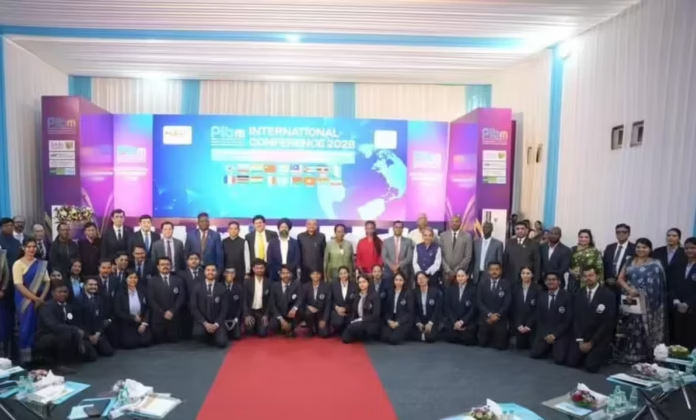
A global education and policy forum held in Pune this week brought together diplomats, industry representatives and academic leaders to examine how countries can better prepare young populations for a rapidly transforming global labour market. The conference, centred on the theme of future ready youth, explored strategies to connect education systems with evolving employment needs across emerging and developed economies.
Hosted at a leading management institute in the city, the gathering saw participation from representatives of several countries across Asia, Africa, Europe and Latin America. Discussions focused on the widening disconnect between traditional academic pathways and the skills increasingly required by technology-driven industries. Experts at the forum noted that demographic shifts are intensifying the urgency of workforce transformation. India, with one of the world’s largest youth populations, faces both a challenge and an opportunity in aligning education systems with global economic demands. Government officials present at the event highlighted that preparing future ready youth requires a stronger emphasis on technical competencies, entrepreneurship and global exposure rather than purely academic achievement.
Participants also pointed to the growing influence of emerging technologies such as artificial intelligence, automation and advanced analytics in shaping future employment. As these technologies reshape sectors ranging from manufacturing to finance, education institutions are under pressure to redesign curricula to equip graduates with digital literacy and problem-solving capabilities. Industry analysts said the issue is particularly significant for developing economies where small and medium enterprises play a central role in job creation. Research insights shared during the discussions suggested that SMEs and mid-sized businesses contribute a significant share of national output in most economies. However, the productivity gap between developed and developing markets often stems from differences in workforce training and technological adoption.
Several speakers emphasised that workforce development strategies should not only focus on elite segments of the labour market. While global corporations recruit from a small pool of highly competitive candidates, the majority of the workforce is employed by mid-sized businesses and local enterprises. Ensuring that this broader workforce becomes future ready youth through accessible training and skill-building initiatives could have a direct impact on national economic growth.
International collaboration was another key theme during the event. Education specialists proposed cross-border knowledge-sharing platforms that allow countries to exchange expertise in sectors such as manufacturing, technology and services. Such partnerships could help institutions develop industry-aligned programmes while allowing students exposure to global professional practices.
The role of cities in enabling these ecosystems was also highlighted. Urban centres like Pune, widely recognised as an educational and technology hub, host large numbers of domestic and international students. Experts believe that cities with strong academic networks, research facilities and innovation clusters can become critical drivers of workforce transformation. Participants concluded that building future ready youth requires coordinated efforts between governments, universities and industry. As economies become more interconnected and technology reshapes traditional employment models, education systems may need to move faster to ensure young people are equipped with the skills required to participate in a sustainable and inclusive global economy.
Pune Global Forum Discusses Future Ready Youth Skills
Pune Hadapsar Annexe Sees New Luxury Housing Launch
