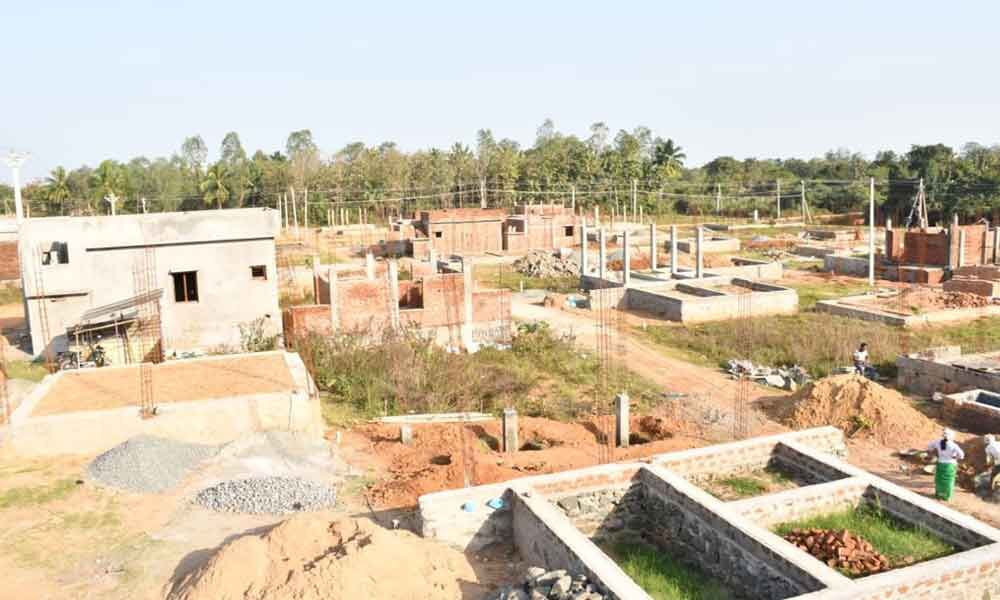
A policy shift in Andhra Pradesh is set to reduce the cost of holding land under development, with the state introducing a partial waiver on vacant land tax for approved construction projects. The move, applicable across urban local bodies, aims to ease financial pressure on plot owners and developers while accelerating housing supply in rapidly growing cities.
Under the revised framework, landowners with valid building approvals will pay only half of the applicable vacant land tax during the construction phase. The concession remains in place until a project reaches completion, receives an occupancy clearance, or the development permission lapses. Authorities have clarified that projects without formal approvals will not qualify, reinforcing a compliance-based approach to urban expansion. Urban planners suggest the measure addresses a long-standing contradiction in city taxation systems. Vacant land tax was originally intended to discourage speculative land hoarding, yet its application during active construction often increased project costs and delayed development timelines. By recalibrating the vacant land tax policy, the state appears to be prioritising timely land use over passive holding.
The implications extend beyond developers’ balance sheets. Reduced carrying costs could improve project viability, particularly in mid-income housing segments where affordability remains strained. Industry observers note that savings generated through vacant land tax relief may translate into more competitive pricing, though the extent of this pass-through will depend on market conditions and demand cycles. From a governance perspective, the reform is also tied to digitised approval and monitoring systems. Officials indicate that linking tax concessions to valid permits and defined timelines creates a clearer audit trail, limiting misuse while encouraging formalisation of the construction sector. This could support more transparent urban growth, an area where Indian cities continue to face institutional challenges. However, the policy raises broader questions about urban land use and sustainability. While incentivising construction can stimulate economic activity and employment, experts caution that faster build-out must align with infrastructure readiness, environmental safeguards, and climate resilience goals. Without parallel investments in public transport, water systems, and green spaces, increased construction could strain already fragile urban ecosystems.
The vacant land tax adjustment comes at a time when Andhra Pradesh is pursuing ambitious urban development, including the expansion of administrative and economic hubs. Secondary cities are also witnessing rising demand, driven by migration and shifting investment patterns. In this context, the tax relief may help unlock underutilised land parcels, bringing them into productive use more quickly. Looking ahead, the effectiveness of the vacant land tax reform will depend on how well it balances ease of doing business with responsible urban planning. As cities expand, the focus will increasingly shift to ensuring that growth remains inclusive, resource-efficient, and aligned with long-term sustainability priorities rather than short-term construction gains.
Andhra Pradesh Eases Taxes To Boost Housing