HomeLatestDelhi Real Estate Enters A New Density Era

Delhi Real Estate Enters A New Density Era

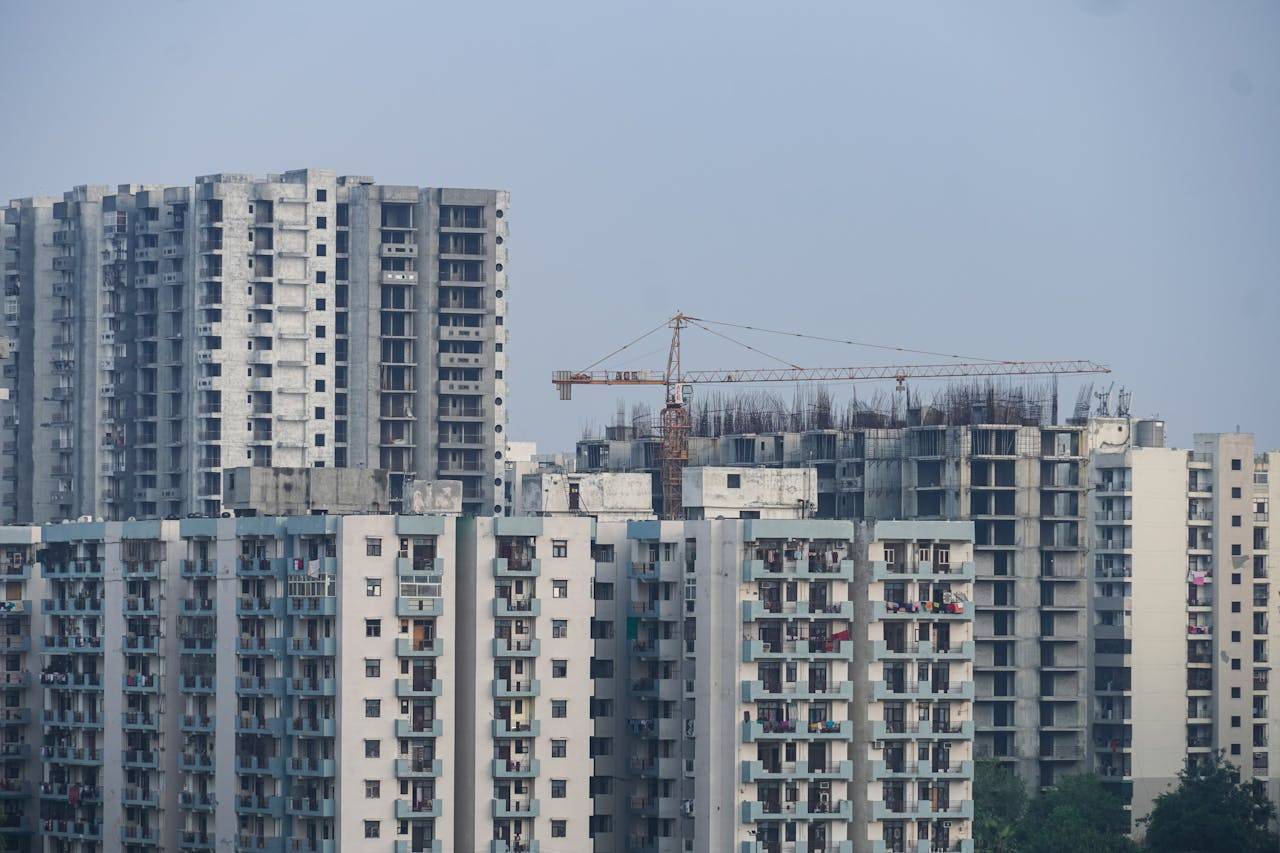
Delhi’s proposed Master Plan 2047 could alter the economics of land and housing by allowing greater development intensity around transit corridors, enabling redevelopment and opening selected areas to new forms of activity. The changes could increase housing capacity within the capital, but their real impact will depend on whether roads, public transport, utilities and civic services expand alongside additional construction.

At the centre of the proposal is Floor Area Ratio, or FAR, which determines how much total floor space can be built relative to a plot’s size. The proposed transit-oriented development framework would cover areas within 500 metres of metro corridors and around RRTS and railway stations. Smaller plots could also qualify than under the earlier framework, potentially widening access to higher development intensity.The shift could make connectivity an increasingly important component of Delhi property values. Land near functioning mass-transit networks may gain development potential because residents can access employment and services without relying entirely on private vehicles. That could gradually redirect investment towards locations where transport infrastructure and development rights overlap.However, additional FAR does not automatically mean more affordable homes. Delhi has experienced a steep decline in the share of newly launched homes priced below ₹40 lakh, falling from 62% of launches in 2020 to 11% last year, according to data cited in the report. Much of the region’s housing expansion has consequently moved towards neighbouring NCR cities.

The draft also proposes changes affecting 70 villages in Outer Delhi, including provisions for commercial and institutional activity in designated Green Development Areas. It also seeks a common approach to reconstruction and redevelopment of older DDA-built two-storey units. If implemented effectively, these measures could bring underused land and ageing housing stock back into productive use rather than pushing the city continually outward.For Delhi property values, the larger question is whether development rights will translate into actual projects. Planning experts caution that a higher permissible density has limited value if approvals remain slow or infrastructure cannot support the resulting population. The draft is also still subject to notification, meaning proposed provisions should not yet be treated as established development rights.That distinction matters for buyers and existing residents. If land becomes more valuable because it can support greater floor space, redevelopment could accelerate. But rising land prices can also make redevelopment less accessible to lower-income households unless housing requirements and public infrastructure are planned alongside private investment.

The environmental implications are equally significant. Concentrating more homes and workplaces near reliable public transport can reduce travel distances and dependence on private vehicles. Yet high-density growth without adequate drainage, water supply, open space and heat-resilient design could intensify existing urban stresses.Delhi’s next planning phase therefore hinges on implementation, not simply higher FAR. If the proposed framework is matched with transport, utilities, affordable housing and transparent approvals, it could support a more compact and connected capital. Otherwise, increased development capacity may raise Delhi property values faster than it improves everyday urban life.

Also Read : India Housing Costs Rise As Valuations Change
Delhi Real Estate Enters A New Density Era
RELATED ARTICLES

LEAVE A REPLY

Please enter your comment!
Please enter your name here

- Advertisment -spot_img

Most Popular

Recent Comments

Vedanta Aluminium Output Hits Record as Restructuring Nears

Vedanta Aluminium Output Hits Record as Restructuring Nears

Vedanta closed FY26 with record aluminium and alumina production, strengthening its position in a metals market closely tied to India’s infrastructure, power and transport...
India Steel Consumption Signals Wider Urban Growth

India Steel Consumption Signals Wider Urban Growth

India’s steel consumption has nearly doubled over the past decade, reaching about 152 million tonnes in 2024-25 from 77 million tonnes in 2014-15. The...
Pune GCC Demand Reshapes Commercial Office Market

Pune GCC Demand Reshapes Commercial Office Market

Pune’s office market is increasingly being shaped by Global Capability Centres (GCCs), with multinational firms using the city for technology, engineering, financial and specialised...
Hyderabad Brigade Barcelona RERA Shapes Kokapet Housing

Hyderabad Brigade Barcelona RERA Shapes Kokapet Housing

Hyderabad’s western growth corridor is seeing another large residential addition as Brigade Barcelona, a luxury housing project in Kokapet’s Neopolis, moves ahead with Telangana...
Chandigarh RERA Enters Focus as Prime Homes Near Crores

Chandigarh RERA Enters Focus as Prime Homes Near Crores

Chandigarh’s prime residential market is entering a new price bracket, with registered transactions showing that well-located plots in established sectors can command tens of...