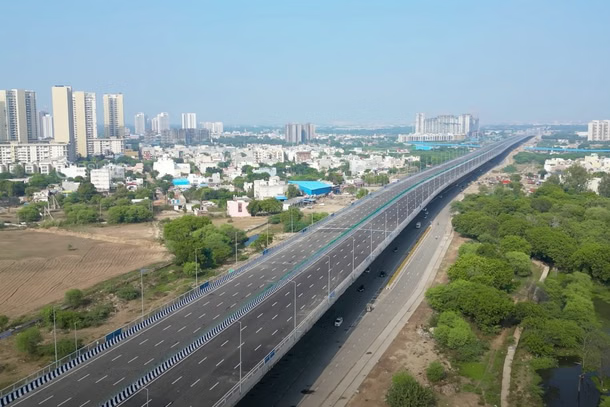
Haryana Land Acquisition Supports Gurugram Road Infrastructure
Haryana has initiated the acquisition of nearly 1,150 acres to develop a network of sector roads across Gurugram, marking one of the city’s largest recent land mobilisation exercises for transport infrastructure. The initiative is expected to improve connectivity between expanding residential and commercial sectors while addressing long-standing mobility bottlenecks in one of India’s fastest-growing urban regions.
The Gurugram sector roads programme forms part of a broader strategy to strengthen the city’s internal transport network as population growth and real estate development continue to outpace infrastructure expansion. Several emerging sectors have experienced rapid residential construction over the past decade, but road connectivity has often lagged behind, leading to congestion, longer travel times and uneven access to civic services. Urban planners believe that creating a well-connected grid of sector roads is essential to improving the efficiency of Gurugram’s urban structure. Unlike arterial highways that primarily facilitate regional movement, sector roads connect neighbourhoods with schools, healthcare facilities, employment hubs and public transport systems. Strengthening these links can reduce travel distances, improve emergency response access and support more balanced development across the city’s expanding urban footprint.
The Gurugram sector roads project also highlights the growing importance of coordinated land acquisition in metropolitan infrastructure planning. Officials involved in urban development indicate that acquiring continuous land parcels remains one of the most significant challenges in delivering planned road networks within rapidly urbanising regions. Delays in land assembly often result in fragmented infrastructure, forcing residents to rely on temporary access roads that reduce network efficiency. Infrastructure specialists note that improved road connectivity can generate wider economic benefits by supporting logistics, reducing commuting costs and increasing accessibility to commercial districts. Enhanced transport corridors also influence residential and commercial investment decisions, encouraging development in sectors that previously lacked reliable connectivity. However, experts caution that road expansion alone cannot resolve long-term mobility challenges without parallel investment in public transport, pedestrian infrastructure and cycling facilities.
From an environmental perspective, transport planners emphasise that new road projects should integrate climate-resilient and sustainable design principles. Features such as dedicated stormwater drainage, permeable surfaces where feasible, roadside tree plantations, safe pedestrian pathways and provisions for non-motorised transport can improve resilience while reducing the environmental impact of expanding road infrastructure. Such measures are increasingly important as Gurugram experiences more frequent urban flooding and rising traffic-related emissions. The land acquisition initiative also aligns with the region’s broader objective of creating integrated urban corridors that connect housing, employment and public services more efficiently. Better road infrastructure can complement major transport projects in the National Capital Region, improving first- and last-mile connectivity while supporting future economic growth across Gurugram and neighbouring districts. As Gurugram continues evolving into a major business and residential destination, infrastructure delivery will remain central to maintaining urban competitiveness. The success of the Gurugram sector roads programme will ultimately depend not only on timely construction but also on integrating mobility, environmental resilience and inclusive planning to create a transport network that serves both current residents and future generations.