HomeConstructionIndia Pushes Construction Technology In Affordable Housing

India Pushes Construction Technology In Affordable Housing

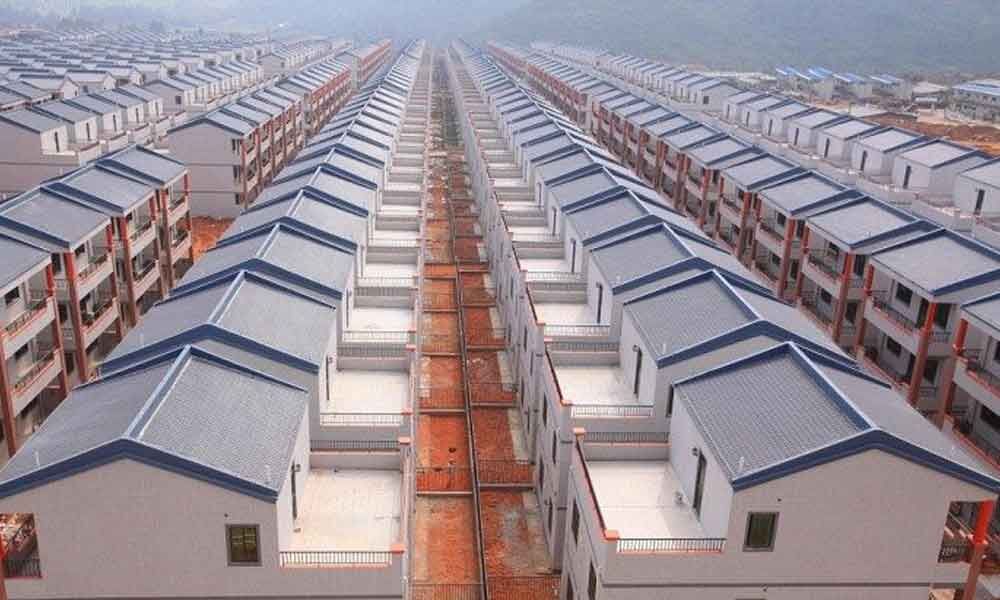
India’s urban housing strategy is entering a new phase, where the focus is shifting from the scale of delivery to the methods of construction. As cities expand and climate risks intensify, policymakers are increasingly prioritising construction technology in affordable housing to improve speed, resilience and environmental performance.

Since its launch in 2015, the country’s flagship urban housing programme has enabled millions of low- and middle-income families to access formal housing with basic services. However, officials now acknowledge that conventional brick-and-mortar approaches may not be sufficient to meet future demand, particularly in rapidly growing and climate-vulnerable cities. The latest phase of the programme aims to support a significant number of additional households over the next five years. What distinguishes this phase is a stronger emphasis on construction technology in affordable housing, with the government encouraging the adoption of alternative building systems that can reduce construction time and improve structural durability.

Urban planners point out that traditional construction practices, while well understood, often face delays linked to labour shortages, material supply constraints and weather disruptions. These challenges are compounded in cities exposed to floods, cyclones and heat stress, where building performance becomes a critical concern rather than a secondary consideration. To address these issues, authorities have been testing a range of globally proven construction technologies. These include prefabricated components, modular systems and materials designed for specific climatic conditions. The objective is not a one-size-fits-all solution but a portfolio of approaches that can be adapted to India’s diverse geographies.

Pilot housing developments across multiple cities have served as testing grounds for such innovations. These projects function as live demonstrations, allowing engineers, contractors and local governments to evaluate construction timelines, cost efficiencies and long-term maintenance requirements under real conditions. Industry experts suggest that while these technologies offer clear advantages, widespread adoption will depend on ecosystem readiness. Builders must invest in new skill sets, supply chains need to adapt, and regulatory frameworks must evolve to accommodate non-traditional construction methods.

To bridge this gap, training programmes targeting architects, engineers and project managers have been introduced. At the same time, financial incentives are being offered to developers willing to experiment with new systems, helping offset initial risks associated with unfamiliar technologies. Quality assurance remains a central concern. Independent monitoring mechanisms have been built into the programme to ensure that faster construction does not compromise safety or durability, particularly in high-density urban environments.

India’s housing shortage continues to be concentrated in urban areas, where land constraints and rising costs make timely delivery essential. If construction technology in affordable housing can deliver both scale and resilience, it could reshape how cities expandmaking them not just larger, but more sustainable and better prepared for environmental stress. The success of these efforts will likely determine whether innovative construction remains limited to pilot projects or becomes embedded in mainstream urban development practices.

Also Read : India Real Estate Investment Growth Signals Shift
India Pushes Construction Technology In Affordable Housing
RELATED ARTICLES

LEAVE A REPLY

Please enter your comment!
Please enter your name here

- Advertisment -spot_img

Most Popular

Recent Comments

India Commercial Property Bets Gain Momentum

India Commercial Property Bets Gain Momentum

India’s commercial real estate market is showing renewed signs of activity as institutional investors, hotel operators, and office developers reposition themselves around income-generating urban...
Accenture Pune Lease Signals GCC Momentum

Accenture Pune Lease Signals GCC Momentum

Pune’s commercial property market has received another major boost after a global consulting and technology firm secured nearly 600,000 square feet of office space...
MHADA Mumbai Revises Vikhroli Apartment Rates

MHADA Mumbai Revises Vikhroli Apartment Rates

Mumbai’s state-run housing authority has lowered prices for more than 1,200 apartments in Vikhroli ahead of its upcoming housing lottery, signalling growing stress within...
Raigad Region Draws Fresh Housing Interest

Raigad Region Draws Fresh Housing Interest

The opening of major transport upgrades around Mumbai is rapidly altering land and housing patterns across Raigad and adjoining hill regions, with developers and...
Aurex Expands AI Led Property Investment

Aurex Expands AI Led Property Investment

A newly formed property venture with operations across Delhi, Kolkata and Dubai is entering India’s increasingly technology-driven real estate market with a strategy centred...