HomeLatestJharkhand Coal Claims Challenge Tata Steel

Jharkhand Coal Claims Challenge Tata Steel

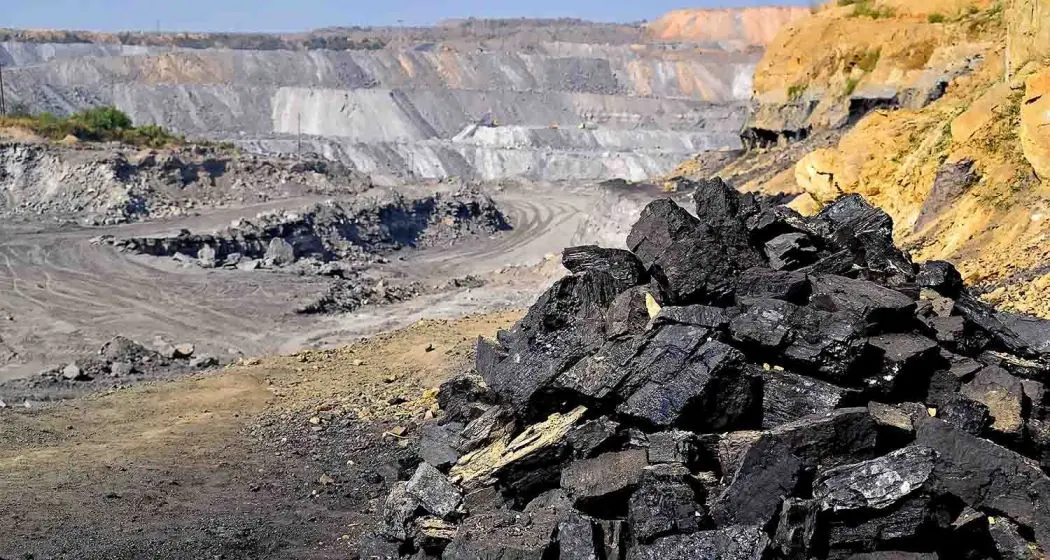
Tata Steel is contesting a ₹1,755 crore demand notice issued by mining authorities in Jharkhand over alleged excess coal extraction at its West Bokaro Colliery, bringing renewed attention to legacy mining disputes, regulatory certainty and the future of captive coal supply for Indian industry.

The notice, linked to production between FY2000-01 and FY2006-07, alleges coal extraction beyond permissible limits. Tata Steel has challenged the claim before the Ministry of Coal’s revisional authority, arguing the demand lacks factual and legal basis. Interim protection against coercive recovery has reportedly been granted while the matter is heard. The case matters beyond one company. Tata Steel is a major steel producer whose operations depend on stable raw material access, including captive coal for metallurgical processes. When disputes arise over mining leases or retrospective claims, they can affect planning, capital expenditure and supply confidence across heavy industry.For Jharkhand, the issue highlights the balancing act between resource revenue and investment stability. The state is rich in coal, iron ore and other minerals, making mining a key source of employment and public income. At the same time, unpredictable enforcement or prolonged litigation can deter future industrial expansion and slow downstream manufacturing growth.The Tata Steel coal notice also revives broader questions around historical compliance frameworks. Many mining operations began under older regulatory systems with production norms, reporting methods and lease conditions that have since evolved. Experts say retrospective assessments often become legally complex because records, methodologies and applicable penalty rules may be disputed years later.

Urban and infrastructure planners watch such cases closely because steel remains central to metro systems, bridges, railways, warehouses, housing frames and renewable energy structures. If raw material uncertainty raises production costs, the effect can ripple through public projects and real estate markets.There is also an environmental dimension. Coal extraction has long carried costs tied to land degradation, dust, water stress and community displacement. Stronger enforcement can help improve accountability where violations exist, but governance systems work best when rules are transparent, timely and consistently applied rather than delayed for decades.The Tata Steel coal notice comes as India attempts a dual transition: expanding industrial capacity while reducing the carbon intensity of manufacturing. Steelmakers are investing in efficiency, scrap recycling, renewable energy and cleaner processes, yet coal still plays a major role in conventional steelmaking.Analysts say outcomes in such disputes can shape how future captive mining assets are managed. Companies may seek tighter compliance systems, digital production monitoring and clearer state-centre coordination to reduce litigation risk. Governments, meanwhile, may face pressure to modernise mineral oversight so revenue protection does not come at the cost of prolonged uncertainty.

For citizens, the bigger question is whether mineral wealth translates into durable public benefit—better roads, cleaner air, jobs and restored landscapes—rather than only legal battles over past extraction. As the case proceeds, it may become a benchmark for how India handles legacy resource disputes in an era of industrial expansion and sustainability demands.

Also Read: India Coal Reserves Support Rising Power Use

Jharkhand Coal Claims Challenge Tata Steel
RELATED ARTICLES

LEAVE A REPLY

Please enter your comment!
Please enter your name here

- Advertisment -spot_img

Most Popular

Recent Comments

India Decarbonisation Efforts Shift Toward Implementation

India Decarbonisation Efforts Shift Toward Implementation

India’s leading industrial, infrastructure and energy businesses used World Environment Day to outline a fresh round of sustainability targets and decarbonisation measures, signalling a...
Steel Exchange India Signals Debt Discipline Shift

Steel Exchange India Signals Debt Discipline Shift

Steel Exchange India has completed a scheduled interest payment of approximately ₹1.53 crore to holders of its listed non-convertible debentures (NCDs), according to a...
UltraTech Cement Slide Signals Market Caution

UltraTech Cement Slide Signals Market Caution

UltraTech Cement has emerged among a group of major listed companies experiencing consecutive declines in share prices over recent trading sessions, highlighting growing investor...
Andhra Cements Merger Plan Draws Infrastructure Attention

Andhra Cements Merger Plan Draws Infrastructure Attention

A proposed integration between Andhra Cements and Sagar Cements has added momentum to a broader wave of consolidation within India’s cement industry, reflecting changing...
Rathi Steel, Steel Industry, Infrastructure Development, Urban Growth, Sustainable Construction, Climate Resilient Cities, Industrial Manufacturing, Housing Development, Construction Economy, Green Infrastructure, Real Estate Growth, Building Materials Sector

Rathi Steel Growth Outlook Tied To Infrastructure Demand

Fresh disclosures linked to Rathi Steel and Power’s latest quarterly performance have drawn attention to the evolving dynamics of India’s steel and construction materials...