

HomeLatestK3 Design Interiors Model Targets Faster Urban Fitouts

K3 Design Interiors Model Targets Faster Urban Fitouts

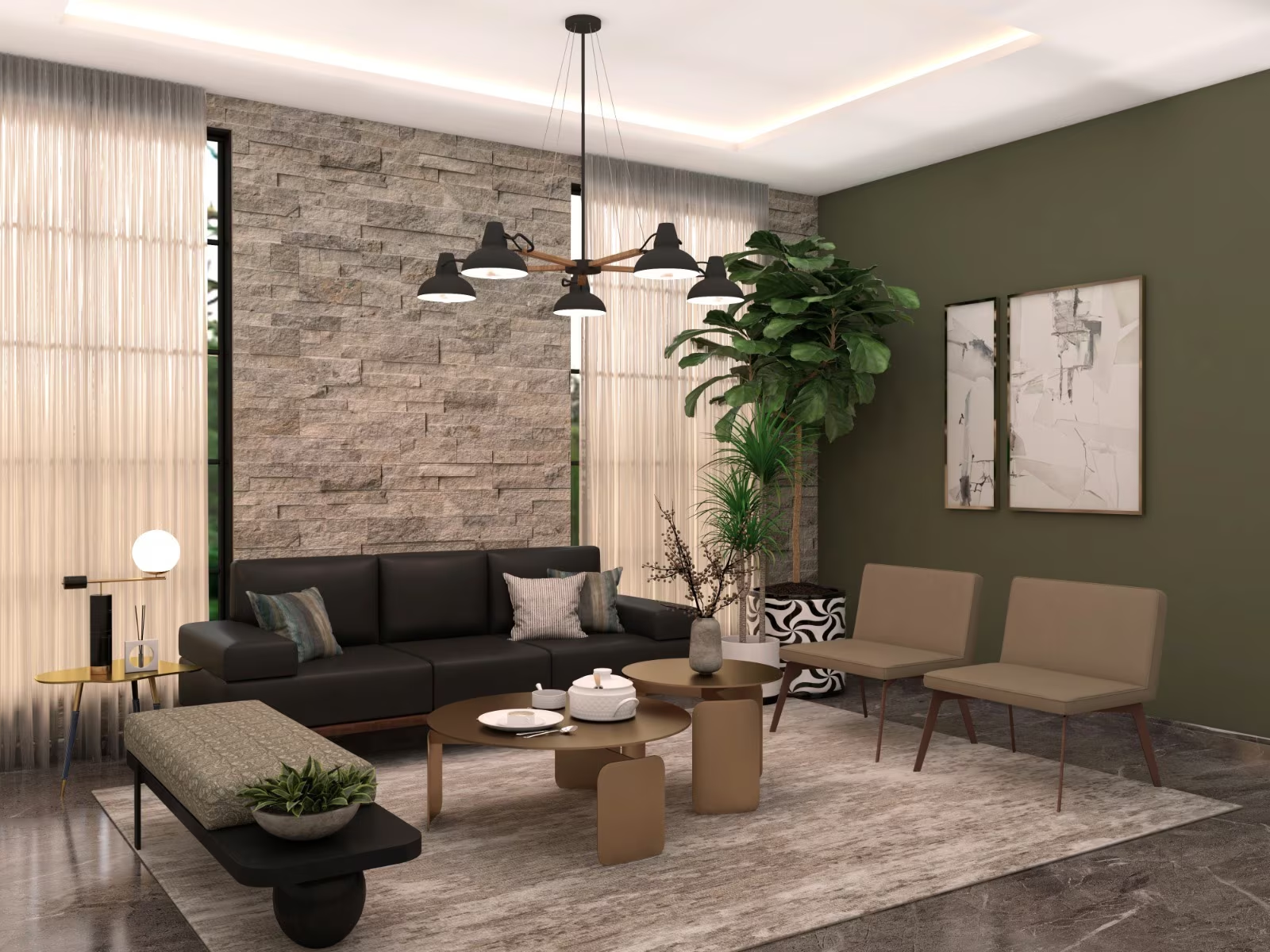
A Mumbai-based interiors firm is attempting to reshape project delivery timelines in India’s housing sector by combining factory-led production with end-to-end execution, reflecting a growing demand for faster, more predictable home completion cycles.Classic K3 Design Interiors, operating through its execution platform K3 Design Lab, has built its model around integrated design and manufacturing. By consolidating planning, fabrication, and installation within a single system, the firm aims to significantly compress timelines that traditionally stretch over several months in India’s interiors market.

At the core of the model is a dedicated manufacturing facility near Mumbai equipped with automated machinery such as CNC routing, panel cutting, and edge-banding. This enables standardised production of modular components, which are then assembled on-site with minimal dependency on fragmented labour networks. The approach reflects a broader structural shift underway in India’s built environment. As urban housing supply increases—particularly in cities like Mumbai, Thane, and Pune—the gap between construction completion and move-in readiness has become more visible. Interior execution, often managed through multiple vendors, remains one of the least standardised segments of the real estate value chain.By contrast, factory-based models promise greater control over quality, cost, and timelines. Industry data suggests that such systems can deliver complete modular interiors for typical apartments within two to three weeks, compared to conventional timelines of several months. The firm’s positioning also reflects increasing formalisation in the interiors sector. Traditionally dominated by small contractors, the industry is gradually seeing the emergence of organised players offering turnkey solutions. These companies integrate design, procurement, and execution—reducing coordination challenges for homeowners and developers.

From an urban development perspective, faster interior delivery has direct implications for housing efficiency. Shorter turnaround times can accelerate occupancy rates, reduce holding costs for developers, and improve utilisation of housing stock in high-demand cities. This is particularly relevant as India continues to urbanise, with pressure mounting on housing supply and affordability.However, experts caution that speed-driven models must maintain consistency in quality and safety standards. Rapid execution requires robust design validation, precise measurements, and reliable materials to avoid long-term maintenance issues. Balancing cost efficiency with durability remains a key challenge, especially in price-sensitive markets.There are also sustainability considerations. Factory-based production can reduce material wastage and improve resource efficiency through standardisation. Yet, scaling such systems will require integration with circular design practices, including reuse and recycling of components, to align with broader climate goals.The company’s growth also highlights a convergence between manufacturing and real estate services. With over a decade of experience and hundreds of completed projects, firms like K3 Design Lab are increasingly positioning themselves as backend execution partners for architects and developers, rather than standalone service providers. 

Looking ahead, the rise of speed-led interior execution models points to a deeper transformation in how homes are delivered in urban India. As expectations shift towards ready-to-move-in living, the integration of design, manufacturing, and installation could become a defining feature of the housing ecosystem.For cities grappling with rapid expansion, such efficiencies may prove critical—not just in improving delivery timelines, but in enabling more responsive, resource-efficient, and citizen-centric housing solutions.

Also Read: Asian Paints Outlook Signals Urban Housing Demand Shift

K3 Design Interiors Model Targets Faster Urban Fitouts
RELATED ARTICLES

LEAVE A REPLY

Please enter your comment!
Please enter your name here

- Advertisment -spot_img

Most Popular

Recent Comments

India Decarbonisation Efforts Shift Toward Implementation

India Decarbonisation Efforts Shift Toward Implementation

India’s leading industrial, infrastructure and energy businesses used World Environment Day to outline a fresh round of sustainability targets and decarbonisation measures, signalling a...
Steel Exchange India Signals Debt Discipline Shift

Steel Exchange India Signals Debt Discipline Shift

Steel Exchange India has completed a scheduled interest payment of approximately ₹1.53 crore to holders of its listed non-convertible debentures (NCDs), according to a...
UltraTech Cement Slide Signals Market Caution

UltraTech Cement Slide Signals Market Caution

UltraTech Cement has emerged among a group of major listed companies experiencing consecutive declines in share prices over recent trading sessions, highlighting growing investor...
Andhra Cements Merger Plan Draws Infrastructure Attention

Andhra Cements Merger Plan Draws Infrastructure Attention

A proposed integration between Andhra Cements and Sagar Cements has added momentum to a broader wave of consolidation within India’s cement industry, reflecting changing...
Rathi Steel, Steel Industry, Infrastructure Development, Urban Growth, Sustainable Construction, Climate Resilient Cities, Industrial Manufacturing, Housing Development, Construction Economy, Green Infrastructure, Real Estate Growth, Building Materials Sector

Rathi Steel Growth Outlook Tied To Infrastructure Demand

Fresh disclosures linked to Rathi Steel and Power’s latest quarterly performance have drawn attention to the evolving dynamics of India’s steel and construction materials...