HomeLatestMeghalaya coal import lapses raise cement scrutiny

Meghalaya coal import lapses raise cement scrutiny

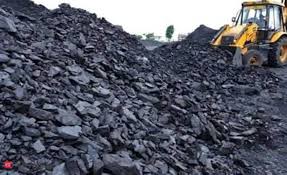
A court-monitored review of coal movement into Meghalaya has uncovered regulatory breaches involving cement manufacturers, raising wider concerns about how industrial fuel sourcing intersects with environmental governance and urban development. A High Court-appointed panel found that two cement companies transported nearly 3 lakh metric tonnes of coal into the state without securing mandatory approvals, pointing to systemic gaps in oversight and compliance.

The findings, submitted to the Meghalaya High Court by a committee led by a retired judge, detail how the companies moved coal between early 2025 and early 2026 without clearance under the state’s Standard Operating Procedure (SOP) for coal transport. Despite applying for permission for the relevant period, the companies continued operations without receiving formal approval, violating established norms. The report identifies multiple procedural lapses, including the absence of critical documentation such as transport challans, tax invoices, e-way bills, and origin certificates. It also flags the failure to file mandatory periodic returns, raising questions about traceability and the legitimacy of the supply chain. While the companies were not named in the public findings, the scale of the alleged violations highlights a deeper challenge in India’s cement sector, where energy sourcing—particularly coal—remains central to production. For fast-growing urban regions dependent on steady construction activity, such irregularities could have cascading effects on project timelines, compliance standards, and environmental accountability.

Urban infrastructure projects rely heavily on cement as a core material, linking industrial supply chains directly to housing, transport, and public works. Experts note that weak enforcement in upstream inputs like coal procurement can undermine broader sustainability goals, especially as cities attempt to reduce carbon intensity and improve transparency in construction practices.The panel also drew attention to enforcement gaps, noting limited investigation into the role of landowners in areas associated with illegal mining. This reflects a broader governance issue in resource-linked industries, where fragmented accountability can allow non-compliant practices to persist.To address these concerns, the committee has recommended a series of corrective measures. These include stricter verification of transport documentation, expanded monitoring across coal-bearing districts, and the introduction of technology-led solutions such as GPS tracking, designated transport corridors, and integrated check-posts to regulate movement. The case also intersects with safety concerns. The panel referenced a recent transport-related accident involving coal movement without approval, underscoring the risks associated with unregulated logistics in hilly and densely inhabited regions.

For policymakers and urban planners, the findings reinforce the need to view construction supply chains holistically—from extraction and transport to end use. As India continues to urbanise, ensuring compliance in foundational industries like cement manufacturing will be critical to building resilient, low-risk, and environmentally responsible cities.The High Court is expected to examine the recommendations in upcoming hearings, which could shape how coal-linked industrial operations are monitored in Meghalaya and beyond.

Also Read: UltraTech Cement case spotlights consumer brand confusion

Meghalaya coal import lapses raise cement scrutiny
RELATED ARTICLES

LEAVE A REPLY

Please enter your comment!
Please enter your name here

- Advertisment -spot_img

Most Popular

Recent Comments

Bengaluru Commercial Market Driven By Tech Firms

Bengaluru Commercial Market Driven By Tech Firms

Bengaluru recorded the country’s highest office leasing activity during the first quarter of 2026, reinforcing the city’s position as India’s dominant technology and global...
Dharavi Housing Claims Depend On Ground Units

Dharavi Housing Claims Depend On Ground Units

Mumbai’s ambitious Dharavi redevelopment programme has introduced a stricter framework for determining rehabilitation benefits for residents living on upper floors, placing significant emphasis on...
Godrej Properties Drives Consolidation Across Cities

Godrej Properties Drives Consolidation Across Cities

India’s urban real estate sector is witnessing a decisive shift towards consolidation, with publicly listed developers tightening control over land acquisition across major cities...
India Steel Ministry defers global industry conference

India Steel Ministry defers global industry conference

A planned international conference organised by India’s Ministry of Steel has been deferred, signalling how global geopolitical disruptions are increasingly influencing domestic industrial planning....
Thyssenkrupp Jindal talks pause amid steel crisis

Thyssenkrupp Jindal talks pause amid steel crisis

A planned transaction between Thyssenkrupp AG and Jindal Steel International has been put on hold, underscoring mounting pressures on the global steel industry as...