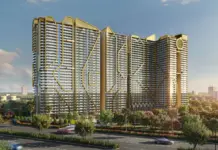
Mumbai’s property market has regained its pre-pandemic strength, attracting over USD 1.2 billion in institutional real estate investments during the first nine months of 2025. According to the latest capital markets data, the city continues to lead India’s investment landscape, driven by global confidence and a growing domestic investor base.
The milestone marks Mumbai’s fourth consecutive year of crossing the billion-dollar threshold a sign of sustained momentum in India’s largest commercial hub. Analysts say this resurgence reflects both renewed global interest and local investor maturity, underscoring Mumbai’s position as a gateway city for long-term capital.At the national level, total institutional real estate inflows including private equity and real estate investment trusts reached USD 4.7 billion by September 2025. Projections indicate that the year may close with USD 6–6.5 billion in overall inflows, positioning 2025 as the second-strongest year on record for India’s real estate sector.
What stands out this year is the rise of domestic capital, which now accounts for nearly half of total inflows. Experts note that the balance between foreign (52%) and local (48%) participation signals market stability and a reduced reliance on cross-border funding. A senior investment analyst said this evolution “marks a new phase of confidence where Indian institutions are not just following global investors but setting the pace themselves.”
Across sectors, office and residential assets remain the preferred choices, capturing more than half of Mumbai’s total inflows. Redevelopment-led residential projects attracted over USD 370 million, while the office segment followed closely, buoyed by strong leasing and sustained occupier demand. Logistics, industrial, and mixed-use assets also continued to gain traction, reflecting diversification in investor appetite.
Mumbai’s infrastructure transformation led by projects such as the Atal Setu (Mumbai Trans Harbour Link), Coastal Road, expanding Metro network, and the upcoming Navi Mumbai International Airport has played a decisive role in this rebound. Industry experts say such large-scale connectivity projects are unlocking new growth corridors, especially in peripheral zones, and supporting the city’s transition towards a more sustainable, accessible urban fabric.
Commenting on the trend, an executive from an international property consultancy observed, “Mumbai’s investment story is not just about numbers it’s about structural resilience, infrastructure-driven optimism, and a maturing investor ecosystem that is increasingly diverse and forward-looking.”As India’s financial capital continues to attract global and domestic capital, the challenge ahead will be ensuring that the city’s investment-led growth translates into inclusive, climate-resilient, and equitable urban development aligning economic expansion with the broader vision of sustainable city-building.
Mumbai Real Estate Investments Cross USD 1.2 Billion In 2025 Reclaiming Pre-Pandemic Momentum