

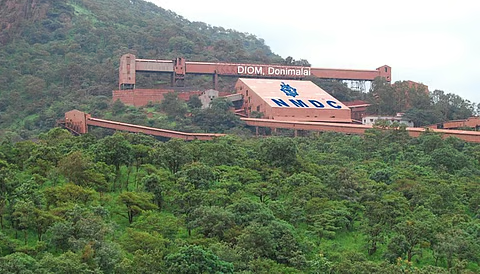
India’s push for infrastructure expansion and industrial growth is beginning to reflect in upstream resource extraction, with NMDC Limited reporting a 16% year-on-year increase in iron ore production for April 2026. The rise signals strengthening demand from the steel sector, a key driver of urban construction and large-scale infrastructure development.
The state-run miner produced approximately 4.64 million tonnes of iron ore during the month, marking its highest-ever output for April and setting an early momentum for the financial year. Sales volumes also remained stable at around 3.68 million tonnes, indicating steady offtake despite logistical constraints. The growth has been largely driven by higher output from mining operations in Chhattisgarh, which continue to account for a significant share of the company’s production. This reflects a broader trend in India’s mining geography, where resource-rich central and eastern regions are becoming critical to supporting industrial corridors and urban infrastructure projects.However, the production surge has also exposed operational challenges. Data indicates a decline in rail movement of iron ore during the same period, pointing to bottlenecks in transportation and supply chain integration. For a sector that relies heavily on efficient logistics to connect mines with steel plants, such constraints could limit the pace at which increased output translates into usable supply.From an urban development perspective, the rise in India iron ore growth is closely linked to construction activity. Iron ore is the primary raw material for steel, which underpins everything from metro systems and highways to housing and industrial facilities.
As cities expand and infrastructure investments scale up, demand for steel—and by extension iron ore—is expected to remain robust.Industry analysts suggest that NMDC Limited’s performance also reflects a strategic shift towards capacity expansion and supply chain strengthening. The company has indicated plans to scale production further, with a long-term target of exceeding 60 million tonnes annually. Such ambitions align with India’s broader goal of increasing domestic steel production capacity to meet future infrastructure needs.Yet, this growth trajectory raises important sustainability considerations. Mining operations, particularly open-cast iron ore extraction, have significant environmental impacts, including deforestation, land degradation, and water stress. As output rises, the need for responsible mining practices and stronger environmental governance becomes more urgent.Urban planners and environmental experts emphasise that the benefits of India iron ore growth must be balanced with ecological safeguards. Integrating cleaner technologies, improving land rehabilitation practices, and ensuring community participation in mining regions will be essential to aligning industrial growth with climate resilience goals.
Looking ahead, the trajectory of NMDC Limited and the wider mining sector will play a pivotal role in shaping India’s urban future. While increased production supports economic expansion and infrastructure delivery, the challenge lies in ensuring that resource extraction remains efficient, transparent, and environmentally sustainable—key factors in building resilient and equitable cities
Also Read: Jindal Stainless results reflect infrastructure demand
NMDC production rise signals steel demand surge




