HomeNewsPune Real Estate Favours Bigger Apartments

Pune Real Estate Favours Bigger Apartments

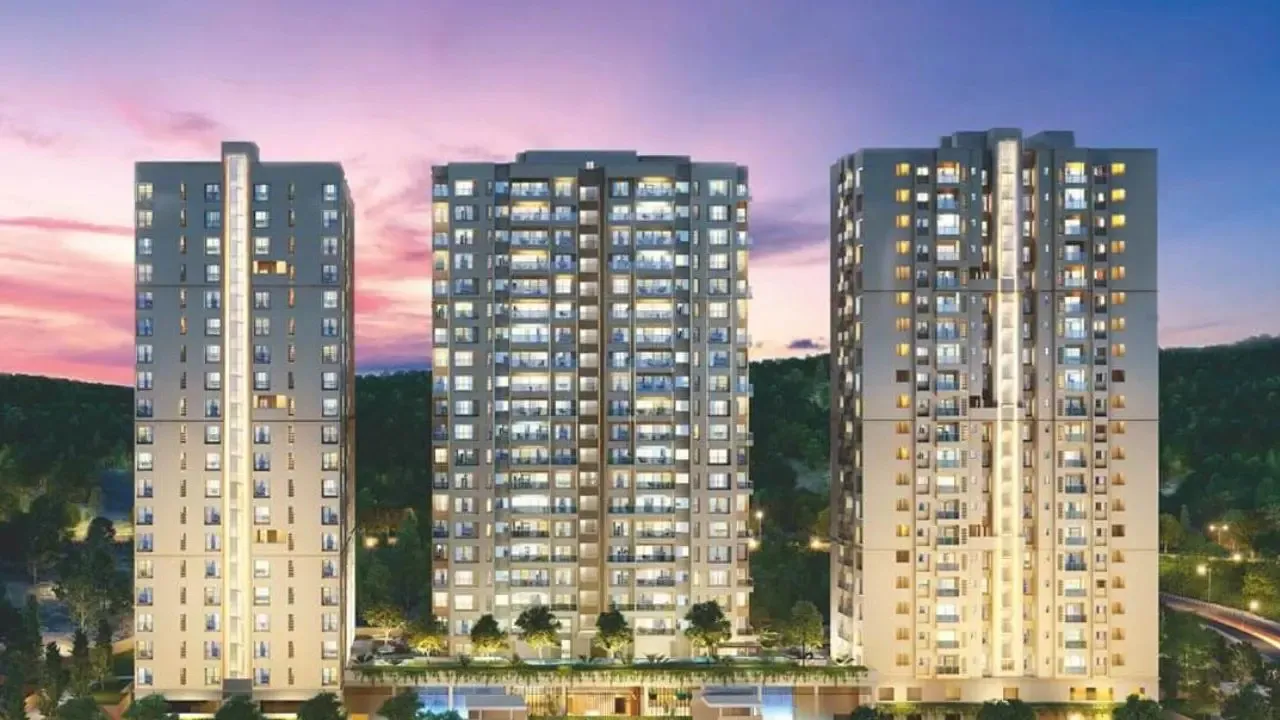
Pune’s housing market opened 2026 on a measured note, with property registrations declining year-on-year in January even as stamp duty revenues showed relative stability. The data indicates that while transaction volumes have eased from last year’s high base, buyer interest in mid-range and premium homes remains firm  a trend that could reshape the city’s residential supply pipeline. Official figures from the state registration department show 14,527 properties were registered in January 2026, compared to 17,449 in the same month last year, marking a 17% decline. Stamp duty collections stood at ₹609 crore, a narrower 5% drop from ₹638 crore a year ago. 

The divergence between volume and revenue suggests that higher-value transactions continue to support the Pune housing market, even as overall activity normalises. Sequentially, January reflected a rebound from December 2025, when registrations and collections had dipped amid year-end seasonality. Market analysts attribute the moderation partly to a high comparison base in early 2025 and partly to evolving buyer preferences. Homes priced below ₹1 crore still account for the bulk of transactions, at 82% of registrations. However, the share of homes priced between ₹1 crore and ₹2.5 crore has risen to 14%, while the ₹50 lakh to ₹1 crore segment holds nearly 29% of registrations.

This gradual tilt towards mid and premium segments signals sustained end-user confidence rather than speculative buying, according to industry experts. They note that households are increasingly prioritising larger living spaces, reflecting hybrid work patterns and lifestyle upgrades. Size-wise, compact homes under 500 sq ft have seen their share reduce to 23%, down from 26% a year ago. Apartments between 500 and 800 sq ft remain dominant at 46%. Units ranging from 800 to 1,000 sq ft and 1,000 to 2,000 sq ft have each inched up to 14%, while homes above 2,000 sq ft continue to hold a niche 3% share.

Urban planners observe that this preference for larger units in the Pune housing market could influence land use and infrastructure planning. Bigger homes typically mean lower density per acre, raising questions about transit connectivity, water supply and energy demand. Integrating sustainable design standards and transit-oriented development will therefore be critical as the city expands.
Geographically, central Pune  including areas under the municipal corporation and the adjoining Pimpri Chinchwad region   accounted for roughly 67% of registrations. Western pockets such as Mulshi and Mawal contributed 16%, with the remaining share spread across northern, southern and eastern zones.

Proximity to employment hubs and established civic infrastructure continues to drive demand in core locations. The January numbers suggest a market adjusting to a steadier growth cycle. For policymakers and developers, the evolving structure of the Pune housing market underscores the need to balance supply across affordability bands while embedding climate-resilient construction and infrastructure upgrades into future expansion.

Pune Real Estate Favours Bigger Apartments 
RELATED ARTICLES

LEAVE A REPLY

Please enter your comment!
Please enter your name here

- Advertisment -spot_img

Most Popular

Recent Comments

India Aluminium Manufacturers Call For Duty Relief

India Aluminium Manufacturers Call For Duty Relief

India’s downstream aluminium manufacturers are seeking changes to import duty structures, arguing that lower tariffs on key raw materials could strengthen domestic value added...
India Chemical Industry Targets Green Manufacturing

India Chemical Industry Targets Green Manufacturing

India’s chemical industry is entering a new phase of transformation as manufacturers prepare for stronger global demand, changing supply chains and rising sustainability expectations.Industry...
Shyam Metalics Expands Manufacturing Growth Strategy

Shyam Metalics Expands Manufacturing Growth Strategy

Shyam Metalics has outlined an investment roadmap of approximately ₹10,000 crore over the coming years as it pursues an ambitious plan to substantially expand...
India Steel Sector Reshapes Leadership For Workforce Growth

India Steel Sector Reshapes Leadership For Workforce Growth

Jindal Steel has strengthened its senior leadership team with the appointment of a new President and Head of Human Resources, reflecting the growing strategic...
SAIL Restructures Staffing Across Steel Plants

SAIL Restructures Staffing Across Steel Plants

Steel Authority of India Ltd. (SAIL) is preparing to implement a workforce rationalisation strategy across its integrated steel plants, signalling a fresh phase of...