HomeLatestTata Steel New Furnace Plan Targets Green Steel

Tata Steel New Furnace Plan Targets Green Steel

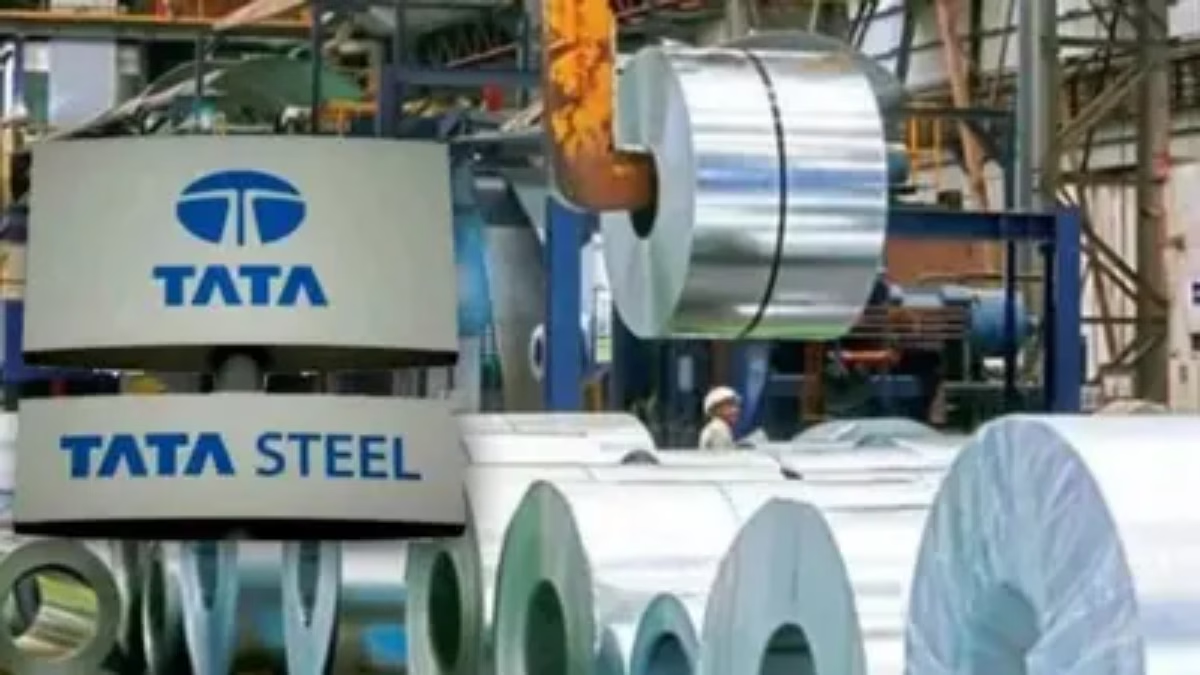
Tata Steel has announced the world’s first industrial deployment of EASyMelt technology at its Jamshedpur works, a move that could materially reduce emissions from conventional blast furnace steelmaking while extending the life of existing industrial assets. The project places Tata Steel at the centre of a growing global race to decarbonise heavy industry without disrupting steel supply needed for housing, transport and urban infrastructure. 

The technology will be introduced in phases at Tata Steel’s ‘E’ blast furnace, a 649 cubic metre unit in Jamshedpur. Publicly available details indicate the system is designed to lower carbon dioxide emissions by more than 50 per cent compared with the furnace’s current baseline operations. Tata Steel is implementing the project through agreements with Paul Wurth of Luxembourg, part of Germany’s SMS Group. For Tata Steel, the significance goes beyond one plant upgrade. Steel producers worldwide face mounting pressure from regulators, investors and customers to cut emissions from one of the most carbon-intensive manufacturing processes. Traditional blast furnaces rely heavily on coke, a coal-derived fuel. EASyMelt uses electrically assisted syngas injection and gas recycling to reduce dependence on coke while improving operational flexibility. That matters for India’s urban economy. Steel is a core input for metros, bridges, railways, warehouses, renewable energy towers and high-rise construction. Cleaner production methods at scale could help lower the embedded carbon footprint of major infrastructure projects as cities expand.

Unlike some green steel pathways that depend on scarce high-grade iron ore or abundant low-cost renewable hydrogen, EASyMelt is being positioned as a retrofit solution for existing furnaces. This makes it commercially relevant for older industrial regions where replacing plants entirely would be expensive and disruptive. For Tata Steel’s Jamshedpur complex—one of India’s most established industrial sites—the approach offers a route to modernisation without abandoning core assets. There are also competitiveness implications. Global buyers, especially in Europe and developed markets, are increasingly scrutinising supply-chain emissions. Producers able to demonstrate lower-carbon steelmaking may gain an advantage as border carbon measures and green procurement norms tighten.Yet the transition is not without challenges. Electrified steel processes require reliable power, robust gas handling systems and significant capital investment. Actual emissions outcomes will also depend on the source of electricity used. If grid power remains coal-heavy, headline reductions may be diluted.

For Tata Steel, however, the project signals intent: decarbonisation is moving from pilot language to plant-floor execution. For India, it offers a test case in whether legacy industrial hubs can be reinvented rather than replaced. If successful, the Jamshedpur model could influence how other steelmakers modernise while supporting the country’s infrastructure ambitions.The broader lesson is clear. Cleaner cities require cleaner materials, and the future of sustainable urban growth may depend as much on factory innovation as on what gets built above ground.

Also Read: Steel Ministry Meet Targets Import Concerns

Tata Steel New Furnace Plan Targets Green Steel
RELATED ARTICLES

LEAVE A REPLY

Please enter your comment!
Please enter your name here

- Advertisment -spot_img

Most Popular

Recent Comments

Mumbai Road Summit Targets Smarter Highways

Mumbai Road Summit Targets Smarter Highways

0
Mumbai is set to host the Global Road Construction Conference 2026 later this month, bringing policymakers, contractors, materials suppliers and infrastructure specialists together as...
Durakraft Expands Smart Building Materials Push

Durakraft Expands Smart Building Materials Push

0
Durakraft is positioning itself to benefit from India’s rising demand for smarter and more efficient construction materials, as developers and homeowners increasingly prioritise energy...
Steel Exchange India Raise Targets Capacity Push

Steel Exchange India Raise Targets Capacity Push

0
Steel Exchange India has secured ₹75 crore as the first tranche of a larger ₹350 crore capital raising plan, signalling renewed expansion intent in...
India Semiconductor Push Attracts Korea

India Semiconductor Push Attracts Korea

0
South Korean semiconductor companies are exploring entry into India through research, software engineering and design functions before committing to large manufacturing investments, signalling growing...
Steel Ministry Meet Targets Import Concerns

Steel Ministry Meet Targets Import Concerns

0
The Ministry of Steel has called an industry open house on April 27 to address concerns linked to steel imports, signalling rising pressure within...